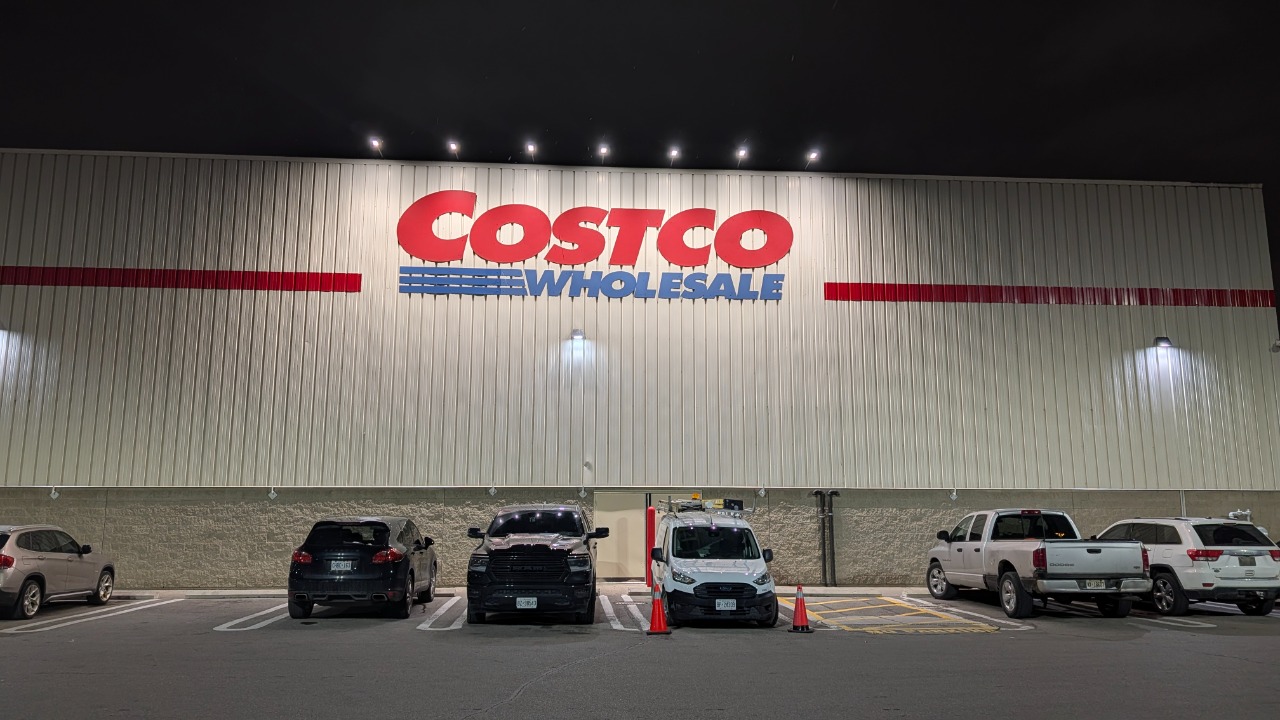
Costco’s share price has cooled after a long run, but the debate on Wall Street is shifting from whether the stock has peaked to how it could still climb toward the psychologically important $1,000 mark even as sales and membership growth slow. The key question for investors is whether the company’s durable business model, pricing power, and expanding digital ecosystem can justify that kind of valuation in a more subdued operating environment.
I see a case emerging that Costco’s slower growth phase may actually set up the next leg higher, as expectations reset while core fundamentals remain intact. If that thesis holds, the stock does not need explosive revenue gains to approach $1,000, it needs consistent execution, high renewal rates, and a market willing to pay a premium for reliability.
Wall Street’s $1,000 debate is already underway
Analysts are not treating a four-digit share price as a fantasy scenario anymore, they are actively modeling it. The latest Costco Stock Forecast shows a detailed Stock Price Forecast table that lays out Target, Low, Average, Median, and High estimates for the next twelve months, underscoring how closely professionals are tracking the upside. Within that Stock Price Forecast, the structure of Target, Low, Average, Median, and High expectations reflects a market that sees Costco as a premium retailer with room to run, not a mature chain stuck in neutral.
Those projections are backed by a consensus view that the stock still deserves a positive rating. The same Costco Stock Forecast notes that the 21 analysts who follow Costco have a consensus recommendation of “Buy,” with a range of price targets that includes a highest estimate of $1,225. When the top of the Target range already sits well above $1,000, it signals that a meaningful slice of the analyst community believes the company’s earnings power and balance sheet can support that kind of valuation even if headline growth moderates.
Slower sales, but a still-powerful membership engine
The near-term bear case centers on cooling sales and a more measured pace of new member sign-ups, yet the reported numbers suggest resilience rather than deterioration. In its first quarter of fiscal 2026, Costco’s total sales rose 8.2% year over year to about $66 billion, with Comparable sales growth still positive despite a tougher macro backdrop. That kind of mid‑single‑digit to high‑single‑digit expansion is not the hypergrowth of a young e‑commerce platform, but for a global warehouse chain operating at massive scale, it is a sign that traffic and ticket sizes remain healthy.
Membership trends are equally important, because the fee income from Costco’s subscription model is what smooths earnings through economic cycles. Reporting on Why Costco could still reach $1,000 notes that even with sluggish sales and slower membership growth, renewal rates and overall membership trends were still strong, which keeps the cash flow engine humming. As long as that membership flywheel continues to spin, the company can afford a period of more modest Comparable sales growth without derailing its long‑term earnings trajectory.
Why the $1,000 target is plausible even without a growth spurt
Several market commentators have already put a specific stake in the ground around a four‑digit share price. One detailed Prediction argued that “Costco Stock Will Hit” $1,000 in 2026, highlighting how Costco’s membership model works in almost any environment, even when consumers are cautious. The thesis there is straightforward: recurring membership fees, disciplined inventory management, and a reputation for value give Costco the ability to grow earnings per share steadily, which in turn allows the valuation multiple to stay elevated without looking reckless.
Other analysts are more focused on the path than the exact timing, but they land in a similar place. A separate piece on Why Costco could still get to $1,000 despite sluggish sales and membership growth emphasizes that the company’s profitability, strong membership trends, and disciplined expansion strategy can support a higher share price even if top‑line growth is not spectacular. In that framework, $1,000 is less about a sudden surge in Comparable sales and more about the market continuing to reward Costco for consistency, balance sheet strength, and shareholder‑friendly capital allocation.
Digital, data, and the quiet transformation of the warehouse model
What makes the $1,000 conversation more credible is that Costco is not standing still operationally, it is quietly modernizing the business in ways that can lift margins and deepen customer loyalty. Reporting on Costco Wholesale Corporation notes that the company’s COST digital ecosystem has become a powerful growth engine, supporting member engagement and a range of convenience‑focused fulfillment options. That includes online ordering for bulk staples, curated deals on big‑ticket items like 2025 Toyota RAV4 hybrids, and services such as pharmacy refills and optical appointments that keep members inside the Costco orbit even when they are not walking the aisles.
As this digital ecosystem scales, it can enhance the economics of the membership model. More data on shopping patterns allows Costco to fine‑tune assortments, negotiate better terms with suppliers, and target promotions without resorting to the kind of aggressive discounting that erodes margins. The result is a business that can grow earnings faster than sales, which is exactly the kind of operating leverage that supports a higher valuation multiple and makes a $1,000 share price more attainable over time.
Sentiment, TV voices, and the next leg of the stock’s move
Market psychology also matters, and some influential voices are starting to lean back toward the bullish side after a choppy stretch. On a recent segment, Jim Cramer told viewers that Costco shares are beginning to look attractive again after what he described as a mixed quarter, with reporter Paulina Likos noting that the discussion aired at 1:40 PM EST. When a high‑profile commentator who had previously urged caution starts to frame the stock as a buyable pullback, it can help shift retail investor sentiment and bring fresh demand into the name.
Other market strategists have been even more explicit about the upside potential. In a televised interview, one guest in Sep argued that Costco shares could hit $1K within 12 to 24 months, joking that every time he visits a warehouse his spouse tells him to keep both hands on the cart because of how easy it is to overspend. That anecdote captures a real dynamic: Costco’s treasure‑hunt merchandising and value proposition encourage larger baskets, which supports revenue growth even when traffic is not surging. As long as that behavior persists, the company can keep compounding earnings, and the stock can grind higher toward four digits.
What has to go right for Costco to earn a four‑digit price tag
For Costco to justify $1,000 per share, several pieces need to fall into place, but none require heroic assumptions. The company must sustain mid‑single‑digit to high‑single‑digit sales growth similar to the 8.2% increase to about $66 billion it posted in its latest reported quarter, while keeping Comparable sales positive and protecting margins. It also needs to maintain strong renewal rates and keep nudging membership fees higher over time without sparking backlash, a pattern that past cycles suggest is achievable when the value proposition remains clear.
On the valuation side, the current analyst framework already embeds room for upside. The Stock Price Forecast table that lists Target, Low, Average, Median, and High estimates, combined with the separate forecast that pegs the highest target at $1,225 and a consensus “Buy” rating, shows that Wall Street already sees Costco as a company that can support a premium multiple. If earnings continue to climb steadily and the COST digital ecosystem keeps deepening member engagement, the stock does not need a dramatic re‑rating to approach $1,000, it simply needs time and consistent execution.
More From The Daily Overview

Elias Broderick specializes in residential and commercial real estate, with a focus on market cycles, property fundamentals, and investment strategy. His writing translates complex housing and development trends into clear insights for both new and experienced investors. At The Daily Overview, Elias explores how real estate fits into long-term wealth planning.