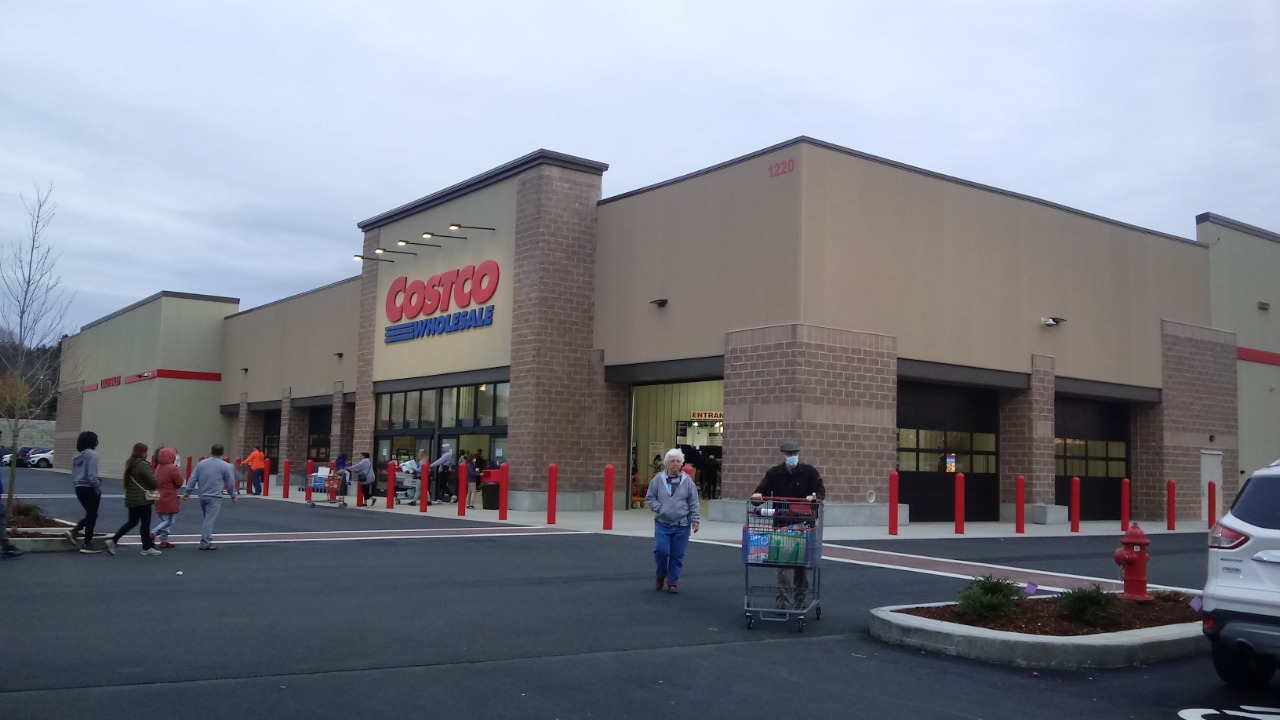
Costco is reshaping one of the most sensitive parts of the warehouse experience: the moment you pay. Self-checkout, once a relatively anonymous way to scan a cart, is now a frontline for membership enforcement, with staff posted nearby and ID checks that shut out non-members. The retailer is betting that tighter controls, backed by new technology, will protect its membership model even if it means a more hands-on experience at the register.
The shift is not happening in a vacuum. Costco has been signaling for several years that self-service lanes were becoming a weak spot for card sharing and non-member access, and the latest rules turn that concern into a full-scale operational change. What looks like a simple tweak to scanning procedures is, in practice, a major test of how far a membership club can go in policing who gets to shop.
Self-checkout becomes a membership checkpoint
The most visible change for shoppers is that self-checkout has effectively become a controlled gate rather than a casual option. Instead of walking up, scanning a card, and getting on with it, members now encounter staff who verify that the person using the lane is the same person whose name and photo are on the account. At some warehouses, that means employees stationed at the kiosks, watching screens and asking to see the membership card and a matching ID before a transaction can proceed.
Behind the scenes, Costco is layering in technology that makes this process harder to bypass. Reporting describes membership card scanners installed at self-service stations that tie each transaction to a specific account, a move explicitly aimed at protecting what the company views as a multibillion dollar annual membership revenue stream, with membership card scanners now central to the process. The message is clear: self-checkout is no longer a gray area where a borrowed card might slide through, it is a formal membership checkpoint.
From quiet warnings to a full crackdown on card sharing
Costco did not jump straight to this level of scrutiny. Earlier efforts focused on reminding shoppers that the warehouse club model depends on paid access, not open-door traffic. The company has long required that only the named member and one free household member can use a given account, but self-checkout created a loophole where a physical card could be passed around with little oversight. Over time, executives concluded that too many people were treating membership as a transferable pass rather than a personal credential.
That concern became explicit when Costco said more shoppers had been improperly sharing membership cards at self-service lanes, prompting the company to confirm that it was checking photos and accounts at self-checkout registers. The warehouse club chain later underscored that it was aiming to thwart non-member card users at these stations, with Costco Wholesale confirming that only the primary member and one free household member are authorized to shop on a given account. What began as a warning has now hardened into a system where staff and scanners work together to shut down card sharing in real time.
How the new ID checks work at the register
For members, the practical impact shows up in the choreography of a checkout trip. At self-service lanes, a Costco employee now asks to see the membership card and then checks the photo associated with that account on a screen, comparing it to the person standing at the register. If the card does not match the shopper, the worker can halt the transaction and direct the person either to add their own membership or leave the items behind. That process, which once happened mostly at staffed lanes, is now embedded in the self-checkout routine.
The company has also framed these checks as a way to clean up account information, not just to catch freeloaders. If the photo on file is outdated or unclear, staff can flag it as something a member might want to correct, a detail highlighted in guidance explaining why you may have to show ID at the kiosks. In practice, that means a quick but pointed interaction: the card is no longer just a barcode, it is a visual identity check that can stop a non-member in their tracks.
Technology upgrades promise speed, not just security
Costco is not only tightening rules, it is also promising that new hardware and software will make checkout faster for those who play by them. The retailer has been rolling out upgraded self-service systems that scan items more quickly and reduce the number of prompts on screen, aiming to cut the time it takes a typical member to get through the lane. The company has framed these investments as part of a broader modernization of its warehouses, with self-checkout as a key test bed.
Some of the most detailed descriptions of these upgrades come from reporting that says the new self-checkout technology is designed to speed up the process by about 20 percent, with NEW TECHNOLOGY expected to reduce bottlenecks even as staff verify membership cards at the cashier. Another account describes how the flagship innovation enables members to scan items and then have their purchases verified by staff before leaving the warehouse, a model in which members scan items but still pass through a human checkpoint. In other words, the technology is meant to accelerate honest transactions while making it harder for unauthorized shoppers to slip through.
Staffed oversight returns to the self-service lane
One of the ironies of Costco’s shift is that self-checkout is becoming less self-directed. Where some retailers have used kiosks to reduce labor at the front end, Costco is leaning into a hybrid model in which employees are highly visible around the machines. Workers are not only troubleshooting scanners and bagging items, they are also watching for card sharing, checking IDs, and in some cases intervening before a transaction even begins if a shopper cannot produce a valid membership.
Coverage of the new rules describes how staff and ID checks are effectively slamming the door on non-members at these lanes, with Costco’s new self-checkout rules described as a direct response to unauthorized use. Local TV coverage has echoed that framing, with segments explaining that it is not just streaming services like Netflix tightening access, but also big-box stores where a Costco crackdown at self-checkout is now part of the shopping routine. The result is a more supervised environment that may feel less like a quick escape and more like a controlled exit lane.
Membership rules grow teeth, including potential bans
Costco has always reserved the right to revoke memberships, but the new enforcement posture gives that threat sharper edges. The company’s rules specify that only the actual member can use their card at checkout, and that applies just as much to self-service kiosks as to staffed registers. If an employee discovers that a card is being used by someone else, they can flag the account and escalate the issue, up to and including canceling the membership.
Some reporting spells this out bluntly, noting that there are Costco membership rules one should never consider breaking, because the warehouse can ban you if you do, particularly if you try to use self-checkout with a card that is not yours and the transaction is not being completed by the actual member themselves, a scenario detailed in guidance on self-checkout membership bans. In practice, that means a borrowed card is no longer a low-risk shortcut, it is a potential path to losing access entirely.
What this means for everyday Costco trips
For regular members, the new regime changes the rhythm of a warehouse run but not the core value proposition. Shoppers still flash a card at the entrance, load up on bulk goods, and head to the front, but now they are more likely to be reminded to have their membership card ready at the register, whether they choose a staffed lane or a kiosk. Advice for speeding through checkout emphasizes that Costco stands out from traditional grocery stores because you must present a valid membership before paying for the goods in your cart, a point underscored in tips that tell shoppers to Have your membership card ready.
The changes also ripple into other parts of the warehouse experience. Food courts, which once felt like semi-public spaces, are increasingly treated as member-only perks, with more Costco Food Courts planning to verify membership and some locations already checking cards before allowing people to order, a trend described in coverage of More Costco Food Courts. As front-end staffing is rebalanced and some traditional register windows dwindle, self-checkout becomes both a convenience and a controlled access point, reinforcing the idea that every part of the trip is tied to a valid membership.
Part of a broader 2026 reset for Costco
The self-checkout clampdown is one piece of a larger reset that Costco is planning for 2026. The company is quietly rolling out a series of changes that touch everything from food court rules to how and where it opens new locations. Rather than focusing solely on entirely new builds, Costco is putting more emphasis on remodeling and optimizing existing warehouses, a strategy described in reporting on Costco changes 2026. Within that context, tightening control at the front end looks less like an isolated policy and more like a pillar of a refreshed membership strategy.
Other planned shifts highlight how technology and local sourcing are being woven into that strategy. Kirkland already has several regional buyers across the United States who source local and specialty products, and that network is expected to play a bigger role as Costco opens new warehouses and upgrades existing ones, a detail noted in coverage that points out how Kirkland already has several regional buyers. At the same time, the company is experimenting with layouts that reduce the number of traditional register windows and lean more heavily on self-service, making the new ID checks and scanners a foundational part of how the front end will work in the years ahead.
Why Costco is willing to risk friction at the exit
All of these moves raise a basic question: why is Costco willing to inject more friction into a part of the trip that shoppers often dread? The answer lies in the economics of the membership model. Annual fees are not just a side benefit, they are a core profit engine, and any erosion of that base threatens the ability to keep prices low on the sales floor. By turning self-checkout into a stricter gate, the company is signaling that it would rather risk a few awkward moments at the register than let non-members quietly tap into member-only pricing.
The retailer is also betting that better technology will offset some of the annoyance. Reporting on how Costco’s new systems are cutting checkout times describes upgrades that allow members to complete their purchase more quickly, with Rey Covarrubias Jr detailing how improved scanners and workflows help move lines along at The Arizo-based warehouses. Combined with the company’s own digital presence, where shoppers can review membership options and policies on the official Costco website, the strategy amounts to a clear tradeoff: a slightly more controlled experience at the front end in exchange for preserving the economics that make the warehouse model work.
More From TheDailyOverview

Silas Redman writes about the structure of modern banking, financial regulations, and the rules that govern money movement. His work examines how institutions, policies, and compliance frameworks affect individuals and businesses alike. At The Daily Overview, Silas aims to help readers better understand the systems operating behind everyday financial decisions.

