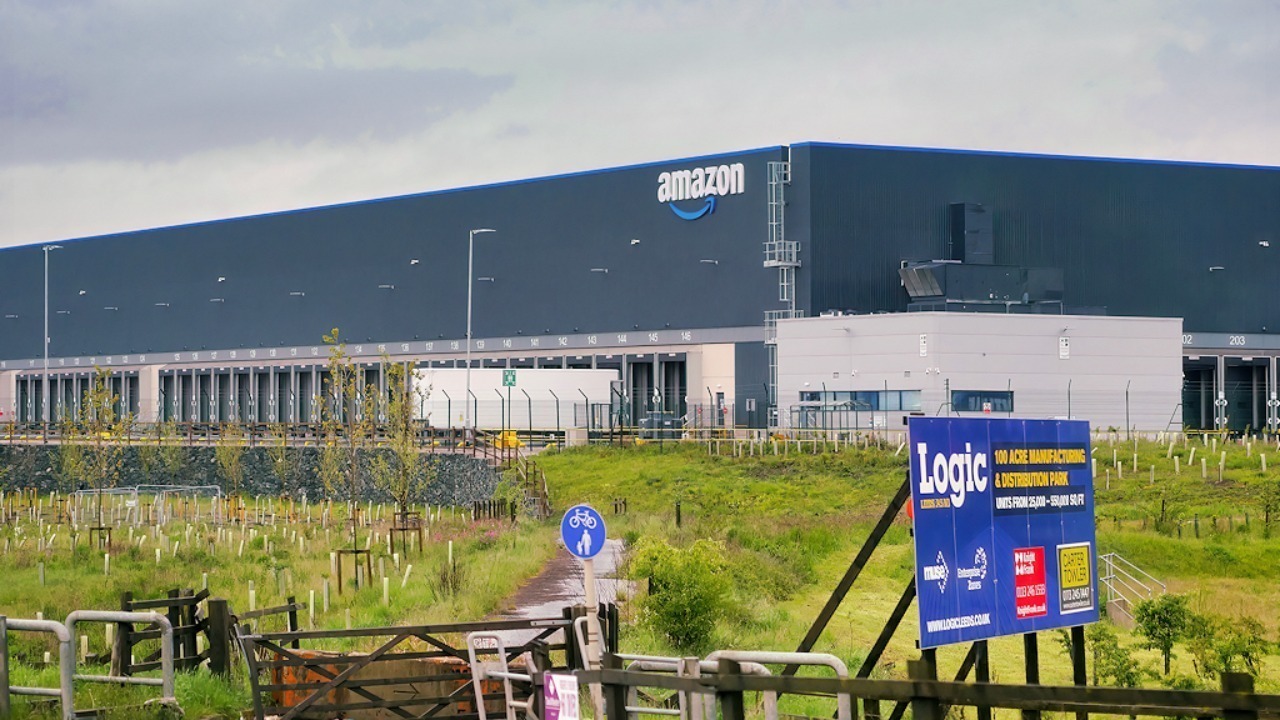
Amazon’s internal projections about automation are unusually blunt: instead of simply trimming headcount at the margins, the company is mapping out how to redesign its warehouses so it never has to hire tens of thousands of people in the first place. The New York Times has now surfaced plans that point to a specific target, avoiding 160,000 new U.S. hires by 2027, and tying that goal to a sweeping rollout of warehouse robots and AI scheduling tools. What looks like a technical upgrade on paper is, in practice, a deliberate reshaping of one of the country’s largest sources of hourly work.
I see those numbers as a turning point in how we talk about automation. For years, executives framed robots as helpers that would “free up” workers for better tasks, but Amazon’s own modeling treats them as a way to sidestep future human hiring at industrial scale. That shift matters not only for people who might have taken those jobs, but also for policymakers, unions, and communities that have come to rely on Amazon facilities as a default employer of last resort.
Inside the leaked blueprint for avoiding 160,000 hires
The centerpiece of the newly revealed strategy is a forecast that automation will let Amazon skip hiring roughly 160,000 U.S. workers over the next few years. Internal planning documents, described in coverage of the leak, show executives treating that figure as a concrete staffing delta between a human-heavy network and one where robots handle much of the repetitive lifting, sorting, and shuttling that currently defines warehouse work. Instead of planning for a steady climb in payroll as order volumes grow, the company is effectively drawing a flatter line and letting machines absorb the difference.
That 160,000 figure is not a back-of-the-envelope guess, it appears in detailed modeling shared by Global Operational Support IT Manager Steve Fawthrop, who highlights how the company expects to reconfigure more than half of its U.S. fulfillment footprint. In that analysis, the avoided hires translate directly into projected cost savings of $12.6 billion, a number that helps explain why the plan has traction at the highest levels. When a single operational shift promises to erase the equivalent of a mid-sized city’s worth of jobs from future payrolls, it stops being a speculative tech experiment and becomes a core business strategy.
From “helper” robots to a 600,000 worker question
Amazon has long insisted that robots are there to assist human staff, not replace them, but the leaked materials suggest a more aggressive trajectory. Internal projections do not just talk about 160,000 avoided hires, they also sketch scenarios in which automation could eventually displace or preempt as many as 600,000 roles across the company’s U.S. operations. That scale would touch everything from entry-level stowers and pickers to more specialized problem solvers who currently intervene when automated systems get confused.
Reporting on the leak describes how the company’s robotics roadmap, if fully implemented, could let it avoid hiring 600,000 workers over a longer horizon, a figure that dwarfs the 160,000 near-term target and hints at how deeply automation could reshape the workforce. Another analysis frames the same ambition as Amazon’s Plan to Replace 600,000 Workers With Robots Just Leaked, underscoring that this is not a marginal efficiency tweak but a wholesale reimagining of how a modern logistics empire is staffed. When the same number appears across multiple internal and external assessments, it becomes harder to dismiss as a speculative worst case.
How the 160,000 target fits into Amazon’s broader automation push
To understand why 160,000 avoided hires by 2027 is plausible inside Amazon’s own models, it helps to look at the broader automation arc the company has been on. Over the past decade, it has steadily rolled out fleets of mobile robots that ferry shelves to human pickers, automated sortation systems that route packages by ZIP code, and machine vision tools that verify items without manual scanning. Each wave of technology has chipped away at the number of people needed per package shipped, even as total volumes have grown.
The new plan essentially accelerates that trajectory by assuming that more facilities will be built or retrofitted from the ground up around robots rather than humans. Instead of designing a warehouse with wide aisles for people and then sprinkling in machines, engineers can now start with dense robotic storage grids and carve out only the human workstations that remain absolutely necessary. In that context, the 160,000 figure looks less like a sudden cliff and more like the cumulative effect of dozens of such design decisions, each one shaving a few hundred or a few thousand potential roles off the future headcount.
The financial logic: $12.6 billion in savings and Wall Street pressure
Behind the technical details sits a simple financial logic: labor is one of Amazon’s largest operating expenses, and any credible plan to reduce it at scale will be taken seriously. The internal modeling shared by Steve Fawthrop ties the 160,000 avoided hires directly to $12.6 billion in cost savings, a number that would materially improve margins in a business where investors scrutinize every basis point. For a company that competes on razor-thin delivery fees and free shipping promises, shaving billions off warehouse costs is not just attractive, it is strategically decisive.
I read that financial framing as a signal to both internal and external audiences. Internally, it tells operations leaders that automation is not optional experimentation but a mandated path to hitting profit targets. Externally, it reassures Wall Street that Amazon has a plan to keep labor costs in check even as it faces union drives, higher minimum wages in key states, and rising benefit expectations. When a single automation roadmap is presented as unlocking $12.6 billion, it becomes easier for executives to justify the upfront capital spending on robots, software, and new facility designs that make the 160,000 figure achievable.
What kinds of jobs are at risk, and which might survive
The leaked projections do not just throw out big numbers, they implicitly rank which categories of work are most vulnerable. The roles most directly in the crosshairs are the highly standardized, repetitive tasks that robots already perform in pilot facilities: moving inventory pods, shuttling totes between stations, sorting packages into delivery routes, and scanning items for damage or misplacement. These are the jobs that can be broken down into clear steps, mapped into software, and executed by machines that never get tired or distracted.
By contrast, the roles that look more resilient in the near term involve complex judgment, improvisation, or direct human contact. Maintenance technicians who repair robots, safety coordinators who respond to accidents, and managers who handle scheduling conflicts or performance issues all operate in environments that are harder to fully codify. Even there, though, the company’s own modeling suggests that AI tools will eventually take over parts of the work, from predictive maintenance algorithms that flag failing components before a human notices, to scheduling systems that automatically reassign staff when a shift runs short. The 160,000 avoided hires are therefore not just about warehouse floor workers, they are also a warning sign for adjacent roles that might be partially automated over time.
Regional and community fallout from 160,000 missing jobs
When a company the size of Amazon decides not to hire 160,000 people it otherwise would have, the impact is not evenly distributed. Many of the warehouses that would have absorbed those workers are located in regions that have already seen manufacturing decline and have come to rely on logistics hubs as a new source of blue-collar employment. In those communities, an Amazon facility often anchors local expectations about job availability, influencing everything from high school career counseling to community college training programs.
If automation lets the company run the same or greater volume of packages with far fewer people, the ripple effects will be felt in local tax bases, housing markets, and small businesses that depend on warehouse workers’ spending. Fewer hires mean fewer paychecks circulating through nearby diners, auto repair shops, and childcare centers. Over time, that can deepen regional inequality, as areas that successfully attract high-tech employers or data centers pull ahead, while towns that banked on labor-intensive logistics find themselves with large, automated buildings on the edge of town and far fewer jobs than they expected.
Workers, unions, and the politics of preemptive automation
For existing Amazon employees, the idea that robots are being deployed not just to assist them but to avoid hiring their future colleagues changes the stakes of workplace organizing. Traditional labor disputes focus on wages, safety, and scheduling, but the leaked plans introduce a more existential concern: whether there will be a meaningful path for long-term employment at all. If the company’s own roadmap envisions hundreds of thousands of roles being automated away or never created, workers may feel an urgency to secure stronger protections, retraining guarantees, or severance terms while they still have leverage.
Politically, the scale of the 160,000 target and the broader 600,000 scenario is likely to draw attention from lawmakers who have already been scrutinizing Amazon’s labor practices. Some will see the plan as evidence that existing safety nets and workforce programs are not prepared for a world where a single corporate decision can erase the equivalent of multiple years of job growth in certain regions. Others may argue that the company is simply responding rationally to competitive pressures and that the policy response should focus on education, mobility, and new forms of social insurance rather than trying to slow automation itself. Either way, the leaked numbers give unions and politicians a concrete benchmark to organize around, rather than abstract fears about “robots taking jobs.”
Amazon’s public narrative versus the leaked numbers
Publicly, Amazon has tended to emphasize the ways automation can make work safer and less physically punishing, pointing to reductions in heavy lifting and repetitive strain when robots take over the most grueling tasks. The company often highlights new technical roles created by robotics deployments, such as mechatronics technicians and process engineers, as evidence that technology can upgrade, rather than erase, warehouse careers. That narrative is designed to reassure both workers and regulators that innovation and employment can move in tandem.
The leaked projections about 160,000 avoided hires and a potential 600,000 worker impact sit uneasily alongside that messaging. They suggest that, inside the company, automation is being evaluated first and foremost as a lever to reduce labor costs and future headcount, with safety and upskilling framed as secondary benefits. Coverage of the leak by reporter Jess underscores that the internal documents explicitly quantify how robotics could replace hundreds of thousands of human jobs and save billions of dollars from 2025 to 2027. When those internal metrics become public, they make it harder for the company to sustain a narrative that automation is primarily about making existing jobs better rather than eliminating future ones.
What this means for the future of warehouse work
Looking ahead, I see Amazon’s 160,000 target as a preview of how other large employers will approach automation once the technology matures and the financial case is clear. Logistics, retail, and manufacturing firms are watching closely to see whether the company can maintain service levels, avoid major public backlash, and still reap the projected $12.6 billion in savings. If it succeeds, the internal logic that drove Amazon’s plan will be hard for competitors to ignore, especially in sectors where margins are thin and investors are impatient.
For workers and policymakers, the leaked numbers are a reminder that the most significant labor impacts of AI and robotics may come not from headline-grabbing layoffs, but from the quiet disappearance of jobs that never get posted. When a company as large as Amazon decides that 160,000 people it might have hired will instead be replaced by machines, the future of warehouse work shifts from a question of individual career choices to one of collective bargaining power, regional planning, and national economic strategy. The robots are not just coming to help, they are arriving with a spreadsheet that already assumes a world with far fewer human hands on the warehouse floor.
More From TheDailyOverview

Grant Mercer covers market dynamics, business trends, and the economic forces driving growth across industries. His analysis connects macro movements with real-world implications for investors, entrepreneurs, and professionals. Through his work at The Daily Overview, Grant helps readers understand how markets function and where opportunities may emerge.