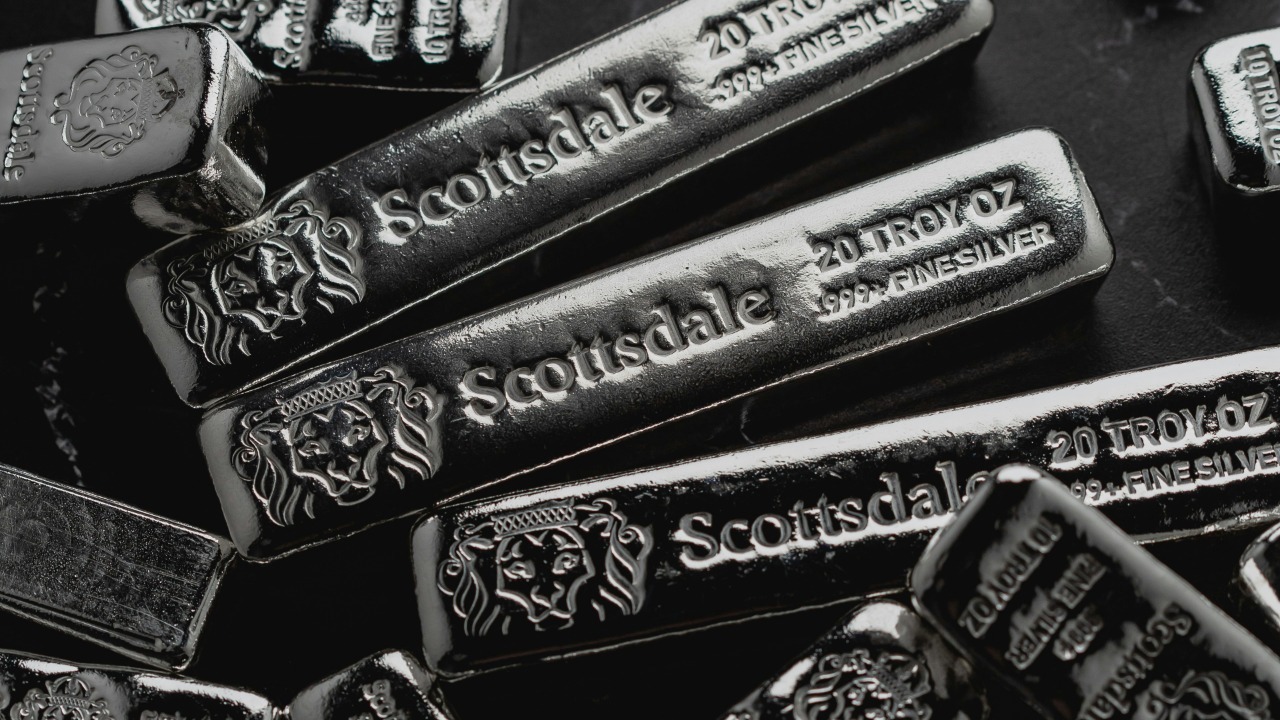
Silver’s violent price swings in early 2026 have turned a once sleepy metal into one of the most hotly debated assets in global markets. After spiking to $121 an ounce before plunging more than 30 percent in a matter of days, the question is no longer whether silver is volatile, but whether that volatility could realistically carry it as high as $200 per ounce by next year. I want to unpack what would have to go right, what could go wrong, and how credible voices on both sides frame that $200 target.
The bullish story leans on a mix of industrial scarcity, monetary anxiety and speculative momentum, while skeptics warn that parabolic moves rarely end well for latecomers. Between those poles sits a more measured camp that sees strong fundamentals but far lower price targets. Understanding where $200 fits on that spectrum is crucial for anyone tempted to chase the rally or, just as dangerously, to dismiss it out of hand.
How silver got from niche metal to front-page drama
The starting point for any $200 discussion is the extraordinary run that has already taken place. Earlier this year, Silver stunned traders by surging to $121 an ounce before crashing more than 30 percent in just days, a move that echoed some of the wildest episodes in commodity history. That spike came after prices had already more than doubled from around $88, turning what had been a steady climb into a full-blown speculative surge that forced risk managers and retail traders alike to reassess how much volatility they could stomach, according to detailed market data.
Behind those fireworks sits a surge in trading activity that has pulled silver out of the shadows. Futures contracts tied to the metal saw record volumes on COMEX, while silver-backed exchange traded products reported their strongest inflows in years as investors piled into what they saw as both a growth story and a defensive hedge. That combination of speculative leverage and long term positioning has created a feedback loop in which each new high draws in fresh money, a pattern that is visible in the futures flows that accompanied the latest spike.
What $200 per ounce would actually require
For silver to reach $200 per ounce in 2026, it would need to more than double from the roughly $88 level that marked its valuation in Feb, a leap that would rival some of the most dramatic commodity rallies on record. Analysts who have mapped out that path argue it would likely take a perfect storm of persistent industrial shortages, aggressive investor buying and a macro backdrop that keeps pressure on fiat currencies, a mix that would echo the Hunt brothers’ infamous attempt to corner the silver market in 1980 according to one detailed scenario analysis.
Even some of the more bullish institutional forecasts stop short of that number, instead sketching a range of outcomes that cluster below triple digits. A survey of major financial houses describes a Bullish Outlook for 2026, with Forecasts for silver that lean positive but still treat $200 as an outlier rather than a base case, framing it as a tail risk that would likely require extreme monetary or geopolitical stress to materialize, as reflected in recent institutional projections.
The bullish camp: scarcity, technology and dollar angst
On the optimistic side, I hear a consistent refrain that silver is no longer just a precious metal, it is a critical input for the technologies that define modern life. From solar panels on suburban rooftops to 5G base stations and electric vehicles, industrial users are absorbing more of the available supply each year, a trend that a recent Table of Contents style review of the market, with sections labeled TOC, Introduction, Key Takeaways and Top reasons for price moves, links directly to the price increase in 2026 and describes as both persistent and price supportive for the years ahead, according to a detailed demand study.
That industrial story is now being fused with a more traditional precious metals narrative centered on currency debasement and financial instability. Robert Kiyosaki, the personal finance author known for his skepticism of paper assets, has gone so far as to say he believes silver prices will reach $200 or more in 2026, warning that trouble for the dollar could push savers toward hard assets and pointing to the metal’s surge to $29 before it pulled back sharply as a sign of what is possible, a view he has laid out in recent public comments.
The cautious consensus: strong, but not a moonshot
Set against those bold predictions is a quieter, but influential, group of analysts who see silver doing well in 2026 without anything like a $200 blow off. Moderate Consensus Forecasts compiled by research firms show Many institution linked outlooks expecting gains, but Some of those projections cap the upside at levels that would still represent a healthy bull market without entering bubble territory, a stance summarized in recent expert roundups.
Other forecasters have gone further, translating their price targets into everyday units to make the numbers more tangible for retail buyers. One widely cited model anticipates silver trading around $ 2.50 per gram, which equates to roughly $ 1,134.25 per pound and $ 2,500.59 per kilo, figures that underscore how even a move to $ 2.50 in that framework would mark a substantial increase compared with current rates but still fall well short of a $200 per ounce blowout, as laid out in a recent price forecast.
The bear case: why some expect a crash back to $50
On the other side of the ledger, some large financial institutions argue that the very forces driving silver higher today could set the stage for a brutal reversal. One high profile note on Silver Price Predictions has warned that speculative excess and stretched positioning could see the metal fall back to $50 in 2026, even after it recently crossed $100 an ounce, with the authors bluntly stating that the current pace of gains cannot be sustained indefinitely, a view spelled out in a stark warning.
That skepticism is echoed in more nuanced form by experts who stress that silver’s dual identity as both an industrial metal and a monetary hedge can cut both ways. A detailed overview of What needs to happen for silver prices to drop in 2026 notes that a cooling global economy, easing inflation and a shift back toward higher yielding assets could sap demand from both sides of the market at once, leaving overextended investors scrambling for the exits, a scenario that some forecasts treat as a real possibility rather than a remote tail risk.
History’s warning: silver’s past blow offs and what they teach
To judge whether $200 is plausible, I find it useful to look backward as well as forward. Historical work on When Was Silver’s Highest Price Ever, compiled through extensive Historical Price Charts and Analysis and Updated For the current cycle, shows that the metal’s all time peak came during a period of intense speculation and macro stress, when a small group of traders tried to corner the market and drove prices to unsustainable levels before a violent collapse, a pattern documented in detail by recent research.
Contemporary analysts are quick to point out that today’s market is broader and more regulated, but some of the same ingredients are present. A recent Silver Prices Outlook for 2026, framed around the question What Do The Experts Say, notes that while structural demand is stronger now than in past cycles, the speed of the latest rally and the growing role of leveraged products mean that any rush for the exits could still be brutal, a nuance that comes through clearly in the expert commentary on past and present bull markets.
What professionals and retail investors should watch next
For traders and long term allocators alike, the most important question is not whether $200 is a catchy headline, but which indicators will tell us if silver is moving toward a sustainable re rating or a speculative bubble. At a recent industry gathering, panelist Spina captured the stakes by saying Its more serious than the gold market, because silver is so essential in our daily lives, and warning that While demand increases, investors may suddenly realize there is not enough silver, a perspective that highlights how tight physical markets could amplify any future price spikes, as reported in a detailed panel discussion.
At the same time, I see a growing emphasis on data driven discipline rather than gut feel. Professional desks increasingly lean on real time feeds from platforms such as Google Finance, whose own disclaimer reminds users that its figures on securities, indexes, currencies and commodities are provided for informational purposes and can be subject to delays or inaccuracies, a caveat that applies just as much to silver as to any stock or bond, as spelled out in the service notes.
More From The Daily Overview
*This article was researched with the help of AI, with human editors creating the final content.

Grant Mercer covers market dynamics, business trends, and the economic forces driving growth across industries. His analysis connects macro movements with real-world implications for investors, entrepreneurs, and professionals. Through his work at The Daily Overview, Grant helps readers understand how markets function and where opportunities may emerge.

