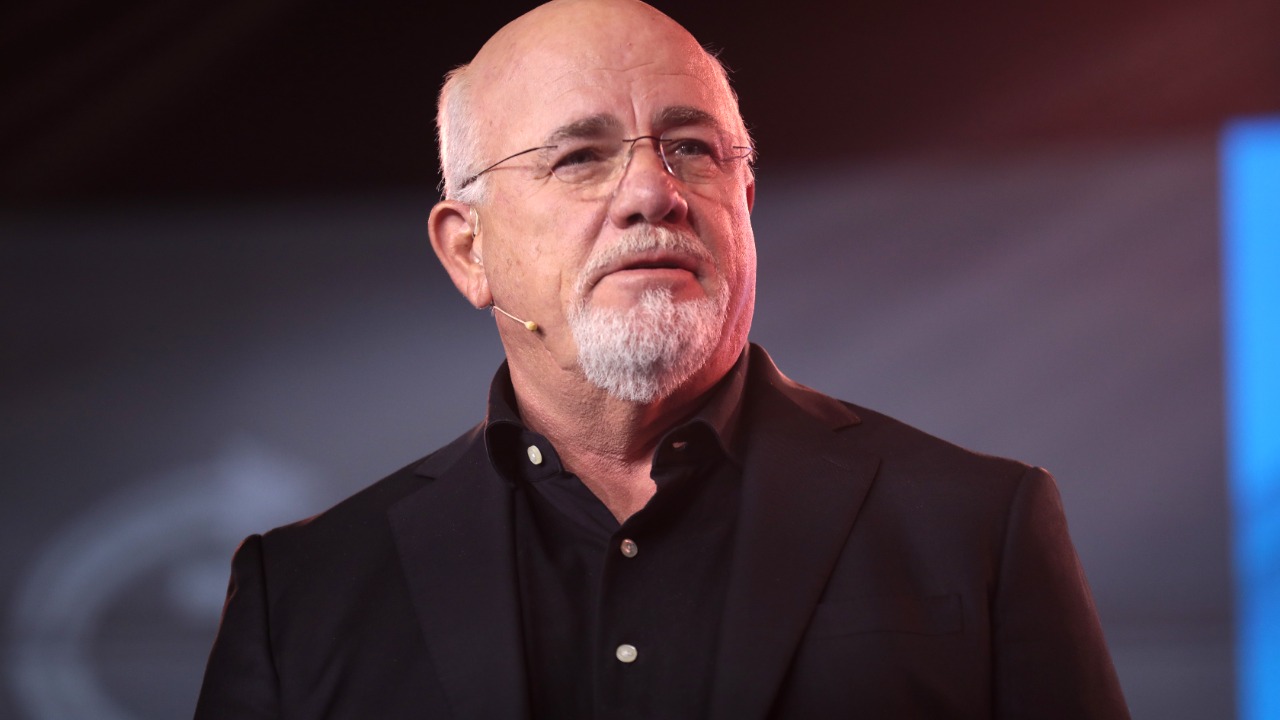
Millions of Americans are racing toward retirement with a blind spot that could cost them years of financial security, and Dave Ramsey is warning that nearly half are on the verge of a serious misstep. His core message is blunt: if you treat retirement like a finish line instead of a long, expensive phase of life, you risk running out of money just when you need it most.
Rather than focusing only on market swings or Social Security headlines, Ramsey is zeroing in on a quieter problem, the way people structure their income and spending in the final decade of work. The danger, he argues, is not just saving too little, but also drawing down those savings in a way that ignores taxes, inflation, and the real cost of healthcare.
Ramsey’s warning: the “big mistake” hiding in plain sight
Dave Ramsey has built his brand on simple rules, but his latest retirement warning is anything but simplistic. He argues that a large share of near-retirees are making a structural error, treating their nest egg like a lump sum to be spent down casually instead of a long-term income engine that must last potentially three decades. In his view, the “big mistake” is failing to plan for how money will flow in retirement, not just how much sits in an account on the day you leave work.
Survey data on retirement readiness backs up the scale of the problem Ramsey is flagging. One national poll of workers and retirees found that roughly half of respondents were not confident they would have enough income to maintain their standard of living, and a similar share admitted they did not have a written retirement plan to guide withdrawals and investment choices, as reported in retirement readiness research. Other analysis of 401(k) and IRA balances shows that median savings for people in their late fifties and early sixties often fall far short of what would be needed to generate sustainable income, especially when healthcare and long-term care are factored in, according to recent survey findings. Ramsey’s warning about a near-50 percent risk of a major misstep fits squarely with those numbers, which show a country where about half of households are on shaky ground as they approach retirement.
How the “nearly 50%” risk shows up in real retirement behavior
When Ramsey says nearly half of people are courting a major retirement blunder, he is pointing to patterns that show up in how Americans actually behave with their money. A large portion of workers either delay saving, cash out small 401(k) balances when changing jobs, or rely heavily on Social Security as their primary income source. By the time they reach their early sixties, many discover that their projected monthly income will not cover even modest living expenses, which forces them into late-career scrambling or early lifestyle cuts.
National data on savings and withdrawal habits illustrates this risk. Research on retirement confidence shows that about 47 percent of workers report having less than $100,000 saved for retirement, a level that would generate only a small monthly income even under optimistic assumptions, according to survey statistics. Other analysis of 401(k) leakage finds that a significant share of participants take hardship withdrawals or cash out accounts when changing jobs, eroding long-term compounding, as documented in retirement plan research. When Ramsey talks about nearly half of Americans being at risk, he is essentially describing this group: people whose behaviors, not just their balances, put them on a path where one market downturn or health shock could derail their entire retirement.
The core blunder: treating retirement like a short vacation
The heart of Ramsey’s critique is that too many people still imagine retirement as a brief, leisurely chapter instead of a long, financially demanding stage of life. If you assume retirement will last ten years, it is easy to underestimate how much you need saved and how carefully you must manage withdrawals. In reality, a healthy couple in their mid-sixties faces a strong chance that at least one spouse will live into their late eighties or beyond, which means planning for 25 to 30 years of income, not a decade-long holiday.
Longevity data underscores why this mindset is so dangerous. Actuarial tables show that a 65-year-old woman has a life expectancy that stretches well into her eighties, and a significant probability of reaching her nineties, according to Social Security life expectancy tables. Studies of retirement spending patterns also reveal that while some discretionary costs decline, healthcare and housing remain substantial, and long-term care can add six-figure expenses late in life, as detailed in healthcare cost estimates. When people plan as if retirement is a short break, they often fail to account for these long horizons and rising medical bills, which is exactly the structural error Ramsey is trying to spotlight.
Why underestimating income needs is so common
One reason nearly half of near-retirees are vulnerable is that they misjudge how much income they will actually need once the paychecks stop. Many assume that expenses will drop sharply, only to discover that property taxes, insurance, travel, and helping adult children keep monthly costs higher than expected. Others forget to factor in inflation, which quietly erodes purchasing power over a 20 or 30 year retirement, turning what looks like a comfortable income today into a tight budget later.
Research on retirement spending shows that while some categories, such as commuting and work clothes, do fall, overall household expenditures often remain close to pre-retirement levels for at least the first decade, according to consumer expenditure data. Inflation compounds the problem: even at a moderate 2 to 3 percent annual rate, prices can double over a 25 year period, which means a retiree who needs $60,000 today might require more than $100,000 in nominal dollars later to maintain the same lifestyle, as illustrated in inflation statistics. Ramsey’s emphasis on realistic income planning aligns with these findings, since underestimating needs is one of the most common ways retirees back themselves into the very blunder he is warning about.
The Social Security trap Ramsey wants people to avoid
Another pillar of Ramsey’s warning is the overreliance on Social Security as a primary income source. He argues that treating Social Security as the main pillar of retirement, rather than a supplement, leaves households exposed to benefit cuts, cost-of-living adjustments that lag real expenses, and the simple math that average benefits were never designed to fully replace a working income. The trap, in his view, is assuming that a government check will cover most bills, then discovering too late that it does not.
Official figures show why this dependence is risky. The Social Security Administration reports that the average retired worker benefit is roughly in the low $1,900s per month, which translates to a little over $23,000 per year, according to program statistics. Trustees’ reports also project that, without legislative changes, the combined trust funds face depletion in the 2030s, at which point incoming payroll taxes would cover only a portion of scheduled benefits, as outlined in long-term projections. While that does not mean Social Security will disappear, it reinforces Ramsey’s point that building a retirement plan around this single income stream is a classic setup for the kind of major mistake he says nearly half of Americans are making.
Withdrawal mistakes: the silent killer of retirement plans
Even for households that manage to build a solid nest egg, Ramsey warns that poor withdrawal strategies can quietly undermine everything they have saved. Taking out too much too soon, ignoring taxes, or failing to adjust withdrawals after market downturns can all accelerate the depletion of retirement accounts. The mistake is not just about overspending, it is about ignoring the math of sustainable withdrawal rates and the sequence in which returns and withdrawals interact.
Financial research has long highlighted the danger of drawing down assets too aggressively. The widely cited “4 percent rule” was originally developed as a guideline for sustainable withdrawals, but more recent analysis shows that safe rates can vary depending on market valuations, bond yields, and inflation, as discussed in withdrawal rate studies. Sequence-of-returns risk, where poor market performance early in retirement combines with fixed withdrawals to drain portfolios faster, is another well-documented threat, detailed in portfolio research. Ramsey’s focus on disciplined, conservative withdrawals is consistent with this body of work, and it helps explain why he sees withdrawal behavior as a key channel through which nearly half of retirees could stumble into a serious financial error.
Debt in retirement: why Ramsey calls it a dealbreaker
Debt is another area where Ramsey’s philosophy collides with common retirement behavior. He is adamant that entering retirement with consumer debt, and ideally with any mortgage, is a fundamental mistake because it locks in fixed obligations at a time when income is more fragile. Carrying balances on credit cards, auto loans, or personal loans into retirement can force higher withdrawals from investment accounts, which in turn magnifies the risk of running out of money.
Data on older Americans’ balance sheets shows that this concern is not theoretical. Surveys of household finances indicate that a significant share of people aged 65 and older still carry mortgage debt, and a notable portion also hold credit card and auto loan balances, according to Federal Reserve survey results. Interest rates on revolving credit have climbed into the twenties for many cardholders, which makes servicing that debt particularly costly on a fixed income, as reflected in consumer credit statistics. Ramsey’s insistence on entering retirement debt-free is his way of steering people away from a structural burden that can turn a borderline retirement plan into the kind of major blunder he believes nearly half of households are at risk of making.
Ramsey’s playbook: how he says to avoid the big mistake
To avoid the retirement trap he describes, Ramsey lays out a playbook that emphasizes aggressive saving, debt elimination, and a clear income plan. He encourages workers to invest 15 percent of their household income into tax-advantaged accounts, prioritize paying off all non-mortgage debt, and then attack the mortgage so that the house is fully paid before retirement. The goal is to enter the final phase of work with high savings rates and minimal fixed obligations, which gives retirees more flexibility in how they draw income.
Elements of this approach align with broader financial planning guidance. Many retirement calculators show that saving between 10 and 20 percent of income, starting in mid-career, can put households on track to replace a substantial share of their earnings, especially when employer matches are included, as illustrated in retirement savings benchmarks. Studies on debt and financial stress also find that households with lower debt-to-income ratios report higher retirement confidence and greater ability to weather unexpected expenses, according to financial well-being research. While Ramsey’s rules are more rigid than some advisors might recommend, they are aimed squarely at reducing the odds that someone falls into the nearly 50 percent of Americans he believes are on track for a major retirement misstep.
Practical steps for those already near retirement
For people in their fifties and early sixties, Ramsey’s warning can feel uncomfortably close to home, but it is not too late to adjust course. The first step is to build a detailed retirement budget that reflects real spending, including healthcare, property taxes, and any ongoing support for family members. From there, near-retirees can map out expected income from Social Security, pensions, and investment accounts, then test whether that income can sustain their lifestyle under conservative assumptions about market returns and inflation.
Tools and data can help make those projections more concrete. Online calculators that incorporate Social Security estimates, required minimum distributions, and different withdrawal rates can show how long a portfolio might last under various scenarios, as demonstrated in benefit estimators and retirement income models. Healthcare cost estimators can also help households plan for premiums, out-of-pocket expenses, and potential long-term care needs, as outlined in medical cost projections. By combining these tools with Ramsey’s emphasis on debt reduction and disciplined withdrawals, near-retirees can move themselves out of the high-risk group he is describing and into a more resilient financial position for the decades ahead.
More From TheDailyOverview
- Tennessee loses $2.6B megafactory and faces major layoffs
- Retired But Want To Work? Try These 18 Jobs for Seniors That Pay Weekly
- What to do with your pennies after the U.S. stops minting them
- Home Depot CEO warns of a troubling customer trend in stores

Nathaniel Cross focuses on retirement planning, employer benefits, and long-term income security. His writing covers pensions, social programs, investment vehicles, and strategies designed to protect financial independence later in life. At The Daily Overview, Nathaniel provides practical insight to help readers plan with confidence and foresight.