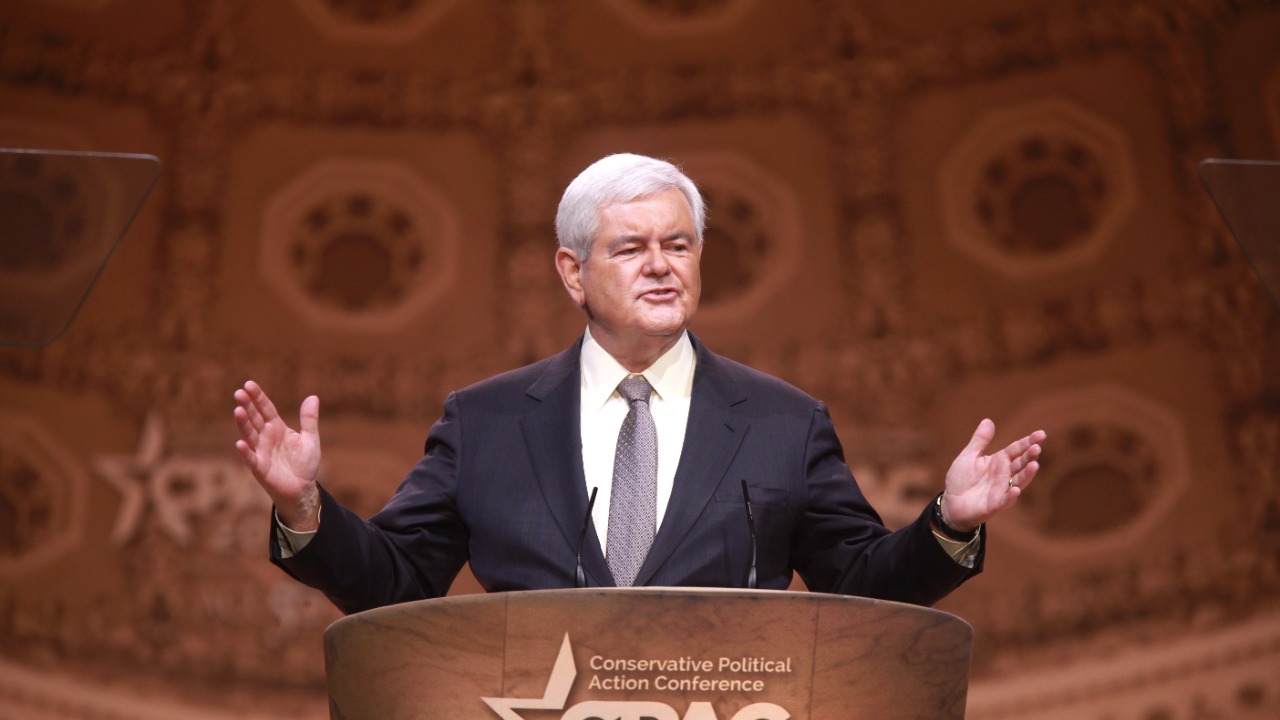
Newt Gingrich is betting that a sweeping conservative policy package, the “big beautiful bill” he keeps touting, will start reshaping the economy and the federal government in visible ways by 2026. He is framing it as a cumulative project, not a single legislative lightning strike, and he argues that if Republicans align behind a unified agenda, the payoff will arrive within the next presidential term.
I see his prediction as less a forecast than a political strategy: a way to rally activists, reassure nervous lawmakers, and set expectations for voters who want rapid change but may have to settle for incremental wins that add up over several budget cycles. The question is not only whether such a bill can pass, but whether its promised transformation can really materialize on the timeline Gingrich is selling.
The origin of Gingrich’s “big beautiful bill” mantra
Gingrich has been workshopping the phrase “big beautiful bill” for months, using it as shorthand for a comprehensive conservative package that would bundle tax, regulatory, and border measures into one marquee achievement. In televised interviews he has described it as a single, signature piece of legislation that Republicans could point to as proof they delivered on campaign promises, echoing the way past Congresses branded landmark laws as defining achievements. His language is deliberately vivid, designed to give activists and donors something concrete to imagine rather than a vague list of bullet points.
In one recent appearance, he framed the idea as a unifying project for a Republican majority, arguing that a large, integrated bill would have more political impact than a series of smaller, disconnected measures, and he tied that vision directly to the current policy fights over spending, immigration, and regulation in Washington, as seen in his comments on a primetime cable interview. The phrase has since migrated into his social media posts and speeches, where he uses it as a rallying cry for a governing agenda that he insists must be both sweeping and specific.
Why Gingrich is focused on 2026 as the payoff year
Gingrich’s insistence that the real impact will be felt by 2026 reflects his understanding of how slowly federal policy changes filter into the broader economy. Even if a major bill were signed early in a presidential term, tax code revisions, regulatory rewrites, and infrastructure or border projects would take time to implement, and he has been explicit that the “cumulative effect” is what matters. In his telling, 2026 is the point when those overlapping changes would start to show up in job numbers, wage growth, and business investment in ways that voters can feel.
He has laid out that argument in interviews where he talks about the lag between passing legislation and seeing measurable results, emphasizing that the first year is often dominated by rulemaking and legal challenges before the benefits compound in later years. In one widely shared clip, he said the combined impact of the agenda he envisions would be “amazing” by the middle of the decade, a claim he linked directly to the idea that a single, integrated bill could accelerate growth and tighten border enforcement if enacted early in a new administration, as he explained in a recent segment. That timing also conveniently aligns with the next midterm cycle, when both parties will be eager to claim credit or assign blame for economic conditions.
How the bill fits into Trump-era Republican policymaking
Gingrich is not operating in a vacuum; he is tailoring his pitch to a Republican Party shaped by Donald Trump’s presidency and his current return to the White House. The “big beautiful bill” concept borrows Trump’s own rhetorical style, echoing the former president’s habit of branding policies with memorable, superlative phrases, while also drawing on Gingrich’s experience crafting the “Contract with America” in the 1990s. The result is a hybrid: a Trump-era slogan wrapped around a more traditional legislative blueprint.
In public conversations with conservative hosts, Gingrich has stressed that the bill must align with Trump’s priorities on border security, energy production, and deregulation, arguing that a unified Republican government should move quickly to codify those themes into law rather than rely on executive orders that can be reversed. He has praised Trump’s willingness to push aggressive changes and has suggested that a comprehensive package would give the administration a clearer mandate, a point he underscored in a detailed policy discussion on a long-form video interview. By tying the bill to Trump’s agenda, Gingrich is also signaling to skeptical lawmakers that this is not a nostalgic throwback to 1990s conservatism but a vehicle for the current president’s priorities.
Inside Gingrich’s public pitch: TV hits, clips, and soundbites
Gingrich has been unusually disciplined in how he markets the idea, repeating the same core message across television, online video, and social media. On cable news, he leans into sharp, quotable lines about a single sweeping bill that would “change the country,” using the format’s tight time constraints to hammer home the branding. Those appearances are then clipped and shared widely, turning a few minutes of airtime into days of online conversation among conservative activists and commentators.
In one extended sit-down, he walked through the logic of bundling multiple priorities into one package, arguing that it would force Democrats to vote on a clear contrast between two governing visions rather than pick off individual provisions. That conversation, captured in a widely circulated social clip, shows him positioning the bill as both a policy roadmap and a political weapon. The repetition is intentional: by hearing the same phrase and timeline across platforms, Republican voters are primed to expect a flagship bill and to judge their leaders by whether it materializes.
The social media blueprint behind the “big beautiful bill”
Beyond television, Gingrich has turned his social feeds into a running commentary on what the bill should contain and why timing matters. He posts short, punchy messages that link the concept to breaking news, whether it is a border incident, an inflation report, or a regulatory fight, using each event as proof that a comprehensive fix is needed. The posts are less about detailed legislative text and more about reinforcing the idea that a single, ambitious package is the appropriate response to a series of crises.
In one recent thread, he framed the bill as the natural next step after years of piecemeal efforts, arguing that only a large-scale rewrite of federal policy can reset the trajectory of the economy and national security. That argument surfaced in a post where he urged followers to think in terms of a multi-year project culminating in visible gains by the middle of the decade, a message he amplified through a prominent platform update. By using social media this way, Gingrich is effectively crowdsourcing enthusiasm and pressure, encouraging grassroots conservatives to demand that Republican leaders commit to the same timeline and scope.
What might actually be inside a “big beautiful bill”
Gingrich has not released a full legislative draft, but his public comments point to a familiar set of conservative priorities that would likely anchor the package. He talks frequently about cutting taxes, especially for businesses and middle-income households, as a way to spur investment and ease pressure from inflation. He also emphasizes deregulation in sectors like energy and manufacturing, arguing that rolling back federal rules could unlock domestic production and lower costs for consumers.
On immigration and border security, he has suggested that the bill should include funding for physical barriers, expanded enforcement, and changes to asylum procedures, tying those measures to broader concerns about crime and national sovereignty. His focus on bundling these elements into one package mirrors the way past Congresses have used omnibus bills to combine tax, spending, and policy changes, a strategy that has been dissected in policy analyses such as a detailed review of how a prior “one big beautiful bill” moved through Congress and reshaped compliance obligations for businesses, as outlined in a comprehensive legislative case study. If Gingrich’s vision follows that template, the resulting bill would be sprawling, touching everything from corporate tax rates to permitting rules and border staffing levels.
The economic stakes of a 2026 payoff
Gingrich’s 2026 timeline is not just a political talking point; it is a bet on how quickly policy can influence growth, inflation, and investment. He argues that lower taxes and lighter regulation would encourage companies to expand hiring and capital spending, while stricter border controls would reduce pressure on public services and wages. In his view, those shifts would start to show up in macroeconomic data within a couple of years, giving Republicans a tangible record to run on in the next midterm cycle.
Economists often caution that such cause-and-effect claims are hard to prove, especially when global factors like energy prices and supply chain disruptions are in play. Gingrich, however, leans on historical analogies, pointing to past periods when tax cuts and deregulation coincided with faster growth, and he has used televised debates to argue that a similar pattern could emerge again if a comprehensive bill is enacted early in a new administration. In one policy-heavy exchange, he pressed the case that aligning fiscal, regulatory, and border changes in a single package would magnify their impact, a point he made during a detailed economic discussion. Whether markets and households respond on the schedule he predicts will depend not only on the bill’s content but also on how investors interpret the broader political climate.
Lessons from past “big bills” in Washington
Gingrich’s confidence is rooted in his own experience shepherding large legislative packages through Congress, and in the broader history of how Washington has handled sweeping reforms. From tax overhauls to health care laws, major bills have often taken years to negotiate and even longer to fully implement, with unexpected side effects emerging along the way. That history cuts both ways for his argument: it shows that big changes are possible, but also that they rarely unfold on a tidy political timetable.
In recent years, lawmakers have increasingly relied on massive, catch-all bills to move complex agendas, combining tax provisions, spending priorities, and regulatory changes into single votes. Analysts who tracked one such package noted how its size and scope created both opportunities and headaches for businesses trying to comply, a dynamic that was dissected in the same compliance-focused review. Gingrich’s proposal would likely face similar challenges, from drafting and coalition-building to implementation and litigation, which makes his 2026 deadline ambitious even if Republicans control both Congress and the White House.
The political risks if the promise slips past 2026
By putting a date on the payoff, Gingrich is also creating a benchmark that opponents can use against Republicans if the results fall short. If voters do not feel better off by 2026, or if the legislative process bogs down in intraparty disputes, Democrats will be quick to argue that the “big beautiful bill” was more marketing than substance. That risk is especially acute for swing-district lawmakers who may be wary of voting for a sprawling package that includes controversial provisions on immigration or social policy.
Gingrich seems aware of that danger, which is why he keeps stressing the cumulative nature of the changes and the need for patience. In one pointed interview, he warned that conservatives cannot expect instant gratification and must instead focus on building a durable governing majority that can sustain reforms over several years, a theme he returned to in a wide-ranging strategy conversation. Still, the more he and other Republican leaders talk about 2026 as a turning point, the more that year becomes a referendum on whether their governing experiment is working.
How Gingrich’s media tour shapes expectations on the right
The success of Gingrich’s project depends not only on legislative math but also on how conservative audiences internalize his message. By saturating television, podcasts, and online video with the same core narrative, he is training Republican voters to think in terms of a single, defining bill and a multi-year horizon for results. That framing can buy leaders time, since it encourages supporters to judge progress by whether the bill is moving rather than by immediate economic data.
He has used long-form conversations to flesh out that narrative, walking through scenarios in which a Republican Congress and the Trump administration coordinate closely on drafting and passing the package. In one extended discussion, captured in a popular online interview, he described the bill as a “contract” between the party and the country, promising that if voters deliver unified government, Republicans will deliver structural change. That message is reinforced by shorter clips and commentary segments, including a recent video appearance where he again tied the bill’s success to visible improvements by the middle of the decade. The more that narrative takes hold, the harder it will be for Republican leaders to pivot away from the promise if legislative realities force them toward smaller, piecemeal wins.
More From TheDailyOverview
- Tennessee loses $2.6B megafactory and faces major layoffs
- Retired But Want To Work? Try These 18 Jobs for Seniors That Pay Weekly
- What to do with your pennies after the U.S. stops minting them
- Home Depot CEO warns of a troubling customer trend in stores

Silas Redman writes about the structure of modern banking, financial regulations, and the rules that govern money movement. His work examines how institutions, policies, and compliance frameworks affect individuals and businesses alike. At The Daily Overview, Silas aims to help readers better understand the systems operating behind everyday financial decisions.