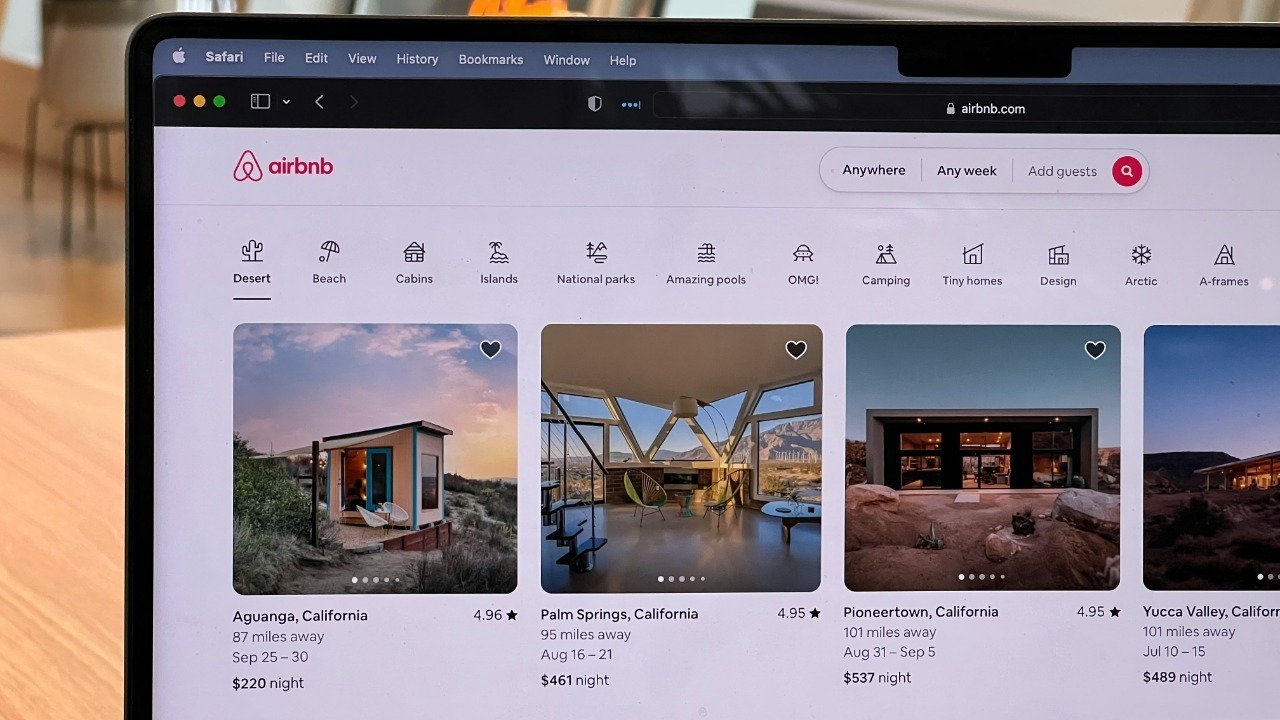
In Washington, a short-term rental dispute that spiraled into a 13‑month standoff has ended with a blunt message from the bench: not every long‑term occupant is a tenant. A D.C. judge has ruled that an Airbnb guest who refused to leave had “no legal tenancy,” clearing the way for immediate eviction and energizing a national debate over how far property protections should go. As lawmakers race to close squatter loopholes from Florida to Illinois and Texas, the case has become a touchstone for homeowners who feel the legal system has finally started to tilt back in their favor.
I see the ruling as part of a broader recalibration, not a one‑off outburst. States are rewriting statutes, governors are signing anti‑squatter bills, and courts are drawing sharper lines between legitimate tenants and opportunistic holdovers. The D.C. showdown captures the stakes: for owners facing five‑figure damage and months of lost income, the difference between “guest” and “tenant” can decide whether they keep their homes at all.
The D.C. showdown: when an Airbnb guest became a squatter
The conflict that has gripped Washington started as a routine booking on Airbnb and turned into a year‑long ordeal for the Homeowner. According to court records, the guest checked in through Airbnb, then simply stayed put after the reservation ended and remained in the property for 13 months. During that time, the owner could not re‑rent the unit or regain possession, even as the dispute shifted from a platform complaint to a full‑blown legal fight. The drawn‑out occupation highlighted how quickly a digital booking can morph into a real‑world squatting crisis when local law is unclear.
On Thursday, a D.C. judge finally cut through the stalemate, ruling that the guest had no tenancy rights and siding squarely with the Homeowner. Reporting on the case notes that the decision came after extensive argument over whether the long stay created any form of leasehold, and the court’s answer was an unambiguous no. One analysis of the case stressed that for owners, Property damage and cleanup can exceed $10,000, and lost rental income during months‑long court battles can devastate a homeowner’s finances. In that light, the D.C. ruling reads less like a technical interpretation and more like a signal that judges are increasingly wary of letting short‑term guests weaponize tenant protections.
Who is Shadija Romero, and why the judge said “no tenancy”
The guest at the center of the case, identified in court coverage as Shadija Romero, has quickly become a symbol in the squatting debate. In WASHINGTON, the judge heard testimony about Romero’s stay, her refusal to leave, and her argument that the length of her occupancy effectively transformed her into a tenant. According to one detailed account, a D.C. judge ruled on a Thursday that Shadija Romero did not have tenancy rights and ordered her removal. That finding undercut her claim that the duration of her stay alone entitled her to the full suite of tenant protections.
Separate reporting on the same dispute describes how, on December 11, a D.C. judge issued an order titled Judge Rules Against, explicitly stating that Romero had no legal tenancy. A related summary notes that On December the court concluded Romero’s status never rose above that of a guest, even though she remained in the home for more than a year. For housing advocates, the case underscores how critical that classification is: once a court decides someone is not a tenant, the path to swift eviction opens, and the balance of power shifts decisively back to the owner.
How the case became a national Rorschach test on homeowner rights
As the details of the D.C. dispute filtered out, the story quickly transcended local housing circles and became a national flashpoint. One widely shared video package framed the saga as “Airbnb Squatter Evicted After Judge Sides With Homeowner | WATCH,” highlighting how an Airbnb Squatter Evicted became a shorthand for a broader backlash. In that coverage, Fisher Jack described how an “Airbnb Guest Turns Squat” narrative resonated with owners who feel trapped by slow courts and generous tenant protections. The framing tapped into a growing perception that the legal system has been too quick to treat any long‑term occupant as a tenant, even when the underlying relationship looks nothing like a traditional lease.
At the same time, financial and consumer outlets seized on the case to illustrate the real‑world costs of squatting. One analysis from Moneywise, circulated through Yahoo, asked bluntly whether homeowner rights were finally being defended after a D.C. judge delivered what it called a “smackdown” to an entrenched guest. That piece emphasized how a single squatter can wipe out months of income and saddle an owner with thousands in repairs, and it used the D.C. ruling to argue that courts are starting to recognize those stakes. By the time Jan and other commentators weighed in, the case had become less about one dispute and more about whether the pendulum on property rights is swinging back.
Illinois and Texas: closing the squatter loophole in law, not just in court
While the D.C. judge relied on existing law to declare that Romero had no tenancy, other states are rewriting the rules outright. In Illinois, Gov. JB Pritzker has signed Senate Bill 1563, an anti‑squatter bill that the Governor and housing groups say will make it easier to remove unauthorized occupants. Before this change, Owners could not just call the police if they found a squatter at their property because the matter was considered civil in nature, forcing them into a months‑long eviction process even when the person had never signed a lease. Legal analysis of the reform notes that Illinois has now “closed the squatter loophole in 2026,” giving law enforcement clearer authority to intervene when someone occupies a home without consent.
A closer look at the Illinois overhaul shows how targeted the fix is. One briefing on the change explains that, In July, lawmakers created a new process that lets Owners seek rapid removal of intruders instead of waiting out the traditional eviction timeline, which can stretch for months. A separate legal summary titled Illinois closes the underscores that the goal is to distinguish between bona fide tenants and people who simply move in without permission. The message from Springfield mirrors the one from the D.C. courtroom: unauthorized occupation is not the same thing as a lease, and the law should treat it differently.
Florida, Texas and the “rocket docket” era
Illinois is not alone. Across the country, states are rewriting their codes to treat squatting as a fast‑track offense rather than a slow civil dispute. A survey of Legal changes notes that In Florida, Gov Ron DeSantis signed a bill that establishes criminal charges for squatting and permits law enforcement to remove unauthorized occupants more quickly. That shift reframes squatting as a potential crime rather than a purely civil matter, a move that aligns with the frustration many owners express when they discover strangers living in their homes. For landlords and small investors, the Florida model is a template for how to deter would‑be squatters before they ever test the system.
Texas has gone even further, embracing what local officials call a “rocket docket” for squatter cases. The legislative shift centers on two primary laws, including Senate Bill 1333, which allows law enforcement to immediately remove unauthorized occupants and streamlines the court process for evictions. A follow‑up report on the same reforms explains that the Texas squatter “rocket docket” is designed to compress what used to be a months‑long ordeal into a matter of days, giving landlords a direct path to regain possession. For owners watching the D.C. case, Texas offers a glimpse of what it looks like when legislatures decide that speed, not process, should define how the system handles squatters.
A wave of anti‑squatter laws, from statehouses to security firms
Zooming out, the D.C. ruling and the Illinois and Texas reforms sit inside a much larger trend. A national housing group reports that Anti‑Squatter Legislation Continues Momentum, with Squatter Legislation Continues Momentum noting that In the first half of the current legislative cycle, 30 states are considering bills and 13 have enacted new or additional laws targeting unauthorized occupants. That tally suggests the D.C. case is not an outlier but part of a coordinated push to rebalance rights after years in which owners felt hemmed in by tenant‑friendly rules. The political appeal is obvious: cracking down on squatters lets lawmakers claim they are defending ordinary homeowners without directly weakening protections for renters who follow the rules.
Private‑sector players are tracking the same shift. A security technology firm that monitors property crime reports that, as of mid‑2025, 11 States Enact Expedited, with 9 More Deliberating on similar measures to speed removal of squatters from residential properties. That same analysis warns that the trend has major implications for the multifamily housing sector, where vacant units and amenity spaces can be tempting targets. For investors and property managers, the combination of tougher laws and high‑profile rulings like the one in D.C. is reshaping how they think about risk, security and insurance.
What homeowners and hosts can actually do
For individual owners, the legal momentum is encouraging, but it does not eliminate the need for vigilance. A practical guide for landlords stresses that Each state has its own rules regarding the length of time before someone may gain certain rights, and the legal process for evicting them can differ dramatically. That means a D.C. ruling about a short‑term guest, or a Texas statute about immediate removal, may not map neatly onto a condo in Arizona or a duplex in New York. For hosts using platforms like Airbnb, the lesson is to understand local statutes before a guest ever checks in, and to act quickly if a stay starts to drift beyond the agreed dates.
Legal reference tools echo that warning. One overview of squatter rights notes that Each state has its own procedures and laws, and gives the example that squatters’ rights for 30 days in Arizona can differ sharply from squatters’ rights elsewhere. For owners, that means the question “are homeowner rights back?” has a different answer in Phoenix than it does in WASHINGTON or Chicago. The safest assumption is that the landscape is shifting fast, and that anyone renting out a spare room or an investment property needs to keep up with both court decisions and new statutes if they want to avoid becoming the next viral squatter story.
More From The Daily Overview
*This article was researched with the help of AI, with human editors creating the final content.

Elias Broderick specializes in residential and commercial real estate, with a focus on market cycles, property fundamentals, and investment strategy. His writing translates complex housing and development trends into clear insights for both new and experienced investors. At The Daily Overview, Elias explores how real estate fits into long-term wealth planning.

