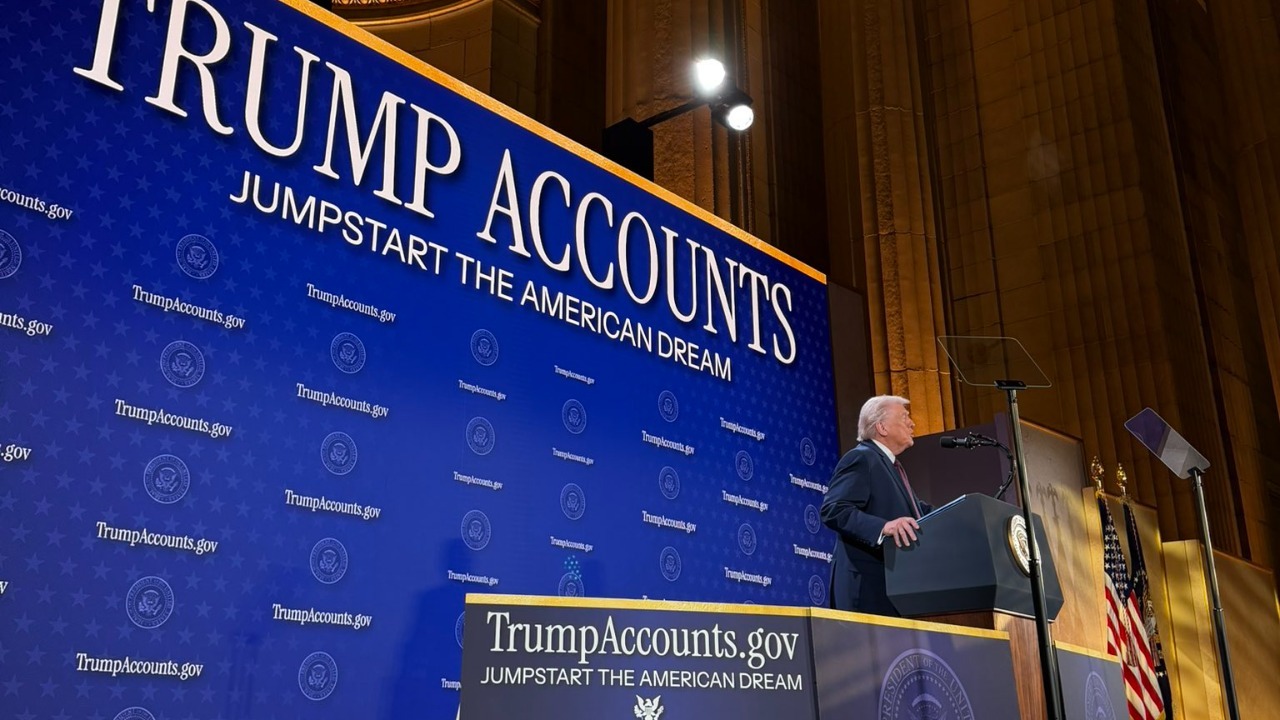
Trump Accounts are about to become a fixture in family finance conversations, promising tax breaks and federal seed money in exchange for strict rules on how and when children can touch the cash. For parents, the opportunity is real, but so are the trade offs, from early withdrawal penalties to the risk of locking up money a teenager might desperately want for college or emergencies. Understanding how these accounts work, who qualifies, and where the pitfalls lie is essential before you sign any government form or click “open account.”
At their core, Trump Accounts are IRA style savings vehicles for kids, created under President Donald Trump’s tax agenda and structured to encourage long term investing rather than short term spending. The design borrows heavily from traditional retirement accounts, but layers on new rules about eligibility, federal contributions, and age based access that parents need to weigh carefully against more flexible options like 529 plans or plain taxable brokerage accounts.
How Trump Accounts came to be and what they are
The starting point is legislative: Trump Accounts were created by the One Big Beautiful Bill Act, or OBBBA, a sweeping tax law that, among other things, added a new tax advantaged savings and investment account for children. Reporting on the law notes that on July 4 the One Big Beautiful Bill Act, often shortened to OBBBA, was signed and that this statute is what authorized the new program and its long term retirement savings focus for minors, a design that is central to how the accounts now operate for families who participate in the program, as explained in detail on On July.
Functionally, a Trump Account is described across multiple financial institutions as a new type of IRA style account for minors, owned by the child but administered by an adult. One detailed comparison table labels the “Feature” of “Who can own” and contrasts a “Trump Account” with a “Traditional IRA,” underscoring that this is a retirement vehicle specifically for children rather than a standard adult product, a distinction that is spelled out in guidance that compares a Trump Account with a more familiar Traditional IRA.
Eligibility, ownership and how the structure actually works
For parents, one of the first practical questions is who can get one of these accounts and who is really in control. Official program materials describe Trump Accounts as custodial style traditional IRAs for minors, owned by the child but administered by an adult, which means the parent or guardian acts as custodian while the child is the legal owner of the assets, a structure that is laid out in the Key takeaways from one major brokerage.
Eligibility rules are relatively broad but not universal. One large asset manager explains that a Trump account is a new type of IRA for kids and that the child must be a U.S. citizen to qualify, while also emphasizing that the account is designed for minors rather than adults, a point that is spelled out in its overview of What a Trump account is and “Who” is eligible.
Key features: tax breaks, federal seed money and long lockups
Trump Accounts are pitched as a way to jump start retirement savings for children, and the federal government is putting real money behind that pitch. Tax and planning specialists note that the program includes a 1,000 dollar federal seed contribution for eligible children, with the accounts expected to be available by mid 2026, a benefit that is highlighted in a technical breakdown of Trump Accounts, Eligibility and other Key planning points.
On the tax side, the accounts are described as IRA style, which means contributions can be tax advantaged and investment growth is sheltered as long as the money stays inside the account. One widely cited FAQ explains that Trump Accounts are IRA style savings accounts for children, with contributions that follow traditional IRA rules and restrictions on withdrawals before a child turns 18, a structure that is spelled out in a consumer facing What parents need to know style Trump Accounts An FAQ that repeatedly refers to each account as a Trump Account and an IRA.
Withdrawal rules, penalties and what happens at 18
The flip side of those tax benefits is a tight set of withdrawal rules that parents need to understand before they lock up money. One major brokerage that has published guidance on these accounts notes that generally no withdrawals are allowed before the child reaches a specified age, and that early distributions are subject to a 10 percent penalty, language that appears in its overview of What to Know About Trump Accounts and the OBBBA rules.
Separate planning guidance stresses that Trump Accounts are a newly created retirement savings vehicle for minors and that when the beneficiary turns 18, the account transitions and the child gains control, which can change how distributions are handled and how the assets are invested. That handoff at adulthood, and the potential for confusion during the program’s early years, is a key insight in a technical summary that explains Key Trump Accounts rules and what happens “When the” child reaches majority.
How and when accounts will actually open
Even as the law is in place, the rollout is still in progress, which matters for parents trying to plan contributions or time sensitive goals. The official program site, reachable through the federal portal at trumpaccounts.gov, is the central hub for policy details, forms and program updates, and it is the site that state and local coverage repeatedly points to for authoritative information on timing and eligibility.
Parents will not be able to simply walk into a bank and open a Trump Account without paperwork. One detailed FAQ explains that once a parent submits Form 4547, starting in May 2026 the Treasury Department or its agent will open the account and notify the family that a Trump account has been opened, a process that is described in a section that begins with “When” and “Once” and spells out the role of the Form 4547 and the Treasury Department in getting these accounts live.
Where to open one and how financial firms are positioning them
Major investment firms are racing to support Trump Accounts, but they are also careful to remind parents that traditional IRA rules still apply. One large brokerage describes Trump Accounts as a new, custodial style traditional IRA for minors, owned by the child but administered by an adult, and emphasizes that beyond the special federal seed contribution, traditional IRA rules apply to contributions, investment choices and withdrawals, a framing that appears in its Trump Accounts IRA overview.
Another major firm frames the product as part of a broader education effort, explaining what a Trump account is, who is eligible and how it compares with other child focused savings tools, while reiterating that the child must also be a U.S. citizen. That positioning, which walks through “What” a Trump account is and “Who” can use it, is laid out in its guide to Trump accounts for kids.
The hype, the restrictions and what parents should watch for
Trump Accounts have generated intense buzz, in part because they combine federal money with the promise of long term compounding for children. Consumer finance coverage notes that these are highly anticipated accounts and asks whether they will live up to the hype, while stressing that withdrawals from the account are restricted and that parents need to understand those limits before committing family savings, a tension that is explored in a piece that opens with “Here’s what to know” and walks through Here is what Trump Accounts can and cannot do.
Other explainers echo that caution, describing Trump Accounts as IRA style savings accounts for children and warning that money cannot be freely tapped before a child turns 18, which may make them a poor fit for families who need flexibility. One widely circulated FAQ, which repeatedly uses the phrases “What” parents need to know, “Trump Accounts” and “An FAQ,” underscores that each Trump Account is an IRA style vehicle with strict rules on access before adulthood, a point that is made explicitly in its description of a Trump Accounts An FAQ that defines each Trump Account as an IRA.
More From The Daily Overview
*This article was researched with the help of AI, with human editors creating the final content.

Silas Redman writes about the structure of modern banking, financial regulations, and the rules that govern money movement. His work examines how institutions, policies, and compliance frameworks affect individuals and businesses alike. At The Daily Overview, Silas aims to help readers better understand the systems operating behind everyday financial decisions.