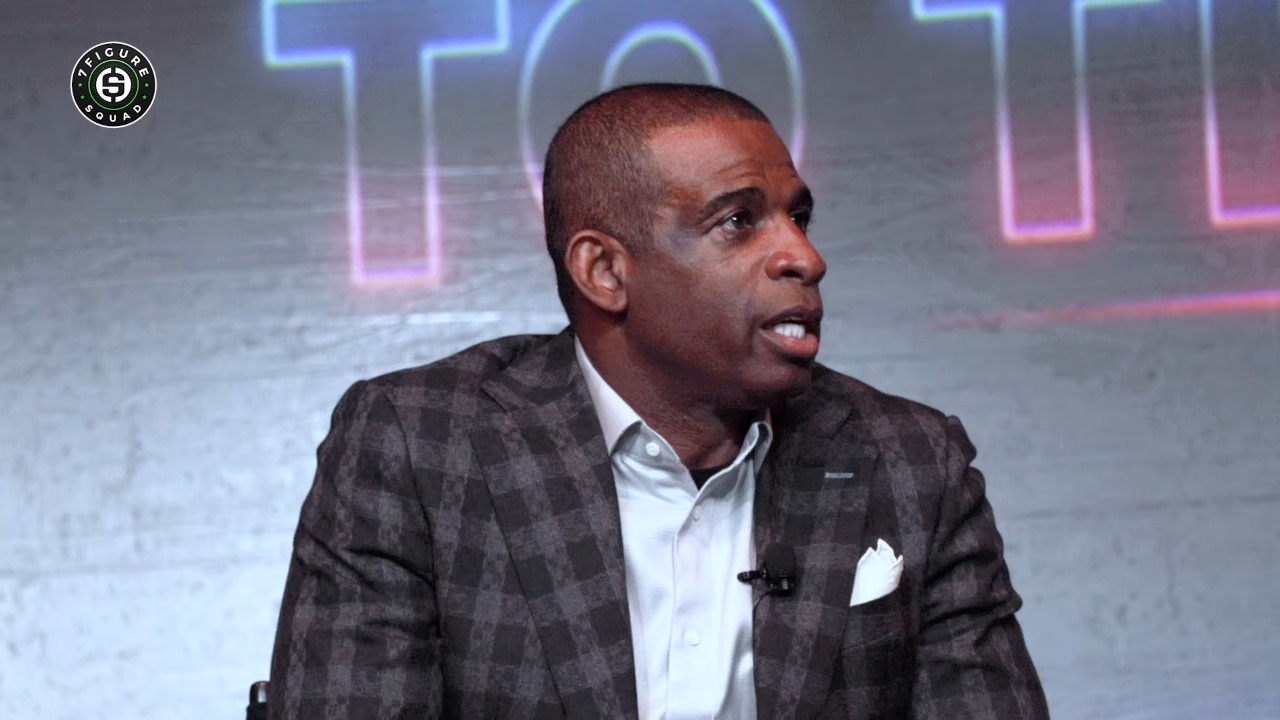
The Deion Sanders experiment in Boulder was always going to be expensive, but the scale of Colorado’s projected shortfall has turned a bold football bet into a campus-wide budget crisis. With a deficit pegged at roughly $27 million and tempers flaring over who pays for what, the program that once symbolized a new era of swagger is now being held up as a case study in how fast the economics of college sports can spin out of control.
Instead of arguing over play calls or recruiting rankings, Colorado stakeholders are now fighting about line items, donor promises, and whether the university misread the financial risks of tying its athletic future so tightly to one coach. The backlash around Deion Sanders is not just about wins and losses, it is about whether the Buffaloes built a business model that never truly added up.
The $27 million hole and how it formed
The headline number that has everyone in Boulder on edge is the roughly $27 million gap between what Colorado athletics expects to bring in and what it has committed to spend. I see that figure as the clearest sign that the Deion Sanders era has pushed The Univ of Colorado into a financial posture that looks more like a professional franchise than a public institution. The athletic department is projected to finish the coming fiscal year with about $136.7 million in revenue against $163.7 million in expenses, a mismatch that leaves little room for error and even less for surprise costs.
Internal projections show that the department is “projected to lose” money as it chases the kind of football relevance Sanders was hired to deliver, with player-related costs and his own compensation driving a significant share of the increase. The Univ has mapped out a budget in which football sits at the center of a sprawling cost structure, and the gap between $136.7 million and $163.7 million is now being treated as a warning that the model is not self-sustaining. Those figures, detailed in a report on how CU projects record deficit, have become the shorthand for a crisis that is no longer theoretical.
Sanders’ salary and the cost of chasing a star
From the moment Colorado hired Deion Sanders, the university signaled that it was willing to pay a premium for star power, and the current budget reflects that choice. I view his contract as both a catalyst for the Buffaloes’ national relevance and a central driver of the current shortfall, because the school did not just add a high-profile coach, it nearly doubled what it was willing to spend on the position. That decision rippled through the rest of the department, forcing Colorado to build a financial ecosystem around one man’s brand.
Reporting shows that Colorado nearly doubled the pay for Sanders after his first season in 2023, a move that locked the school into a far more aggressive compensation structure at the exact moment the broader economics of college sports were shifting. The Athletic director, Rick George, who helped engineer that deal, has already announced he will step down at the end of the academic year, leaving behind a contract that is now inseparable from the deficit conversation. The same analysis that details the pay bump for Sanders and the looming leadership change in the Athletic department underscores how much of the red ink is tied to that decision, with Deion Sanders’ Colorado football contract now a lightning rod for critics who see the deficit as self-inflicted.
Player costs, NIL pressures, and the new arms race
Even if Sanders’ salary grabs the headlines, the deeper structural issue is the escalating cost of building and maintaining a competitive roster in the NIL era. I see Colorado’s budget as a reflection of a broader arms race, where schools are pouring money into support staff, facilities, and indirect NIL infrastructure to keep pace with rivals. Those investments are often justified as necessary to attract transfers and high school stars, but they also lock athletic departments into spending trajectories that are hard to reverse.
Colorado’s own financial breakdown points to player-related expenses as a major slice of the deficit pie, with the third aspect of the shortfall described as not specific to Colorado but still the largest chunk of the problem. That framing matters because it shows how the Buffaloes are both unique, thanks to Sanders’ profile, and typical of a system where roster costs are exploding faster than traditional revenue streams. In explaining why Colorado is facing financial troubles ahead after its worst season under Sanders, one analysis notes that this third aspect is shared across the sport, even as Colorado insists it is “not worried about that piece.” The tension between those reassurances and the numbers is captured in a breakdown of how Colorado’s worst season under Sanders has intersected with the sport’s broader financial pressures.
Revenue reality: when hype stops matching the books
For a time, the Deion Sanders effect looked like it might pay for itself, with sellout crowds, surging merchandise sales, and national TV windows that turned Colorado into appointment viewing. I see the current budget, however, as evidence that the initial hype has not translated into a stable revenue base that can keep up with the spending curve. The projected income of $136.7 million is substantial by college standards, but it still trails the $163.7 million in planned expenses, which means the program is living beyond its means even after accounting for the Coach Prime bump.
That mismatch is laid out starkly in a report that notes the projected revenue for fiscal year 2026 is $136.7 million compared to $163.7 million in expenses, a gap that has forced Colorado to announce “cutting” decisions that reach beyond football. Making matters worse, the same analysis describes how internal skepticism is growing over whether donors and external partners can reliably cover the difference, especially when contributions to athletics are discretionary and vulnerable to fatigue. The sense that the Sanders project has entered a more fragile phase is captured in a breakdown of how $136.7 m in revenue against $163.7 m in expenses has fueled internal tension and forced the school to rethink its assumptions.
Transparency fights and who is really paying
As the deficit has grown harder to ignore, the question that keeps surfacing is not just how much Colorado is spending, but who is actually footing the bill. I see the transparency battle around Deion Sanders and his players as a sign that the university has leaned heavily on private money and creative accounting, while resisting full disclosure about the mechanics. That reluctance has only intensified criticism from faculty, lawmakers, and fans who want to know whether public funds are indirectly propping up a high-risk football gamble.
Earlier this year, The University of Colorado faced scrutiny over how it was paying for Deion Sanders and the roster he overhauled, with open records requests probing the flow of money from donors, collectives, and other outside entities. Transparency was flagged as a general concern, particularly around whether the university could or would show the money for this expense, and officials signaled that information would be carefully reviewed before being released. The pushback over those limits on disclosure is detailed in a report on why Colorado’s transparency at issue, which has become a central thread in the backlash against the current financial plan.
“Asked who would be paying”: the political optics
When a university’s athletic department runs a deficit of this size, the debate quickly spills beyond the sports pages and into campus politics and statehouse hearings. I see Colorado’s situation as particularly combustible because officials have struggled to give clear, consistent answers about who ultimately covers the shortfall if donor pledges fall short. That ambiguity has fed a narrative that the school is gambling with money it does not have, while hoping that future success on the field will bail it out.
In one telling exchange, Asked who would be paying for these expenses if not the university, spokesman Steve Hurlbert responded that “The mechanics of that are still being worked out,” a line that has since been cited as evidence that the financial plan was never fully baked. Critics have seized on that admission to argue that the Sanders project has put the school in financial peril, with the risk that academic priorities could be squeezed if the athletic department cannot close the gap. The unease around that answer is captured in coverage of how Deion Sanders is under fire for Colorado’s massive financial loss, with Steve Hurlbert’s comment now a shorthand for the uncertainty hanging over the budget.
What the deficit means for Sanders’ future in Boulder
Any time a coach is tied so directly to a financial crisis, questions about job security follow, and Deion Sanders is no exception. I see the $27 million shortfall as a complicating factor rather than an immediate trigger for change, because Colorado still has to weigh the cost of moving on from Sanders against the potential upside if he can turn the program around. The buyout math, donor relationships, and recruiting pipeline all make it difficult to treat him like a typical coach on the hot seat.
Analysts have already started to frame the concerning financial report as a key variable in Sanders’ long-term future at Colorado, noting that Boulder is squeezing its budget at the same time it is trying to sustain the Coach Prime experiment. According to one breakdown, the 2025 fiscal year projections have raised alarms about whether the current model is sustainable, even as some boosters remain convinced that Sanders is the only figure capable of keeping Colorado nationally relevant. That tension is laid out in an examination of What Concerning Financial Report Means For Future Of Deion Sanders, Colorado, which describes how Boulder is trying to reconcile its budget squeeze with the political and financial capital already invested in its head coach.
Internal cuts, campus tension, and collateral damage
As the numbers have hardened, Colorado has started to move from projections to concrete cuts, and the fallout is being felt well beyond the football facility. I see these reductions as the clearest sign that the Sanders-driven deficit is no longer an abstract concern, but a force reshaping priorities across the athletic department and potentially the wider campus. When administrators talk about “cutting” decisions, they are acknowledging that someone, somewhere, is going to feel the pain of the $27 million gap.
Reports describe how the projected revenue of $136.7 million against $163.7 million in expenses has already fueled internal tension, with some stakeholders questioning whether the promised external funding will materialize at the scale needed. Making matters worse, there is growing skepticism inside the university about relying on discretionary contributions to athletics at a time when donors may be tiring of constant asks. The sense that the crisis is forcing hard choices is woven through coverage of how Colorado announces a ‘cutting’ decision as the $27M crisis fuels internal tension, with staff, non-revenue sports, and campus relationships all caught in the crossfire.
A cautionary tale for the next big splash hire
Stepping back from the day-to-day drama, I see Colorado’s $27 million budget meltdown as a warning to every school tempted to chase a quick football fix with an expensive, celebrity coach. The Deion Sanders era has delivered undeniable visibility, but the current deficit shows how fragile the underlying economics can be when spending races ahead of guaranteed income. In a landscape where NIL, player costs, and coaching salaries are all climbing, the Buffaloes’ predicament illustrates how easily a bold bet can morph into a structural problem.
Colorado is hardly alone in facing these pressures, yet its combination of a high-profile coach, aggressive spending, and unresolved questions about who pays the bills makes it a particularly vivid case study. The Univ’s projections of $136.7 million in revenue against $163.7 million in expenses, the scrutiny over how The University of Colorado funds Deion Sanders and his players, and the pointed questions Asked of spokesman Steve Hurlbert all feed into a narrative that other athletic departments are watching closely. As Dec budget meetings unfold and stakeholders tally the true cost of the Sanders experiment, the lesson for the rest of college sports is simple: if the math does not work on paper, it will eventually catch up on the field and in the boardroom.
More From TheDailyOverview
- Tennessee loses $2.6B megafactory and faces major layoffs
- Retired But Want To Work? Try These 18 Jobs for Seniors That Pay Weekly
- What to do with your pennies after the U.S. stops minting them
- Home Depot CEO warns of a troubling customer trend in stores

Grant Mercer covers market dynamics, business trends, and the economic forces driving growth across industries. His analysis connects macro movements with real-world implications for investors, entrepreneurs, and professionals. Through his work at The Daily Overview, Grant helps readers understand how markets function and where opportunities may emerge.