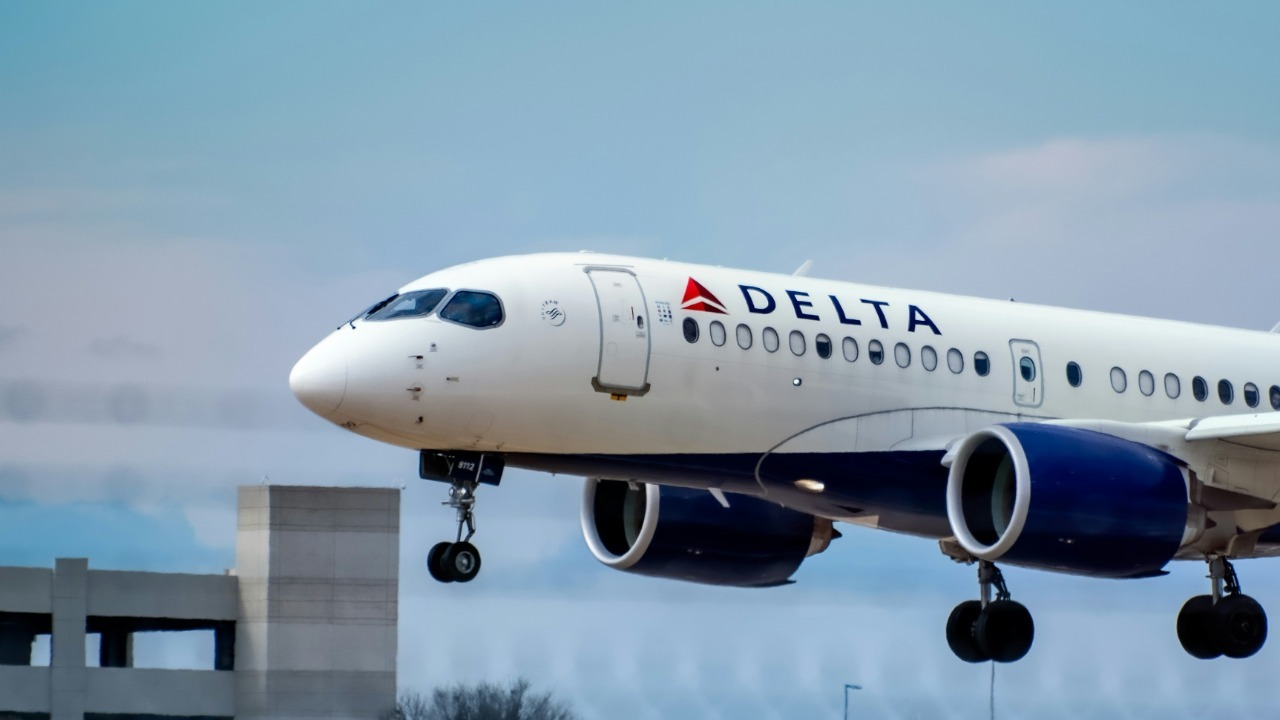
Delta Air Lines is leaning hard into the travel habits of affluent flyers, and its chief executive says that strategy is putting record profitability back within striking distance. After a year in which high-end cabins outperformed the rest of the plane, the carrier is betting that premium demand, disciplined capacity and a refreshed fleet will push earnings to new highs again.
At the center of that bet is CEO Ed Bastian’s conviction that the top tier of the market is not just resilient but expanding, even as more price-sensitive travelers pull back. The result is an airline that increasingly looks like a luxury brand with a large coach section attached, rather than a mass carrier with a few rows of extra comfort at the front.
Premium demand powers a new profit cycle
Ed Bastian is telling investors that Delta Air Lines is entering another leg of its profit cycle, with earnings poised to climb roughly one fifth on the back of strong travel demand at the top of the cabin. In a briefing highlighted by Jan, the CEO said Delta Air Lines could see earnings jump 20% this year as travel demand surges, framing that outlook as a realistic path back toward record results rather than a stretch goal, and tying it directly to the spending power of high-end customers who are still willing to pay for comfort and flexibility even as other consumers trade down.
That confidence is rooted in the company’s latest scorecard, which shows Delta Air Lines Announces December Quarter and Full Year performance that management describes as strong and resilient across key metrics. In its latest Financial Results, the airline reported solid profitability and reiterated that it is targeting higher earnings again in 2026, using its balance sheet strength to keep investing in product and technology while still returning cash to shareholders, a combination that only works if the premium revenue engine keeps humming.
When first class beats coach on the revenue line
The clearest sign of that engine is what has happened to the mix of ticket sales. For the first time, Delta Air Lines generated more revenue from its premium cabins than from the main cabin, a milestone that underscores how much of its business now depends on travelers who sit in first class, business class and extra-legroom seats. Reporting on the latest quarter shows that main cabin revenue decreased while premium cabin revenue increased to the point that premium cabin revenue exceeds main cabin revenue, a reversal of the traditional hierarchy that used to define airline economics.
That shift is not a one-off quirk, it is the product of deliberate design choices. Analysts who dug into the numbers noted that Delta is configuring new aircraft with a higher share of premium seats and that many of its narrow-body jets now carry more than 20 seats in those higher-yield sections, a layout that reflects management’s belief that the front of the plane will stay full. As one Bottom line assessment of Delta put it, the airline is structurally tilting its fleet toward customers who are willing to pay a multiple of the basic fare for more space, better service and extra perks.
A fleet built for high-yield flyers
To keep that premium machine running, Delta is reshaping the hardware it flies. The company has committed to a new long-haul order book that includes Boeing 787-10 Dreamliners, a widebody type that gives it more flexibility on international routes where premium demand is strongest. In a note shared by Jan, Delta highlighted that it has made a great investment in its future with its order of Boeing 787-10 Dreamliners, emphasizing that the 787 family will help it serve lucrative business and leisure markets with cabins that can be heavily skewed toward higher-yield seats.
Those jets are part of a broader fleet renewal that management says will support both profit growth and cost control. In its latest outlook, Delta Air Lines detailed strong 2025 results and said it expects higher profits as it brings in new Boeing planes that burn less fuel and support more premium-heavy layouts, a strategy that is meant to offset industry-wide cost pressures. The company has also told investors that it targets 20% earnings growth as profits surge and fleet renewal accelerates, with Delta Air Lines arguing that newer aircraft will help it manage cost pressures across the industry while keeping momentum in high-yield segments where demand is still robust.
The K-shaped economy at 35,000 feet
What is happening inside Delta’s cabins mirrors a broader split in the economy. As Jan, a News Editor who tracks corporate earnings, pointed out in coverage of Delta’s guidance, the airline’s performance captures the K-shaped economy in which wealthier households keep spending on experiences while others feel squeezed. That divergence shows up in Delta’s booking curves, where high-end travel demand remains strong even as some discretionary trips in the cheapest fare buckets get deferred or downgraded, and it is why Bastian can talk about record earnings being within reach again without sounding out of step with the broader macro picture.
Delta’s own commentary reinforces that narrative. In a detailed look at the company’s outlook, analysts noted that Delta, the biggest US carrier by market value, projects a 20% profit increase that is driven largely by premium travel and by customers who are less sensitive to airfare inflation, a pattern that one report linked to the same K-shaped dynamic. A related analysis described how Delta is effectively turning its aircraft into a cross-section of the 2026 economy, with the front of the plane filled by travelers whose incomes and credit lines have grown faster than inflation and the back of the plane reflecting households that are still watching every dollar.
Guidance, cash returns and the American Express engine
Behind the rhetoric about record earnings is a detailed financial plan. In its latest investor update, Delta Air Lines reported that after reinvesting $4.3 billion in the business, it still expects to generate free cash flow of $3 to $4 billion, a range that gives it room to pay down debt and return capital while funding cabin upgrades and airport projects. The company’s formal guidance for the first quarter of 2026 calls for revenue to increase by 5% to 7% compared to the prior year and for earnings per share to rise as well, according to a summary that framed Delta Air Lines as entering the new year with strong momentum despite some macro and geopolitical headwinds.
Ed Bastian has described that outlook as upbeat, pointing to record booking trends at the start of the year while stressing that the airline is maintaining discipline on capacity and costs. In remarks captured by Jan, Bastian also highlighted the importance of Delta’s long-standing partnership with American Express, a co-brand relationship that delivers billions in high-margin revenue from card fees and spending by affluent customers who tend to favor premium cabins. Another analysis of the company’s forecast, titled Delta Air Lines Issues Optimistic Forecast: Strong Premium Travel Demand Could Drive Over Profit Growth in 2026, noted that Delta Air Lines CEO Ed Bastian is counting on more than 20% Profit Growth in 2026 even though the latest quarter fell below some market expectations, a reminder that management is leaning on structural revenue drivers rather than one-off tailwinds.
More From TheDailyOverview

Alex is the strategic mind behind The Daily Overview, guiding its mission to uncover the forces shaping modern wealth. With a background in market analysis and a track record of building digital-first businesses, he leads the publication with a focus on clarity, depth, and forward-looking insight. Alex oversees editorial direction, growth strategy, and the development of new content verticals that help readers identify opportunity in an ever-evolving financial landscape. His leadership emphasizes disciplined thinking, high standards, and a commitment to making sophisticated financial ideas accessible to a broad audience.

