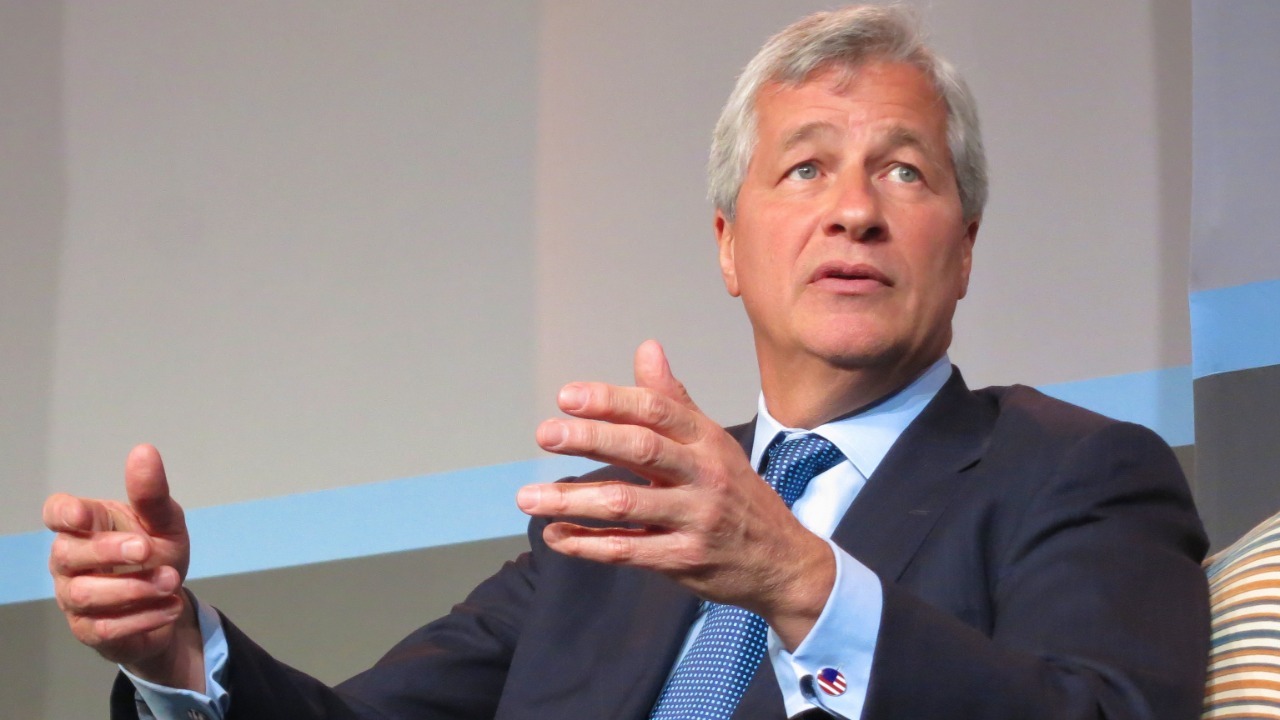
Jamie Dimon is not usually shy about criticizing regulators, but his latest warning is aimed squarely at the political system itself. As the Department of Justice pursues a criminal probe into Federal Reserve Chair Jerome Powell, Dimon is arguing that dragging the central bank into a subpoena fight would be a “very bad idea” for markets, inflation and the broader economy. In a moment when the White House is pressuring the Fed while also demanding lower borrowing costs, his intervention crystallizes a deeper worry on Wall Street about how far this confrontation might go.
At stake is more than the reputation of one central banker. The clash pits President Donald Trump’s Justice Department against a long standing norm of Federal Reserve independence, and it is unfolding just as investors, homebuyers and businesses are trying to gauge the path of interest rates. Dimon’s message is that if politics overwhelms that norm, the cost will be paid in higher mortgage rates, weaker confidence and a potential hit to growth.
The DOJ probe that rattled the Fed
The Department of Justice has launched an investigation into Jerome Powell that has quickly escalated from a legal matter into a test of institutional boundaries. According to reporting on the probe, the Department of Justic is examining aspects of the Federal Reserve’s internal decision making, a move that many in finance view as an intrusion into monetary policy rather than a routine enforcement action. Chase CEO Jamie Dimon has been explicit that he sees this as a threat to the central bank’s ability to operate without fear of political retribution, warning that the investigation itself risks undermining confidence in the Fed’s judgment on inflation and interest rates, as detailed in coverage of the Department of Justic.
The reaction from the global banking community has been unusually unified, reflecting how central bankers and large lenders alike see the Fed as a cornerstone of financial stability. During a fourth quarter earnings call, Jamie Dimon, the longtime head of JPMorgan, signaled “full solidarity” with Powell and framed the probe as a potential constitutional crisis if it leads to direct interference with monetary policy decisions. That warning came as markets were already on edge, with some investors interpreting the investigation as a sign that political leaders might try to influence rate setting through legal pressure, a concern underscored in accounts of how Jamie Dimon addressed investors.
Dimon’s defense of Powell and Fed independence
Dimon’s argument is rooted in a simple premise: modern economies work best when central banks can make unpopular decisions without fear of subpoenas or political retaliation. As CEO of JPMorgan Chase, he has stressed that “Everyone we know believes in Fed independence,” casting support for Powell as a mainstream position across the financial sector rather than a niche Wall Street defense. In his view, the Justice Department’s move risks blurring the line between legitimate oversight and pressure on a central bank that is still trying to steer inflation back toward target, a point he has made while publicly backing Powell and emphasizing his role as Chase CEO Jamie.
His defense of Powell has also been framed as a warning to the White House. Dimon has argued that President Trump is effectively undercutting his own economic goals by allowing the probe to proceed in a way that could intimidate the Fed. He has pointed out that President Trump is “shooting himself in the foot” because he is trying to bring down mortgage rates and help first time homebuyers at the same time his administration is creating uncertainty around the institution that sets those rates. That contradiction, he suggests, could ultimately make it harder for the Fed to cut borrowing costs if markets begin to price in political risk, a concern that has been highlighted in analysis of how President Trump is handling the confrontation.
Why subpoenas are a “very bad idea”
Dimon’s sharpest criticism is reserved for the prospect of grand jury subpoenas aimed directly at the Federal Reserve or Powell himself. He has warned that serving the central bank with such legal demands is “not a good idea,” arguing that it would cross a line from oversight into intimidation. In his telling, the mere act of compelling internal communications or deliberations could chill the kind of frank debate that policymakers need when deciding whether to raise or cut rates, and it could also invite future administrations to use similar tactics whenever they dislike the Fed’s decisions, a scenario he has flagged in interviews about why a Federal Reserve subpoena would be destabilizing.
There is also a more immediate economic risk embedded in his warning. Dimon has suggested that aggressive legal action against Powell could backfire by driving up interest rates rather than pushing them down, because investors would demand a higher premium to hold U.S. assets if they believe the Fed is being politicized. He has tied that risk directly to inflation, cautioning that undermining the central bank’s credibility could stoke price pressures instead of relieving them, especially if markets begin to doubt the Fed’s willingness to tighten policy when needed. That is why he has framed subpoenas as a threat not only to institutional norms but also to everyday borrowers, from families shopping for 30 year mortgages to small businesses relying on credit lines that are sensitive to the Fed’s benchmark rate, a concern echoed in his comments that the probe could drive up interest.
Trump’s counterattack and the political stakes
President Donald Trump has not taken Dimon’s criticism quietly, turning the dispute into a very public clash between the White House and one of the country’s most influential bankers. In his response, Trump has defended the Department of Justice investigation into the Fed and pushed back on the idea that it threatens central bank independence, while also lashing out at Chase CEO Jamie Dimon personally. The president’s allies have framed the probe as a legitimate effort to scrutinize Powell’s conduct, but critics see it as part of a broader pattern of attacks on institutions that resist political pressure, a divide captured in accounts of how President Donald Trump has defended the Department of Justice.
Trump’s rhetoric about Powell has grown more personal as the controversy has intensified, with the president publicly venting frustration about the Fed’s handling of interest rates. His comments have come even as bipartisan criticism of the investigation and support for the Fed’s independence have continued to grow, including from figures who are usually reliable supporters of Trump. That split underscores how unusual it is for a president to be seen as pressuring the central bank through law enforcement channels, and it has raised questions about how far the administration might go if Powell resists. The political stakes are heightened by the fact that Trump is simultaneously demanding lower rates to support growth, even as his attacks on the Fed and Powell, described in reports on how Trump has targeted the Fed, risk making that outcome harder to achieve.
Wall Street’s broader alarm over the probe
Dimon is not alone in warning that the Justice Department’s approach could backfire. Across Wall Street, executives have argued that turning a policy dispute into a criminal matter could unsettle markets and weaken the dollar by signaling that the United States is willing to politicize its central bank. Chase CEO Jamie Dimon has gone further than most, explicitly warning that the investigation could stoke inflation and undermine the Fed’s ability to keep prices stable, a concern that has been amplified in reporting on how he has slammed the Trump administration’s strategy. In that context, his warning that subpoenas are “not a good idea” is less a legal argument than a market signal.
More From TheDailyOverview

Alex is the strategic mind behind The Daily Overview, guiding its mission to uncover the forces shaping modern wealth. With a background in market analysis and a track record of building digital-first businesses, he leads the publication with a focus on clarity, depth, and forward-looking insight. Alex oversees editorial direction, growth strategy, and the development of new content verticals that help readers identify opportunity in an ever-evolving financial landscape. His leadership emphasizes disciplined thinking, high standards, and a commitment to making sophisticated financial ideas accessible to a broad audience.

