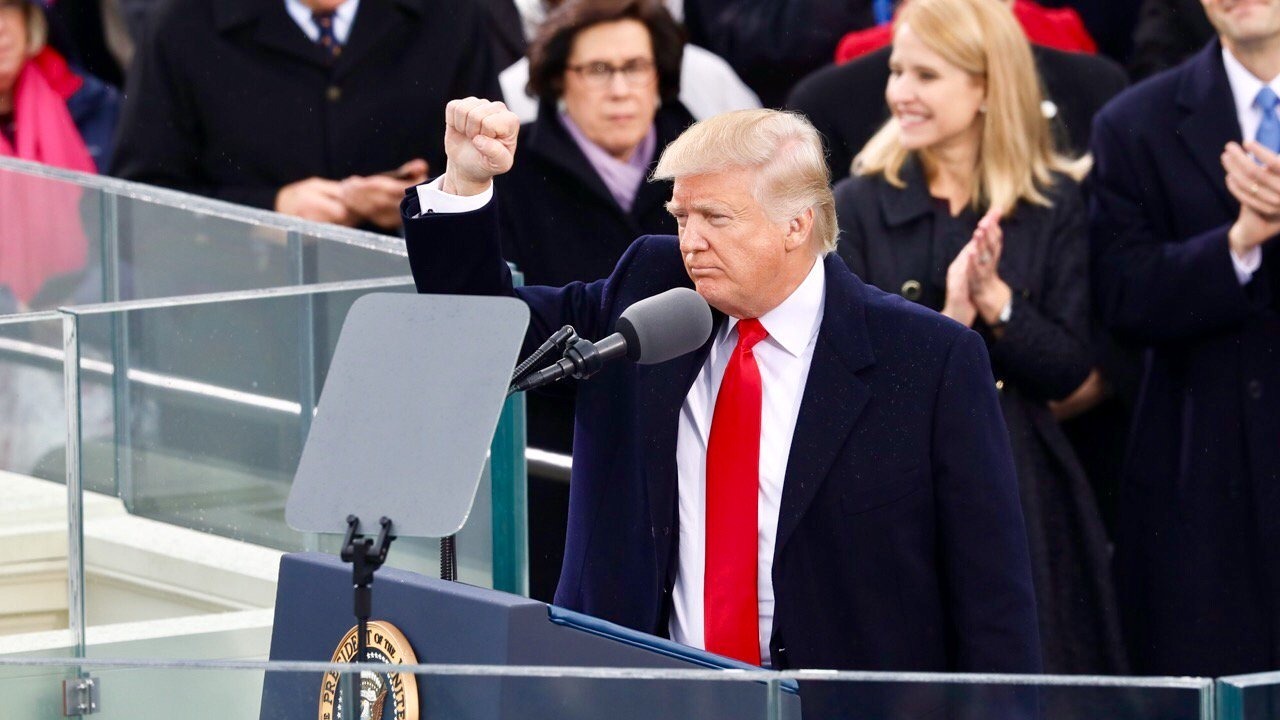
President Donald Trump got the voter identification vote he demanded, and every Republican who showed up backed it. The Senate tally still ended in defeat because 52 votes were not enough to clear a 60-vote procedural wall.
Democrats and the chamber’s two voting independents held together, blocking the Senate from even taking up the bill before lawmakers left Washington for their August break. The proposal was not defeated on a final vote and it did not become law, but its path forward is now frozen unless the Senate finds eight more votes or changes the procedure around it.
Fifty-Two Yes Votes Could Not Open Debate
The Senate’s official record shows the cloture vote at 4:36 a.m. on August 8. The question was whether to end debate on the motion to proceed to S.5271, the photo-identification bill. Fifty-two senators voted yes, 46 voted no and two did not vote.
The vote needed three-fifths of the Senate, or 60 votes with no vacancies, so the motion was rejected. Every Republican who participated voted yes. Every participating Democrat voted no, as did independent Sens. Bernie Sanders of Vermont and Angus King of Maine. Republican Leader Mitch McConnell and Democratic Sen. Peter Welch did not vote.
That distribution makes the conflict unusually clean. Republicans supplied 52 votes for consideration, a clear majority of the full Senate, but the procedural threshold allowed 46 opponents to stop the chamber. The bill never reached an up-or-down vote on passage.
The exact claim matters. S.5271 was blocked at the motion-to-proceed stage; it was not formally killed, withdrawn or voted down on final passage. It remains a proposal unless Congress acts again. For the moment, however, the Senate has refused to take it up, and the calendar has moved into a recess period rather than another immediate attempt.
S.5271 Put Photo Identification at the Center
The official Congress.gov record for S.5271 describes it as a bill to amend the Help America Vote Act of 2002 to require voters to provide photo identification. That is the measure on the roll call, and it is narrower than every election-integrity proposal that has circulated under the SAVE America banner.
The distinction prevents a procedural defeat from being inflated into a vote on provisions that were not before the Senate. Saturday’s roll call was about opening debate on the photo-ID bill. It was not a final vote on proof-of-citizenship registration rules, mail-ballot deadlines or every other element associated with the administration’s broader election package.
The core question was still unmistakable: should a voter be required to show photographic identification in federal elections? Republicans forced that question into the record. Democrats stopped it before debate could begin.
That gives both parties a vote they will carry into the next election. Republicans can say a majority backed taking up photo ID and that the filibuster threshold stopped it. Democrats cannot say the proposal never received attention; the names and positions are now fixed in the Senate record.
An Earlier Blockade Set Up the August Showdown
Ohio Sen. Jon Husted had already tried to move voter-ID legislation through the Senate earlier in the year. His office said in June that Democrats blocked unanimous consent for that version, which would have required identification while recognizing several forms of government-issued or state-approved ID.
That earlier bill and S.5271 should not be treated as identical texts. What they share is the governing principle and the obstacle: Republicans want a federal identification requirement, while Democrats have enough votes under current Senate rules to prevent the chamber from reaching passage.
The August roll call turned a dispute that could be dismissed as a unanimous-consent maneuver into a full numerical test. This time, every senator had a chance to be counted on cloture. The result was 52 in favor of moving forward and 46 opposed, with the 60-vote rule deciding the outcome.
For conservative voters, the frustration is obvious. A proposal supported by every participating Republican and a majority of the Senate is stalled because election legislation remains subject to the same supermajority barrier that has stopped much of the party’s agenda.
Trump Made the Bill a Test of Republican Power
The White House has spent months treating election rules as a priority rather than a side issue. In March, it called the broader SAVE America Act a central election-reform package and argued that proof of citizenship and photo identification enjoy wide public support.
Senate Republicans then made the immediate case for the narrower bill. Sen. John Thune’s office argued that voter ID is a commonsense standard and presented the requirement as comparable to identification already demanded in ordinary areas of American life.
Those arguments did not change the cloture arithmetic. They did change the political meaning of the vote. Trump wanted Republican senators on record, and the caucus delivered every available vote. The failure came from the Senate’s threshold, not from a Republican rebellion.
That is a sharper result than a quiet decision to avoid the subject. It gives the White House a clear adversary and a clean number: 52 senators supported moving forward, yet the proposal remained eight votes short of cloture.
The Recess Locks In the Defeat for Now
The Senate’s 2026 tentative schedule marks August 10 through September 11 as a state work period. Senators can return to the issue later, but there was no second vote waiting behind Saturday’s rejection before the scheduled break.
The next move is therefore political before it is legislative. Republicans can try to pressure Democrats in competitive states, negotiate changes that attract eight more votes or reopen the Senate-rules fight. None of those possibilities has happened yet, and the rejected cloture motion cannot be described as an enacted requirement.
What has happened is concrete. Trump pushed the Senate to confront voter identification. Republicans voted as a bloc. Democrats and independents used the 60-vote threshold to stop consideration, and lawmakers headed home with the policy unchanged.
The bill may return, especially because the vote created exactly the contrast the White House wanted voters to see. Until it does, the 52-46 roll call is both a majority win and a legislative defeat, a result that captures why Trump’s Senate agenda can command the chamber and still go nowhere.
This article was produced with AI assistance and reviewed prior to publication.

Cole Whitaker focuses on the fundamentals of money management, helping readers make smarter decisions around income, spending, saving, and long-term financial stability. His writing emphasizes clarity, discipline, and practical systems that work in real life. At The Daily Overview, Cole breaks down personal finance topics into straightforward guidance readers can apply immediately.