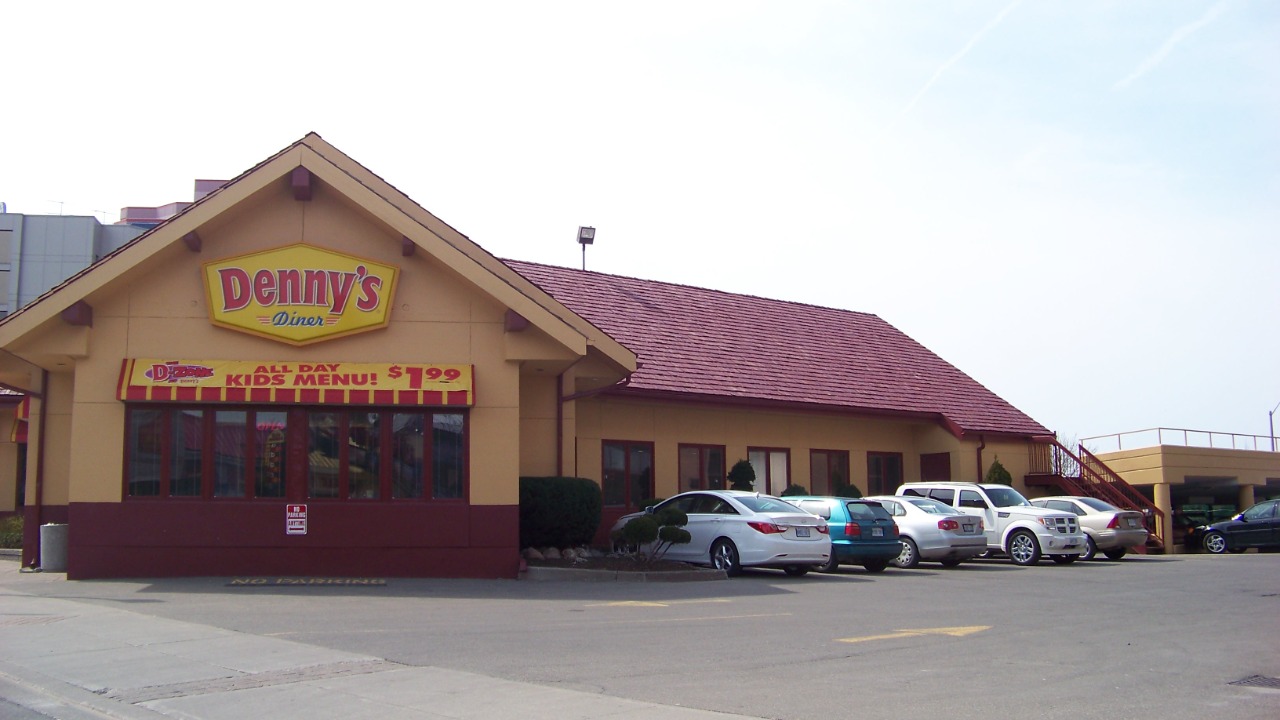
Denny’s is shrinking its footprint again, shuttering more dining rooms just weeks after agreeing to a $620 million buyout that will take the company private. The latest closures underscore how fragile the 24/7 diner model has become, even for a legacy brand that once defined late‑night eating across the United States.
As the chain prepares to change hands, the pullback in locations offers an early signal of what the new owners may prioritize: fewer underperforming restaurants, tighter cost controls, and a sharper focus on where Denny’s can still win in an unforgiving casual‑dining market.
Another wave of closures hits the Denny’s map
The newest round of shutdowns continues a pattern that has been building for several years, as Denny’s trims weaker units from its system. Company and franchise operators have been closing locations that struggle with traffic, labor costs, or lease economics, and the latest exits fit that same profile, with dining rooms going dark in markets where sales have not kept pace with rising expenses. The closures follow earlier announcements that several franchised restaurants would not renew their leases after landlords raised rents and local wage floors climbed.
In regulatory filings tied to the buyout, Denny’s has already acknowledged that it expects to keep rationalizing its store base, citing a mix of unit closures, remodels, and relocations as it tries to lift average restaurant volumes. Those disclosures line up with local reports of recent shutdowns in multiple states, where franchisees have cited higher operating costs and softer late‑night traffic as reasons for walking away from long‑running sites. The pattern suggests the latest closures are not a one‑off event but part of a broader effort to reshape the chain’s geography.
Inside the $620 million buyout and what it changes
The decision to close more locations lands just after Denny’s agreed to a roughly $620 million deal that will take the company private under a new ownership structure. In the transaction, a private equity buyer is acquiring all outstanding shares at a premium to the recent trading price, valuing the business on its future cash‑flow potential rather than its current stock‑market performance. The agreement includes the assumption of existing debt and sets out a plan to complete the deal after customary regulatory and shareholder approvals.
Deal documents describe how the buyer expects to generate returns through a mix of operational improvements, refranchising, and portfolio pruning, which helps explain why closures are surfacing so close to the announcement. By taking Denny’s private, the new owners will be able to make aggressive changes without the quarter‑to‑quarter scrutiny of public markets, including shutting low‑margin restaurants, renegotiating supplier contracts, and pushing franchisees toward stricter performance benchmarks. The timing of the closures, arriving only weeks after the buyout was unveiled, signals that the shift from a growth‑at‑all‑costs mindset to a profitability‑first strategy is already underway.
Why Denny’s is pulling back: traffic, costs, and the 24/7 squeeze
The logic behind the closures is rooted in a simple equation: traffic has not fully recovered in many markets, while labor, food, and occupancy costs have climbed sharply. Denny’s has long leaned on a 24/7 operating model that depends on steady overnight and early‑morning business, but late‑night dining has been slower to rebound than daytime visits, particularly in suburban and highway locations. Franchisees facing higher minimum wages and difficulty staffing overnight shifts have been blunt that some restaurants no longer generate enough sales to justify staying open around the clock, let alone keeping marginal locations alive.
Industry data cited in Denny’s own investor materials show that while breakfast and weekend traffic have improved, weekday late‑night visits remain below pre‑pandemic levels, a gap that hits diners harder than fast‑casual competitors that focus on lunch and early dinner. At the same time, the company has reported higher average wage rates and increased commodity costs for staples like eggs, bacon, and coffee, pressuring restaurant‑level margins. In that environment, closing underperforming units becomes a straightforward way to protect profitability, even if it means shrinking the overall store count.
What the closures mean for workers, franchisees, and local communities
Every Denny’s closure ripples beyond the balance sheet, affecting employees, franchise operators, and neighborhoods that have relied on the chain as a 24‑hour gathering spot. Workers at shuttered locations face job losses or transfers, depending on whether nearby restaurants can absorb staff, and franchisees must decide whether to reinvest in other units or exit the system entirely. In several recent cases, local reports have described employees receiving short notice of closures as franchisees cited unsustainable costs and the need to consolidate operations.
For communities, the loss of a Denny’s often means the disappearance of one of the few sit‑down options open around the clock, particularly near interstate exits and in smaller cities. Municipal filings tied to restaurant shutdowns show that some locations had operated for decades before closing, serving as informal hubs for night‑shift workers, travelers, and students. While new fast‑casual entrants and delivery‑only “ghost kitchens” have filled some of the demand for convenient meals, they rarely replicate the role of a full‑service diner where customers linger over coffee and pancakes at 2 a.m., which leaves a cultural gap even when other food options remain.
How the new owners may reshape the Denny’s playbook
The buyout gives Denny’s new owners a chance to reset the brand’s strategy, and the latest closures hint at how that reset might unfold. Private equity buyers typically look for ways to standardize operations, streamline menus, and focus capital on the highest‑return markets, and Denny’s has already signaled that it will lean into those levers. In presentations outlining the deal, the company has highlighted plans to accelerate remodel programs, expand digital ordering, and refine its franchise mix, all of which are easier to execute if the system is not weighed down by chronically underperforming units.
I expect the next phase to revolve around three priorities: concentrating on core breakfast and late‑night strengths in markets where those dayparts still perform, investing in technology that makes 24/7 operations more efficient, and tightening franchise standards so weaker operators either improve or exit. Recent disclosures already point to pilot programs for smaller, more efficient prototypes and experiments with limited overnight menus that reduce labor needs without fully abandoning the round‑the‑clock promise. If those tests succeed, future closures may be paired with openings of new‑format restaurants in stronger trade areas, turning today’s retrenchment into a selective repositioning rather than a straight retreat.
More From TheDailyOverview
- Dave Ramsey says these two simple questions show whether you’re rich or poor
- Retired But Want To Work? Try These 18 Jobs for Seniors That Pay Weekly
- IRS raises capital gains thresholds for 2026 and what’s new
- 12 ways to make $5,000 fast that actually work

Grant Mercer covers market dynamics, business trends, and the economic forces driving growth across industries. His analysis connects macro movements with real-world implications for investors, entrepreneurs, and professionals. Through his work at The Daily Overview, Grant helps readers understand how markets function and where opportunities may emerge.

