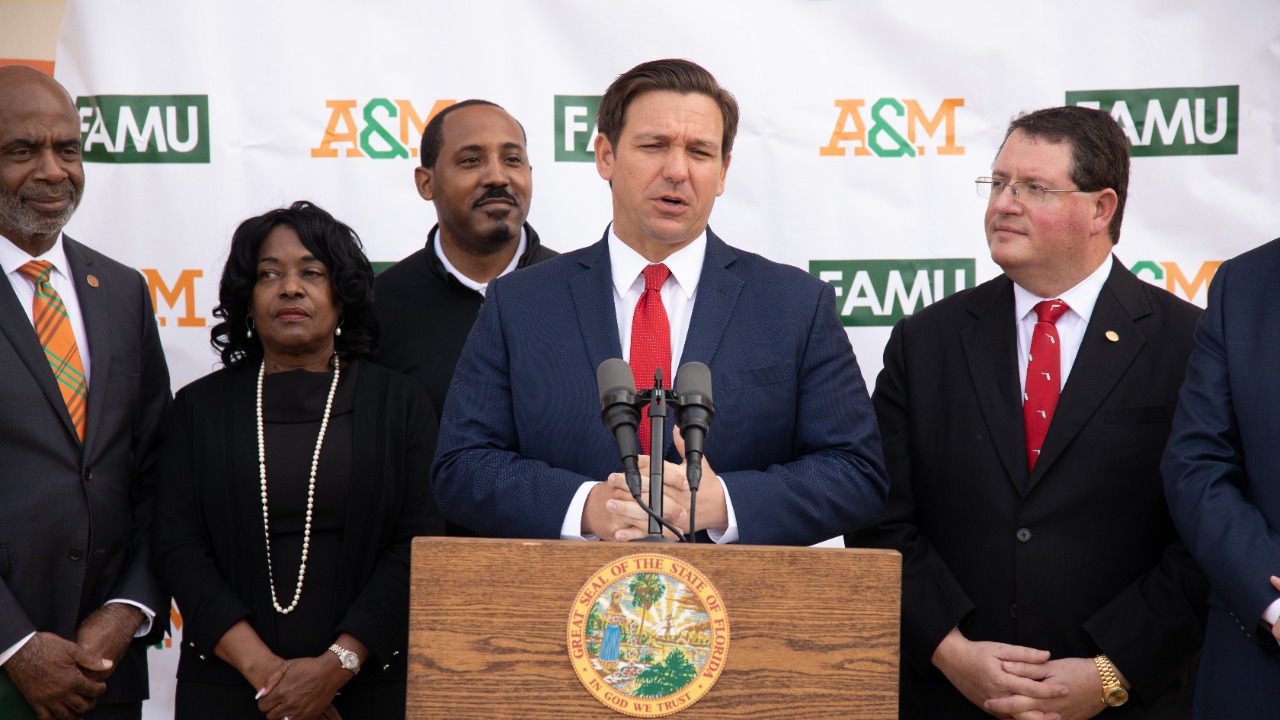
Ron DeSantis has turned a wonky gripe about local levies into a sharp populist line, arguing that property taxes function less like civic contributions and more like rent payments to the state. By casting homeowners as perpetual tenants of government, he is trying to reframe a familiar bill as a fundamental threat to ownership, and he is pairing that rhetoric with a series of concrete proposals that test how far Florida, and perhaps the country, is willing to go.
His language is deliberately provocative, but it is not just talk. From rebate plans to calls for outright abolition of property taxes, DeSantis is building a policy portfolio that treats the annual tax bill as a political fault line, one that could shape both Florida’s finances and his own national ambitions.
From “rent to the government” to a broader tax revolt
When DeSantis says property taxes are like paying rent to the government, he is distilling a long-running conservative frustration into a vivid sound bite. In public remarks earlier this year, he pressed the point with a blunt question, asking whether a house is truly a person’s property if they must keep paying the state simply to stay in it, and warning that homeowners are effectively writing checks just to avoid losing what they already bought. That framing, which likens local tax collectors to landlords, is designed to resonate with anyone who has watched an escrow payment climb faster than their mortgage balance.
He has repeated the idea in different settings, including a televised interview where he complained that Americans are treated like ATMs for local governments and argued that annual assessments turn ownership into a conditional privilege rather than a right. In that conversation, he described the system as one where officials “have their hands in your pocket every year,” a line that dovetails with his claim that people are “basically paying rent to the government to live on your own property,” a phrase he used while Florida lawmakers weighed a measure to end property taxes and replace the revenue with other sources such as higher sales taxes and fees on tourists, according to You are basically paying rent.
The Florida experiment: rebates, relief and a push to end property taxes
DeSantis is not leaving the argument at the level of metaphor. In Florida, he has tried to turn his critique into tangible relief, pitching the state as a laboratory for aggressive property tax reform. He has proposed sending $1,000 property tax rebates to Florida homeowners, a plan his office said on Mar 30, 2025 would be issued in December and would cover state mandated school property taxes while still ensuring full school district funding, a structure laid out in the official announcement of $1,000 property tax rebates. The idea is to show that a state can cut what homeowners owe without gutting classrooms, and to do it in a way that is simple enough to fit on a campaign mailer.
At the same time, he has floated a far more sweeping vision: eliminating property taxes in Florida altogether. In a proposal dated Mar 14, 2025, DeSantis argued that property ownership should not come with perpetual payments to the government and said the goal was to make owning a home more accessible by phasing out those taxes and replacing them with other revenue streams, a plan described in detail in his pitch to eliminate property taxes in Florida. That proposal, paired with his rent-to-government rhetoric, turns Florida into a test case for how far a state can go in rebalancing its tax mix while still paying for schools, police and infrastructure.
National messaging: homeowners as ATMs and the Best Buy analogy
DeSantis is also clearly thinking beyond Florida’s borders, using national media hits to sharpen his message for a wider audience of homeowners. In one interview highlighted on Nov 20, 2025, he complained that property taxes treat U.S. homeowners like ATMs, arguing that local officials see rising home values as an excuse to withdraw more cash every year rather than a sign that families are building equity. That appearance, which framed the issue as a national problem and urged viewers to scrutinize their local tax bills, underscored his claim that “it’s almost like they have it on autopilot,” a line captured in coverage of how Ron says homeowners are treated like ATMs.
Over the summer, he pushed the analogy even further by comparing property taxes to paying an annual fee on a television from Best Buy. In that July 3, 2025 segment, he argued that no one would accept a system where buying a 65 inch Samsung from a big box store meant sending the government a yearly check just to keep it in the living room, yet that is effectively how localities treat a three bedroom ranch or a condo in a high rise. The comparison, which he used to drive home his broader critique of property taxes in America, was featured in a piece that described how Ron slams property taxes in America and invokes Best Buy. By invoking a familiar purchase like a TV, he is trying to make an abstract tax debate feel as concrete as a receipt in a shopper’s hand.
Legislative friction and the 2028 political backdrop
Turning that rhetoric into law is proving harder than delivering a punchy line on television. DeSantis has pressed Florida lawmakers to move quickly on his property tax agenda, but he has also voiced frustration that the legislature is not acting with the urgency he wants. Reporting on Nov 20, 2025 noted that since he rolled out his ideas, he has repeatedly criticized legislators for dragging their feet and has framed the issue as a test of whether Florida Republicans are serious about structural tax reform, a tension described in coverage of how Florida Governor Ron DeSantis speaks about property tax plans. That friction matters because any move to eliminate or sharply cut property taxes would force lawmakers to rework school funding formulas, county budgets and bond obligations that rely on stable property tax streams.
At the same time, the politics of the issue extend well beyond Tallahassee. The same reporting has framed his property tax crusade as part of a broader effort to lay the groundwork for a potential 2028 presidential run, positioning him as a governor who not only talks about cutting taxes but is willing to take on one of the most entrenched revenue sources in American local government. By casting himself as the champion of homeowners who feel squeezed between rising insurance premiums, higher mortgage rates and escalating assessments, he is trying to build a coalition that sees property tax relief as a signature test of conservative governance heading into the next national cycle.
Appealing to frustrated homeowners while promising “real relief”
DeSantis is betting that this message will resonate with people who feel they never quite get ahead, even as their home values climb on paper. In a social media post on May 6, 2025, he said, “Today we heard from Floridians who need real relief from property taxes. Truly owning private property should not mean writing a check to the government every year just to keep it,” a line that captured both the emotional and ideological stakes of the debate and was shared through his official account as Today Floridians need real relief. By highlighting individual stories of retirees on fixed incomes and young families stretching to buy starter homes, he is trying to turn a structural tax argument into a kitchen table issue.
At the policy level, he has paired that emotional appeal with specific promises, from the $1,000 rebates to his insistence that any changes must still keep school districts whole. In the Mar 30, 2025 announcement, his office stressed that the rebates would cover state mandated school property taxes while ensuring full school district funding, and he framed the plan as one of the most important ways the legislature could help the people of Florida in that session, according to the detailed description of how Mar 30, 2025 rebates would be issued in December. That combination of fiery rhetoric and concrete, if still evolving, policy proposals is what makes his “rent to the government” line more than a throwaway jab: it is the organizing slogan for a broader attempt to rewrite the rules of how Americans pay for the communities they live in.
More From TheDailyOverview
- Dave Ramsey warns to stop 401(k) contributions
- 11 night jobs you can do from home (not exciting but steady)
- Small U.S. cities ready to boom next
- 19 things boomers should never sell no matter what

Julian Harrow specializes in taxation, IRS rules, and compliance strategy. His work helps readers navigate complex tax codes, deadlines, and reporting requirements while identifying opportunities for efficiency and risk reduction. At The Daily Overview, Julian breaks down tax-related topics with precision and clarity, making a traditionally dense subject easier to understand.

