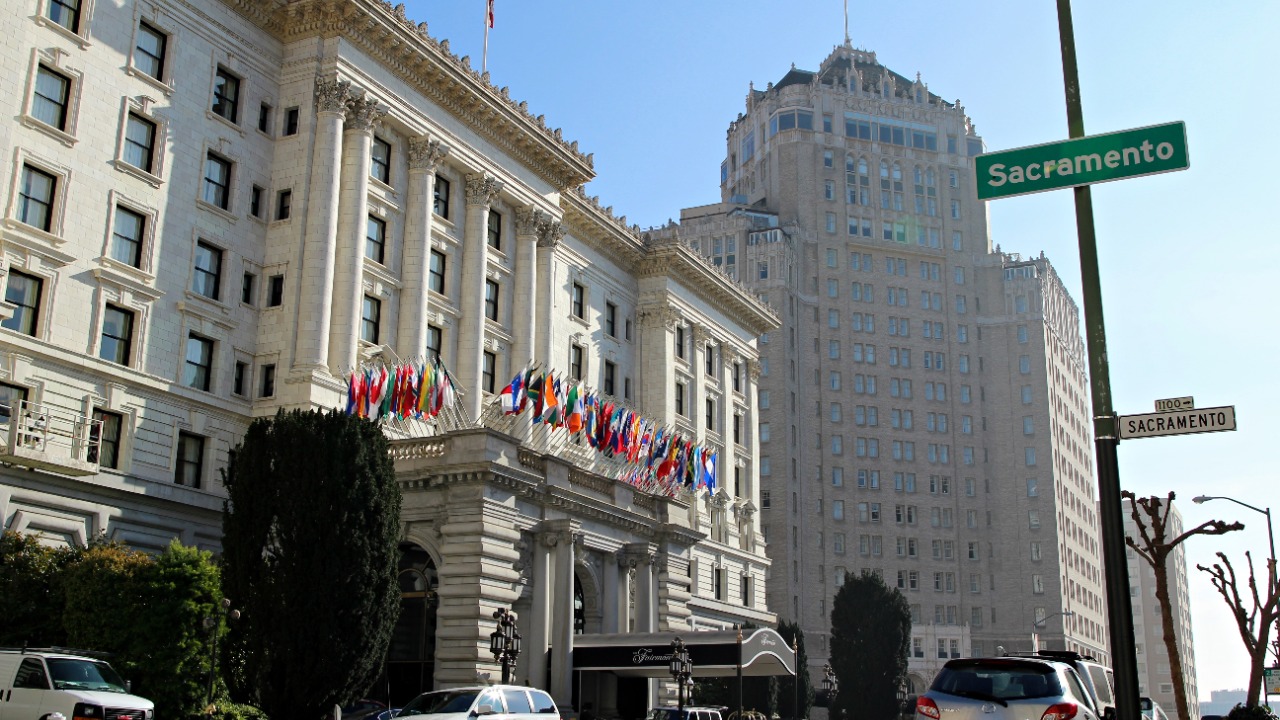
San Francisco’s hotel market is now producing the kind of price tags usually reserved for distressed malls and failed office parks, with marquee properties changing hands at roughly a quarter of what they fetched less than a decade ago. The steep markdowns capture a broader reset in a downtown that has struggled to bring back workers, tourists, and convention traffic at anything close to pre‑pandemic levels.
What looks like a fire sale on trophy hotels is really a referendum on the city’s stalled recovery, from empty office towers to stubborn public safety concerns. I see the hotel deals as a clear, quantifiable signal of how far values have fallen, how cautious investors have become, and how much work remains if San Francisco wants to rebuild a sustainable urban core.
Hotel values collapse as buyers demand deep discounts
The headline number that has grabbed attention is the roughly 75 percent haircut on some high‑profile hotel sales, where properties that once commanded nine‑figure valuations are now trading at a fraction of those levels. In one widely cited example, a large Union Square hotel that previously sold for several hundred million dollars was recently valued at barely one quarter of that prior price, reflecting both weaker cash flow and sharply higher borrowing costs for potential buyers. That kind of discount is not a minor repricing, it is a reset of what investors think San Francisco hospitality is worth in the current environment, and it aligns with reporting that documents how distressed owners are unloading assets at steep losses.
These markdowns are not happening in isolation, they are part of a broader pattern of lenders taking control of struggling properties and then selling them at prices that would have been unthinkable before 2020. Several downtown hotels have already been handed back to creditors after owners stopped making payments, a process that typically ends with foreclosure sales or negotiated transfers at heavily discounted valuations. Reporting on recent transactions shows buyers stepping in only once pricing reflects both the risk of a slow recovery and the cost of renovating aging buildings, with some deals closing at less than $100,000 per room in a market that once supported multiples of that figure.
Tourism, business travel, and convention demand have not fully returned
The collapse in hotel values is rooted in a simple reality: San Francisco is still not filling rooms the way it did before the pandemic, especially during the weekdays that used to be dominated by business travelers and convention attendees. Visitor numbers have improved from the depths of 2020 and 2021, but they remain below the peaks that supported premium room rates and strong occupancy across the city’s core neighborhoods. Analysts tracking the market point to lagging convention bookings at Moscone Center and a slower rebound in international tourism as key reasons why revenue per available room has not recovered to prior highs, a trend that is documented in recent tourism data.
Corporate travel has also shifted in ways that hurt San Francisco more than some competing cities, because so many of the tech and finance firms that once filled downtown hotels have embraced hybrid or remote work. With fewer in‑person meetings and fewer multi‑day conferences, there is less demand for the kind of high‑end rooms that anchor large properties near the Financial District and SoMa. Industry reports show that while leisure travel has come back more quickly on weekends and during peak vacation periods, the midweek business segment that underpinned the city’s hotel economics is still soft, a gap that helps explain why lenders and buyers are underwriting future cash flows so conservatively in recent deals.
Remote work and empty offices drag down the urban core
Behind the weak hotel fundamentals is a downtown that has yet to solve its office vacancy problem, with entire blocks of high‑rise space sitting dark or underused. San Francisco’s office vacancy rate has climbed into the high twenties as a percentage of total inventory, according to commercial real estate trackers, a level that would have been unimaginable when tech companies were competing for every square foot. That hollowing out of the daytime population has a direct impact on hotels, because fewer workers and fewer client visits mean fewer room nights, fewer business lunches, and less spillover spending in nearby retail corridors, a dynamic that recent office market analyses highlight.
The shift to remote and hybrid work has also weakened the ecosystem that once made downtown feel vibrant and safe, particularly after dark. When tens of thousands of commuters no longer flood the streets each morning and evening, the remaining foot traffic can feel sparse, which in turn makes some visitors more wary about staying in central neighborhoods. Studies of mobility data and transit ridership show that weekday activity in the core is still well below pre‑pandemic levels, and that reduced density feeds into perceptions of decline that weigh on both hotel demand and investor sentiment, as reflected in recent reporting on the city’s downtown struggles.
Public safety, street conditions, and political backlash shape investor sentiment
Hotel buyers are not just looking at spreadsheets, they are also watching headlines about crime, open‑air drug use, and visible homelessness in and around key tourist districts. While overall crime statistics in San Francisco are complex and in some categories have improved, the perception among many visitors and convention planners is that the city’s streets feel less orderly and less predictable than they did a decade ago. That perception matters, because large groups and corporate events are sensitive to reputational risk, and several high‑profile conferences have either downsized or relocated in recent years, a pattern documented in coverage of event cancellations tied to safety concerns.
The political response has been uneven, with city leaders touting targeted crackdowns and new initiatives while critics argue that enforcement remains inconsistent and that deeper social problems are going unaddressed. Investors watching from afar see a jurisdiction still debating how aggressively to police drug markets and encampments in the very neighborhoods where tourists stay, shop, and attend conventions. That uncertainty feeds into higher risk premiums and lower valuations, as reflected in commentary from analysts who cite public safety and governance as key factors behind the discounts on recent hotel sales.
What distressed hotel sales signal for San Francisco’s broader recovery
When hotels sell at 75 percent off their prior valuations, the deals become a benchmark for pricing other types of downtown real estate, from offices to retail. Appraisers and lenders look at the implied cap rates and revenue assumptions in these transactions and then apply similar skepticism to neighboring properties, which can trigger a feedback loop of write‑downs and tighter credit. In that sense, the hotel market is functioning as an early warning system for the city’s broader commercial landscape, a point underscored in analyses that link recent hospitality sales to a wider repricing of downtown assets.
At the same time, distressed buyers see opportunity in acquiring well‑located buildings at a fraction of replacement cost, betting that San Francisco will eventually stabilize and that they can reposition properties for a different mix of guests. Some investors are exploring conversions to mixed‑use or residential formats, while others are planning heavy renovations to appeal to a leaner but higher‑spending visitor base. Those strategies are still in their early stages, and their success will depend on whether the city can meaningfully improve safety, transit reliability, and the overall appeal of its core. For now, the deep discounts on hotel sales serve as a stark measure of how far confidence has fallen, and as a reminder that any true recovery will require more than waiting for tourism to bounce back on its own, a conclusion echoed in forward‑looking credit assessments of the city’s outlook.
More From TheDailyOverview
- Dave Ramsey warns to stop 401(k) contributions
- 11 night jobs you can do from home (not exciting but steady)
- Small U.S. cities ready to boom next
- 19 things boomers should never sell no matter what

Elias Broderick specializes in residential and commercial real estate, with a focus on market cycles, property fundamentals, and investment strategy. His writing translates complex housing and development trends into clear insights for both new and experienced investors. At The Daily Overview, Elias explores how real estate fits into long-term wealth planning.

