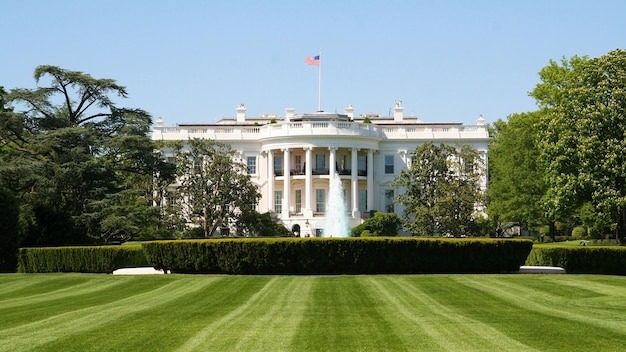
Detroit’s biggest automakers asked the White House on February 20, 2026, to be exempted from a fresh round of trade penalties that threaten to add billions of dollars in costs to vehicles assembled with imported parts. The appeal, delivered while President Donald Trump was visiting Ford’s historic River Rouge Complex in Dearborn, Michigan, underscores mounting concern in an industry already absorbing steep tariff bills. Ford alone reported an extra $900 million tariff hit in 2025, and the other major manufacturers face similar pressure as duties on foreign auto parts remain in effect with no clear end date.
According to people familiar with the outreach, the Detroit companies framed their request as an effort to preserve domestic jobs and keep core truck and SUV lines affordable, rather than as a bid to unwind the administration’s broader trade strategy. The private push comes as the White House weighs additional penalties on imports tied to national security and border enforcement. For automakers whose supply chains run deeply through Mexico and Canada, any new layer of duties would stack on top of existing 25% tariffs on vehicles and parts, potentially forcing production cuts or accelerated price hikes.
How the 25 Percent Auto Tariff Took Shape
The current wave of trade costs traces back to a March 2025 presidential proclamation that imposed a 25% tariff on imports of automobiles effective April 3, 2025. That action, laid out in a Section 232 national security investigation and formalized through a White House proclamation, also directed the Commerce Department to prepare a list of covered auto parts and to coordinate implementation with U.S. Customs and Border Protection. The same document signaled that the United States-Mexico-Canada Agreement (USMCA) would shape how duties are calculated on vehicles with cross-border content, effectively tying tariff exposure to rules-of-origin paperwork and certification.
By May 3, 2025, the parts tariffs were live. The Department of Commerce confirmed the effective date and linked the program to both the original March proclamation and subsequent April amendments, while a Congressional Research Service timeline detailed how quickly the executive branch layered new trade measures across multiple sectors. Because the Big Three source engines, transmissions, and electronic modules from plants in Mexico and Canada, the USMCA documentation requirements became an immediate compliance burden on top of the duty itself. Suppliers that had long optimized for just-in-time logistics suddenly had to budget for both higher cash outlays at the border and the risk of penalties if origin claims were later challenged.
The Offset Program and Its Limits
Recognizing the strain, the administration issued an April 29, 2025, amendment that created an import adjustment offset application process for manufacturers assembling vehicles in the United States. The amendment, codified in a subsequent presidential adjustment, allows companies to seek partial relief if they can demonstrate that tariffs on imported components are undermining domestic production goals. To qualify, firms must submit detailed certifications that include projected assembly volumes, lists of importers of record, and a penalty-of-perjury attestation that the data are accurate.
The amendment was formally published in the Federal Register on May 2, 2025, giving it the canonical legal standing that customs brokers and corporate counsel rely on for compliance. On paper, the offset mechanism looks like targeted relief: it is designed to reward companies that maintain or expand U.S. assembly operations despite higher input costs. In practice, it demands that manufacturers lock in production forecasts and open their books to federal auditors, a trade that smaller suppliers and even large assemblers may find difficult when demand shifts quarter to quarter. No public Commerce Department dashboard tracks how many applications have been approved or denied, which means the industry is operating without a clear picture of how much relief is actually flowing.
Ford’s $900 Million Bill and the Broader Cost Signal
Ford’s disclosure that it absorbed an extra $900 million in tariff costs during 2025 is the clearest public measure of the financial toll. That figure represents money diverted from vehicle development, factory upgrades, and electric-vehicle programs at a moment when global competitors are investing heavily in battery technology and software. Executives have warned that sustained trade costs of that magnitude could slow the rollout of new electric pickups and SUVs, or force the company to prioritize higher-margin luxury trims over mass-market offerings.
If General Motors and Stellantis faced proportional exposure, and there is little reason to assume their cross-border supply chains are dramatically cheaper to restructure, the combined industry tab could run well into the billions annually. Those costs do not stay on corporate balance sheets. Higher input prices are passed along through sticker-price increases, reduced incentive programs, or delayed launches of lower-margin models. American car buyers, particularly those shopping in the $30,000-to-$45,000 range where imported components make up a large share of the bill of materials, bear the downstream effect. That consumer pressure is the lever Detroit is pulling in its February 2026 appeal: the political cost of visibly more expensive trucks and SUVs may exceed the perceived trade-policy benefit of the tariffs themselves.
Non-Stacking Rules Offer Partial, Not Full, Relief
Separate from the offset program, the White House issued an executive order that established a non-stacking framework for overlapping trade measures. Under this order, goods already subject to the Section 232 auto and auto parts proclamation are not hit with additional tariffs under border or drug-related actions, nor under the separate Section 232 steel and aluminum duties. The intent, as described in the tariff non-stacking order, is to prevent a single shipment from being taxed multiple times under different authorities.
That sounds like meaningful protection, and for some components it is. A stamped-steel body panel imported from a USMCA partner, for instance, would be taxed under the auto-specific Section 232 rate rather than stacking the steel-specific Section 232 rate on top of it. But the non-stacking rule does nothing to reduce the base 25% auto tariff itself. Detroit’s ask goes further: the automakers want exemptions or reductions to the underlying rate, not just assurance that rates will not pile up. The gap between what the executive order provides and what the industry says it needs helps explain why private discussions between automakers and the administration have intensified as new trade actions are drafted.
Security Politics, Technology Priorities, and the Road Ahead
The auto tariffs sit at the intersection of several policy agendas that reach beyond Detroit. Homeland security officials have used their authority to scrutinize cross-border shipments and supply chains more aggressively, with initiatives such as the Department of Homeland Security’s Watch, Observe, and Warn program reinforcing the national-security framing of trade actions. At the same time, the administration has promoted domestic innovation in strategic technologies, highlighting artificial intelligence as a pillar of future competitiveness through resources like the federal AI coordination portal. For automakers, this mix of security-focused trade controls and technology ambitions creates both constraints and opportunities: tariffs raise costs, but public investment in AI, autonomy, and advanced manufacturing could help offset some of the pressure if funds are steered toward vehicle and battery research.
Inside the White House, trade and industrial policy have been organized under a set of executive priorities that include defending critical sectors, rewarding domestic production, and leveraging tariffs as bargaining tools. Advocates of the 25% rate argue that it strengthens the president’s hand in negotiations and encourages companies to reshore production, while critics in industry stress that complex global supply chains cannot be rebuilt overnight. Political strategists aligned with the administration have framed these moves under a broader “Trump Card” approach to economic leverage, echoed in policy messaging and in materials associated with the Trump Card initiative. As Detroit’s February 2026 appeal lands on the president’s desk, the decision will test how far that strategy can bend to accommodate the realities of a capital-intensive, globally integrated auto industry without abandoning its core emphasis on toughness at the border and in trade talks.
More From The Daily Overview
*This article was researched with the help of AI, with human editors creating the final content.

Grant Mercer covers market dynamics, business trends, and the economic forces driving growth across industries. His analysis connects macro movements with real-world implications for investors, entrepreneurs, and professionals. Through his work at The Daily Overview, Grant helps readers understand how markets function and where opportunities may emerge.

