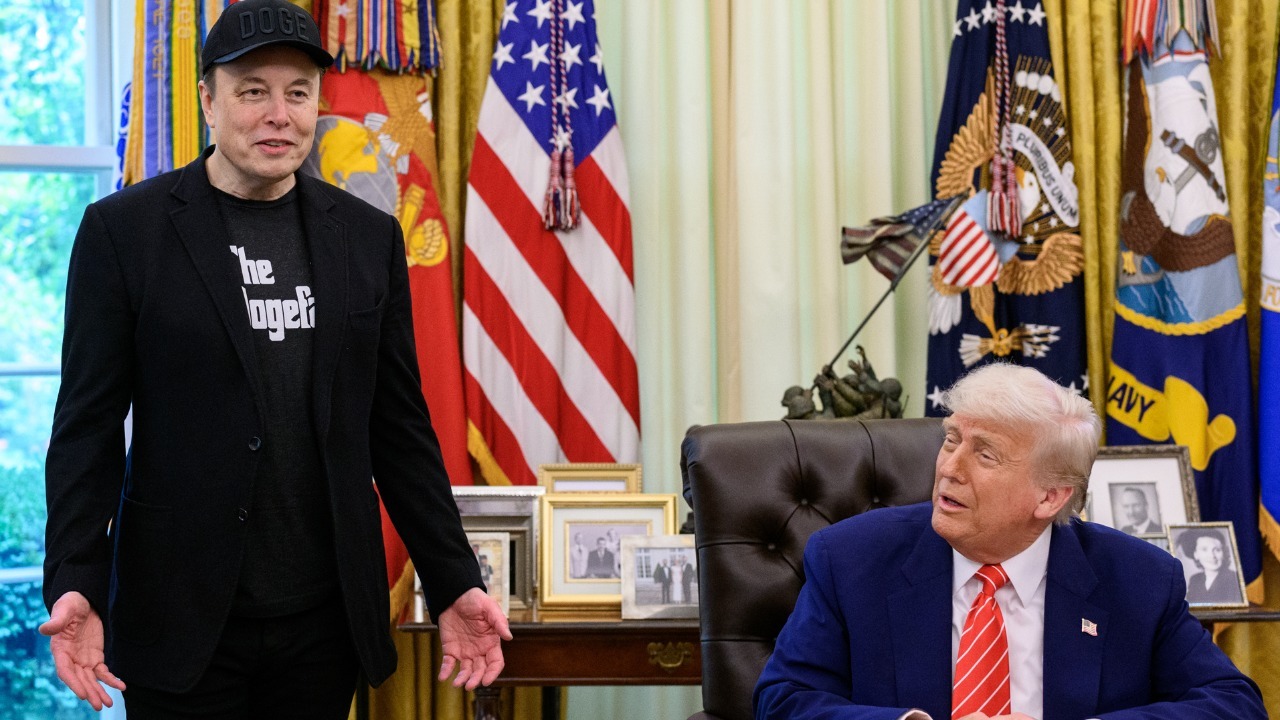
DOGE was supposed to be over. The Department of Government Efficiency was declared finished, its brand retired, its operatives scattered. Yet inside agencies, staff now describe something closer to a phase change than a shutdown, with the same methods and people quietly embedded in the bureaucracy’s daily work. In place of a headline-grabbing crusade, DOGE has become a set of habits, tools, and loyalties that still shape how federal offices spend money, manage data, and treat their own workers.
Instead of a dead program, what I see is a diffuse network: former DOGE staff, sympathetic managers, and political allies who have carried its cost-cutting ethos into the bloodstream of the government. They are not flying the old banner, but they are still cutting contracts, consolidating systems, and pushing agencies to behave more like lean startups than sprawling public institutions.
From splashy experiment to “disassembled” project
The official story is simple enough. President Donald Trump created the Department of Government Efficiency as a blunt instrument to slash federal spending and force agencies to modernize. In public, it was branded as Doge the Department of Government, a cost-cutting strike force closely associated with Elon Musk and his promise to run Washington more like a hard-edged tech company. When Trump later announced that Doge the Department of Government had been disassembled, he framed it as a completed mission rather than a retreat, saying the structure was gone but the principles remained alive, a message captured in a televised segment that highlighted how Elon Musk and his team had already reshaped expectations for what “efficiency” should mean inside federal offices.
That framing matters because it set up DOGE’s end not as a failure but as a graduation. In another broadcast, commentators described how the Department of Government Efficiency, better known as Doge, was “done” after less than a year, a controversial cost-cutting experiment that had burned hot and fast before being folded back into the traditional bureaucracy. The language in that segment was strikingly similar to Trump’s own, emphasizing that the department’s formal life was over while hinting that its methods would live on in quieter forms across agencies that had been pushed, sometimes brutally, to change how they operate.
How DOGE was designed to work
To understand why DOGE’s influence lingers, it helps to look at how it was built. The Department of Government Efficiency was never meant to behave like a normal cabinet agency with slow rulemaking and cautious pilots. It was structured as a rapid intervention unit, empowered to cut contracts, consolidate overlapping programs, and pressure leaders to accept painful reorganizations. From the start, DOGE was framed as a disruption engine, and its operatives were selected less for traditional civil service experience than for their willingness to break things and move fast.
That design was reinforced by the way the project was sold to the public. When Elon Musk was tapped to lead Trump’s cost-cutting DOGE “department,” coverage emphasized that the Department of Government Efficiency might not even function as a conventional government department, with some reports noting that it would not be a real government department in the classic sense but rather a hybrid entity that could sit above or alongside existing structures. That ambiguity gave DOGE room to improvise, and it also meant that when the formal department was declared finished, its playbook and personnel could be redeployed without the same level of scrutiny that a traditional agency shutdown would attract.
The ethos that survived the shutdown
Inside agencies, what survived was less a logo than a mindset. Federal employees describe a DOGE ethos characterized by cutting contracts and government workers, consolidating data across agencies, and imposing aggressive performance metrics on programs that had long been shielded from that kind of scrutiny. That ethos was not subtle. It treated redundancy as waste, headcount as a problem to be solved, and legacy systems as obstacles rather than assets, and it rewarded managers who could show quick savings even if the long-term tradeoffs were unclear.
According to one IRS employee, DOGE has “just transformed,” a telling phrase that captures how the initiative shifted from a visible campaign to a quieter operating philosophy. While DOGE is no longer moving across the government in a marquee, standalone mission, the same staffer describes how its methods have been absorbed into the way offices like the IRS now evaluate contracts, structure teams, and justify technology budgets. The DOGE ethos, in this telling, is less a temporary project and more a permanent filter through which decisions about staffing, procurement, and modernization are now made.
Embedded operatives and quiet influence
That transformation is not abstract. Former DOGE operatives have landed in permanent roles across the federal landscape, from finance offices to IT departments, where they continue to push the same aggressive cost-cutting and consolidation agenda. At the IRS, staff describe how Dec veterans of the original DOGE push now sit inside key budgeting and modernization teams, using their experience to steer decisions toward shared services, centralized data platforms, and leaner staffing models that mirror the original project’s priorities.
Other agencies report similar patterns. The DOGE ethos, as one detailed account puts it, is now embedded in the way cross-agency data consolidation projects are scoped and funded, with The DOGE alumni helping to design architectures that pull information into unified systems controlled by a smaller number of managers and contractors. In at least one case, a source describes how a former DOGE operative effectively runs an entire IT department’s modernization roadmap, using the same metrics and dashboards that were first rolled out during the department’s short, intense life as a standalone entity.
“Absorbed into the bloodstream” of government
From the perspective of rank-and-file staff, the most striking change is how normalized DOGE’s methods have become. Federal employees now talk about DOGE not as a separate project but as something that has been absorbed into the bloodstream of the government, shaping how agencies like the IRS and the National Institutes of Health justify their budgets and structure their internal teams. In their telling, the old DOGE brand has faded, but the pressure to cut, consolidate, and centralize has only intensified as those expectations have been woven into performance reviews and strategic plans.
One detailed account describes how Dec and Last month’s internal discussions framed DOGE as a completed phase that had nonetheless left behind a durable infrastructure of dashboards, shared services, and cross-agency working groups. In that narrative, DOGE is not dead, it is simply operating under new names and within existing chains of command, with its alumni now serving as senior advisors, program managers, and chiefs of staff who can quietly steer decisions without the political baggage that came with the original Department of Government Efficiency label.
Trump, Musk, and the politics of “efficiency”
None of this happened in a vacuum. President Donald Trump’s decision to create the Department of Government Efficiency was part of a broader political project to show that his administration could slash costs and “fix” Washington by importing Silicon Valley style discipline. Elon Musk and his association with Doge the Department of Government gave that project a celebrity technocrat face, one that signaled to supporters that the administration was serious about confronting what it saw as bloated bureaucracy and entrenched interests inside the federal workforce.
When Trump later announced that DOGE had been disassembled but that its principles remained alive, he was effectively declaring victory while also giving cover for its methods to persist. In the televised segment that captured this moment, the narrator described Doge the Department of Government as a blunt force operation led by Elon Musk and his allies, emphasizing both the speed and the controversy of its interventions. That framing allowed the White House to claim that the hardest work had been done while leaving behind a network of loyalists and a set of tools that could continue to shape policy from within.
What DOGE actually changed inside agencies
Beyond the rhetoric, DOGE’s most concrete legacy lies in the systems and structures it left behind. At agencies like the IRS, Dec staff describe how DOGE-driven reforms consolidated multiple overlapping contracts into single, larger agreements, often with strict performance clauses and aggressive timelines. Those changes did not disappear when the department was declared finished. Instead, they became the new baseline, with managers expected to justify any deviation from the leaner, more centralized models that DOGE had imposed.
In technology and data management, the impact is even clearer. The DOGE ethos, as one detailed account explains, pushed agencies to consolidate data across offices and even across departments, creating shared platforms that could be monitored and optimized from a central hub. In at least one case, a source describes how a former DOGE operative now effectively runs an IT department, using the same dashboards and key performance indicators that were first introduced during the department’s short life. Those tools, once controversial, are now treated as standard practice, a sign of how thoroughly DOGE’s methods have been internalized.
The human cost of a permanent cost-cutting mindset
For the people who work inside these agencies, the persistence of DOGE’s ethos has come with real tradeoffs. Cutting contracts and government workers can produce short-term savings, but it also means fewer staff to handle complex workloads, less redundancy when systems fail, and more pressure on remaining employees to meet aggressive targets. At the IRS, staff describe how Dec-era cuts have left some teams stretched thin, even as they are asked to manage new data consolidation projects and implement ever more sophisticated analytics tools.
The same pattern appears in health and research agencies, where Last month’s internal discussions highlighted concerns that DOGE-style consolidation could undermine specialized expertise and slow down mission-critical work. When the Department of Government Efficiency was first launched, some observers warned that treating public services like a startup could erode the resilience that comes from redundancy and institutional memory. Now, with DOGE’s methods embedded in everyday operations, those warnings feel less hypothetical. The question is no longer whether the DOGE ethos will shape government, but how far its operatives will push the logic of efficiency before the costs outweigh the gains.
Where DOGE goes next
Looking ahead, the most important story is not whether DOGE might be formally revived, but how its alumni and ideas continue to evolve inside the system. The original Department of Government Efficiency may be gone, and some reports even stressed that DOGE would not be a real government department in the traditional sense, but the people who built it now occupy influential roles across the federal landscape. They are writing procurement rules, designing data platforms, and advising senior leaders on how to measure success, often using the same metrics and methods that defined DOGE’s short, intense life.
In that sense, DOGE has already achieved a kind of institutional immortality. It started as a high-profile experiment, backed by President Donald Trump and fronted by Elon Musk, then morphed into a diffuse network of practices and loyalties that now flow through agencies from the IRS to research institutions. Whether that legacy ultimately makes government more effective or simply more brittle is still an open question. What is clear, from the accounts of Dec staff and the detailed descriptions of The DOGE ethos, is that the project did not end when the department was declared finished. It simply changed form, embedding itself in the everyday machinery of the state where it is far harder to see, and far harder to unwind.
More From TheDailyOverview

Grant Mercer covers market dynamics, business trends, and the economic forces driving growth across industries. His analysis connects macro movements with real-world implications for investors, entrepreneurs, and professionals. Through his work at The Daily Overview, Grant helps readers understand how markets function and where opportunities may emerge.