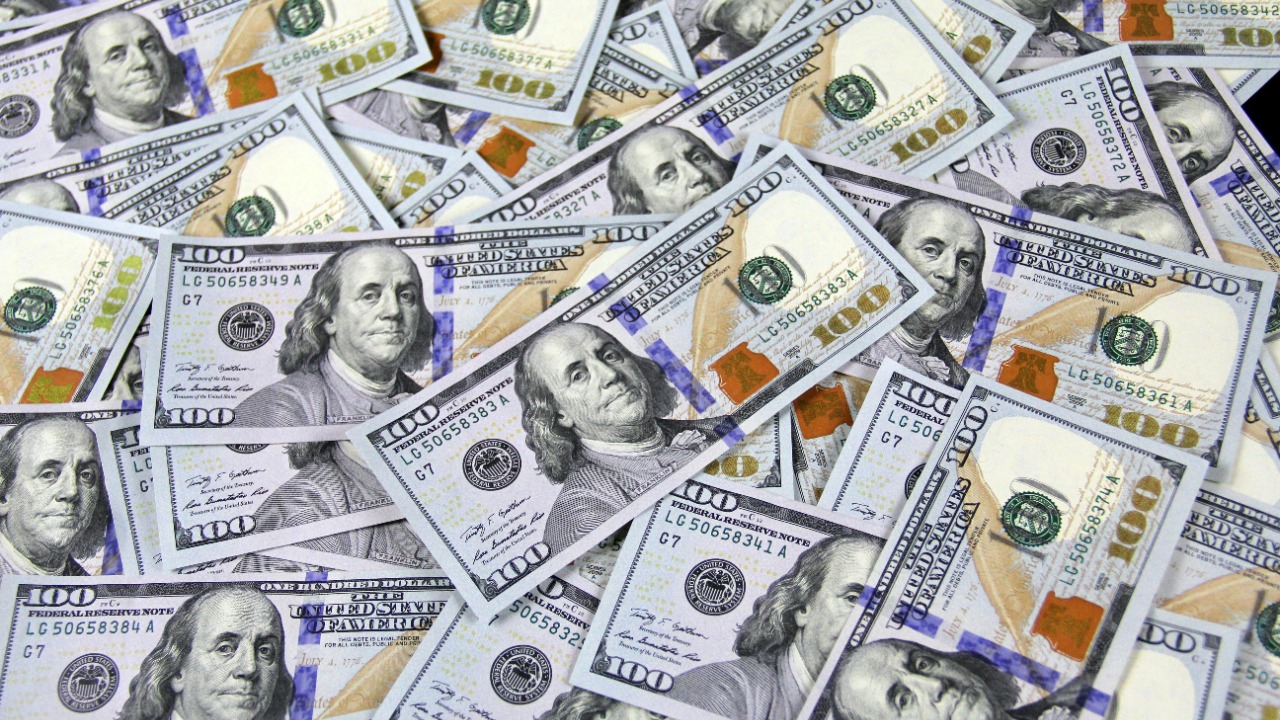
The phrase “dollar collapse” has migrated from fringe blogs to mainstream social feeds, often framed as an imminent, all‑or‑nothing event that will wipe out savings overnight. The reality, as I read the data and expert work behind the headlines, is more complicated: the Dollar faces real pressures, but its core architecture still looks far more robust than the panic suggests. The task is to separate plausible long term risks from pure hype so households and investors can respond with judgment instead of fear.
What a real currency collapse looks like
Before weighing the odds for the Dollar, I need to be clear about what “collapse” actually means. In historical cases, a true breakdown involves a rapid loss of purchasing power, a rush out of the currency, and a government that either cannot or will not stabilize the system. Analysts who study Understanding Currency Collapse point out that such episodes usually follow deep political breakdown, war, or hyperinflation, not just a bad year in foreign exchange markets. When a currency fails in this way, daily life is disrupted, contracts are rewritten, and the financial system often has to be rebuilt around a new unit of account.
That is why research on the Dollar’s current position stresses its structural advantages rather than short term price moves. One detailed look at the Dollar’s Fortified Position argues that, given the size of the U.S. economy, the depth of its capital markets, and its legal protections, the probability of a sudden Dollar collapse is “virtually nonexistent.” Since the Bretton Woods Agreement in 1944, the Dollar has been the backbone of global trade and finance, and that legacy still shapes how central banks, corporations, and investors behave in moments of stress.
Signals from markets: weakness is not the same as ruin
Market prices have certainly been flashing discomfort. The Dollar fell over 9% in 2025, its worst annual performance since 2017, a slide that reflected a volatile year for the U.S. economy and left traders facing another unpredictable 12 months, according to one detailed Jan assessment. For anyone watching their international purchasing power or overseas investments, that kind of move is painful and very real. It is not, however, the kind of free fall that typically marks a currency collapse, and it came against a backdrop of other major currencies also adjusting to shifting interest rate expectations and growth prospects.
Professional forecasters are explicit about that distinction. A recent deep dive titled Our Analysis for 2026 notes that, according to financial analysts, it is unlikely the U.S. Dollar will experience a full blown Dollar Collapse in the near term, even as they model scenarios with slower growth and high debt. Another review of how dollar fell over treats that move as a cyclical swing tied to interest rates and growth, not a structural break. In other words, markets are repricing risk, not abandoning the currency.
Reserve status: cracks, but still the central pillar
The more serious question is whether the Dollar is losing its privileged role at the center of the global system. One influential analysis of the “first cracks in the dollar’s dominance” notes that the Dollar’s share as a reserve currency is declining, but “albeit very slowly so far,” and that in section 2.1 the Dollar still plays the leading role as a perceived safe haven. That is consistent with the Federal Reserve’s own work, which finds that There is widespread confidence in the U.S. Dollar as a store of value and that central banks still hold a large share of their reserves in Dollars despite some diversification.
Other researchers reach similar conclusions. One careful review of whether the Dollar is losing its edge notes that, What this Means, Notwithstanding the turbulence of the past few years, is that a major short term turn against the Dollar is unlikely, especially given the steps U.S. authorities can still take to protect the currency’s status. A separate look at where the U.S. Dollar is headed in 2025 concludes that, Despite the potential for further weakness, the Dollar’s reserve currency status remains intact because of its trustworthiness and the scale of U.S. financial markets.
Real risks: debt, politics and the “tsunami” scenario
Where the panic merchants have a foothold is in the genuine vulnerabilities around U.S. debt and politics. A detailed examination of what a fiscal crisis would look like highlights the danger of a Debt Limit Breach, where the federal government is constrained in how much it can borrow without new legislation. That kind of self inflicted standoff could trigger a loss of investor confidence, higher interest costs, and even set off a dangerous debt spiral if markets begin to doubt Washington’s willingness to honor its obligations. In that sense, the biggest threat to the Dollar’s stability is not foreign competition but domestic brinkmanship.
Some macroeconomists go further and sketch out a “financial tsunami” in which a Loss of confidence in the U.S. Dollar’s reserve currency status could trigger a collapse in cross border funding and lending to non banks, with knock on effects for trade and growth. Another essay on Jan 22, 2026, framed as Unspoken Foundation of, argues that America’s global influence rests heavily on the Dollar and warns that the end of Dollar dominance would hit domestically at the worst possible time. These are not forecasts, but they are reminders that the Dollar’s strength is intertwined with fiscal discipline and political stability.
Hype, “death of the dollar” narratives and what investors should actually watch
Against that backdrop, it is easy to see why dramatic stories about imminent collapse gain traction. One widely read commentary on currency debasement notes that, Unfortunately, many investors confuse loud narratives with likely outcomes and that the key is to separate noise from the actual probabilities being priced into markets. Another analysis of the “dollar’s death” storyline concedes that the narrative has been on the rise, However, it concludes that the Dollar’s death narrative is exaggerated when weighed against the currency’s entrenched role in trade, finance, and reserves.
Empirical work backs up that skepticism. A detailed review of whether the U.S. Will the Dollar Collapse uses systematic Analysis of debt, growth, and reserve data and finds that, According to the experts surveyed, a near term collapse is not the base case. Another piece that sets out to debunk the myth of an imminent crash notes that the Dollar Remains Resilient experts agree that the U.S. Dollar is unlikely to be on the verge of collapse and that Much of the alarm is driven by social media amplification rather than shifts in how central banks or large institutions behave.
More From TheDailyOverview
*This article was researched with the help of AI, with human editors creating the final content.

Grant Mercer covers market dynamics, business trends, and the economic forces driving growth across industries. His analysis connects macro movements with real-world implications for investors, entrepreneurs, and professionals. Through his work at The Daily Overview, Grant helps readers understand how markets function and where opportunities may emerge.

