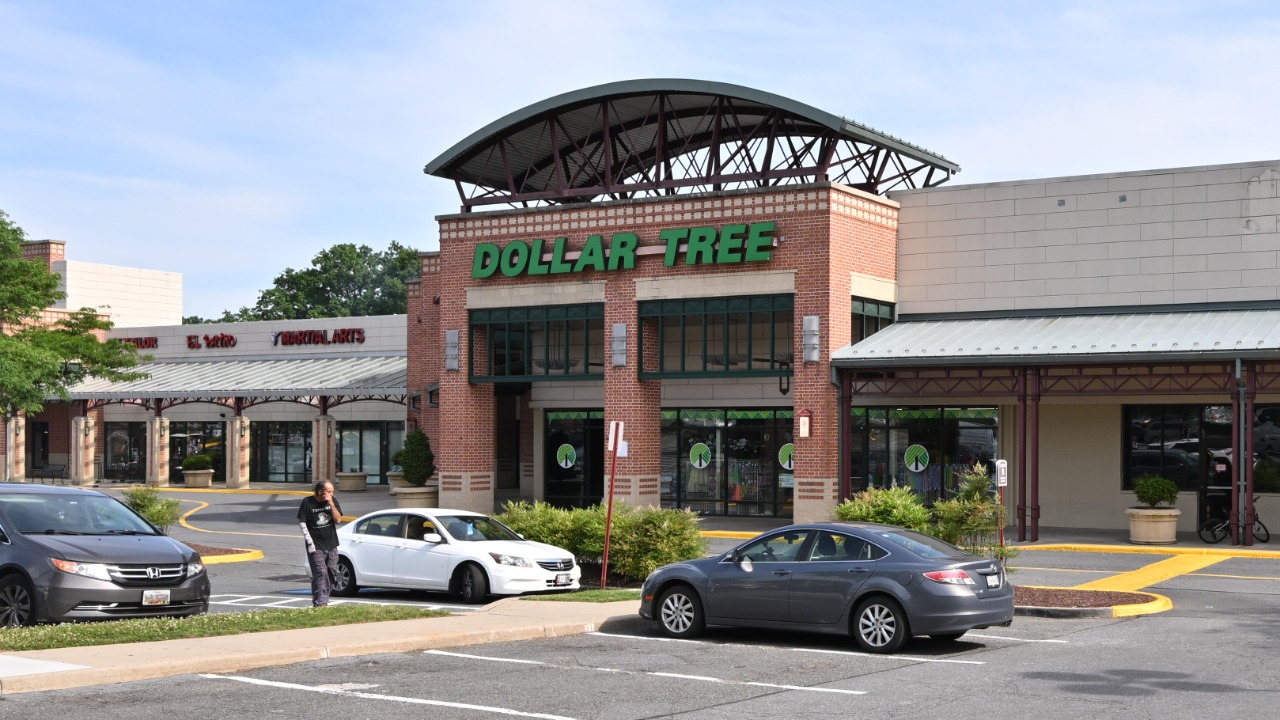
For shoppers watching every dollar, the choice between Dollar General and Dollar Tree is no small detail. The same $50 budget can translate into very different carts depending on which logo is on the front of the store, especially when groceries and household basics are involved. I set out to compare how that $50 behaves in each chain, drawing on recent price checks and product comparisons to see where bargain hunters truly come out ahead.
The $50 experiment: where the money runs out first
When I look at how far a fixed budget goes, I start with a simple test: how quickly the register hits $50 and what is actually in the basket at that point. Recent comparisons of identical or similar baskets show that the $50 limit runs out more quickly at Dollar General than at Dollar Tree, even when shoppers are trying to stick to low-cost staples. In those head-to-head checks, the conclusion was blunt: Dollars Stretch Further at Dollar Tree, with the same budget buying more individual items and a slightly fuller pantry. That gap matters most to households that treat $50 as a hard ceiling rather than a suggestion.
The details behind those comparisons are revealing. Analysts tracking receipts in Jan found that shoppers will spend $1 more on average at Dollar General to assemble a similar mix of basics, which adds up quickly when every line item is already stripped down to essentials. The same work showed that the granularity of prices at Dollar General, where tags jump from $1.25 to $3 or $5, tends to chew through a $50 cap faster than the more uniform pricing at Dollar Tree. Those findings are laid out in a recent breakdown of how far $50 goes, which underscores that the budget line is not just psychological, it is mathematical.
How Dollar Tree’s fixed price strategy shapes value
Dollar Tree built its brand on a simple promise: every item in the store costs the same low price. That model has evolved, but the core idea still shapes how far a small budget can stretch. For years, the chain was known for a strict $1 price point, which made mental math effortless and allowed shoppers to know exactly how many items they could afford before they even picked up a basket. Then, in 2021, Dollar Tree announced it was hiking its across-the-board price to $1.25, a shift that sparked debate but still left the chain anchored in a single primary price tier that keeps budgeting straightforward.
Even with that increase, recent grocery comparisons find that Dollar Tree is still cheaper, with some caveats, when you line up similar pantry items against rivals. Analysts note that the chain often offers only one type or size of a given product, which limits choice but simplifies decisions for shoppers who care more about price than brand variety. One review of food categories found that Dollar Tree offers a large selection of grocery items under its core price point, even as it experiments with multi-price sections. Another analysis of grocery value concluded that Dollar Tree is still cheaper, while noting that the chain is already trending toward more price tiers, a shift captured in a comparison of which chain offers the best value on groceries.
Dollar General’s multi-price play and “Dollar Deals”
Dollar General takes a different approach, leaning into a multi-price model that looks more like a compact discount supermarket. That structure can be an advantage for shoppers who want larger sizes or more brand options, but it also means a $50 budget is sliced up in less predictable ways. Instead of counting items, customers have to track a mix of $1, $3, $5, and higher price tags, which can make it easier to overshoot a strict spending cap. At the same time, the chain has carved out specific low-price sections to keep bargain hunters engaged.
One of those tactics is its “Dollar Deals” program, which highlights items priced to compete directly with single-price rivals. In at least one direct comparison, Dollar General beat Dollar Tree’s price on a specific item by 25 cents because it was part of Dollar General’s Dollar Deals, a reminder that the chain can undercut its rival on individual products even if the overall basket often costs more. That nuance is spelled out in a detailed look at how far $50 goes at Dollar General compared to Dollar Tree, which notes that some categories are actually cheaper at Dollar General while others lean decisively toward Dollar Tree.
Groceries: where each chain wins on the weekly shop
When I narrow the lens to groceries, the trade-offs between the two chains become sharper. Dollar General is often described as Great for groceries, with a layout and assortment that feel closer to a small supermarket than a traditional dollar store. The chain has been a go-to choice for customers for 86 years, and that long history shows in its deeper shelves of canned goods, boxed meals, and refrigerated items. Prices at Dollar General have crept up in the past few years, but the breadth of food options can make it a one-stop shop for a quick midweek restock.
Dollar Tree, by contrast, tends to focus on smaller package sizes and a narrower range of brands, which can still be a smart play for shoppers who care more about unit price than bulk value. In grocery comparisons, Dollar Tree often comes out ahead on per-item cost for pantry basics, even if the selection is thinner. One analysis framed Dollar General as Great for groceries while noting that Dollar Tree’s lower baseline price still makes it attractive for budget shoppers who are willing to accept fewer choices. Another breakdown of grocery value found that Dollar Tree is still cheaper, but only if shoppers are comfortable with the limited variety and smaller sizes highlighted in the earlier comparison of which chain offers the best value on groceries.
Household essentials and cleaning supplies
Beyond food, most $50 runs at discount chains include cleaning products, paper goods, and basic household supplies. Here, the structure of each store’s pricing matters as much as the sticker on any single bottle of bleach or roll of paper towels. Dollar Tree’s fixed core price makes it easy to stock up on smaller quantities of dish soap, sponges, or trash bags without doing mental gymnastics, and the chain’s website showcases a wide range of these items in its online aisles. A quick scan of Dollar Tree’s official site shows how heavily it leans on private-label and smaller-count packages to keep prices low, which can be ideal for renters, students, or anyone with limited storage space.
Dollar General, on the other hand, often carries larger sizes and more national brands in its cleaning and household sections, which can offer better value per ounce but requires a bigger upfront outlay. That difference can tilt a $50 budget in either direction depending on the shopper’s priorities. For someone trying to stretch cash across multiple categories, the ability to grab ten different cleaning and household items at a predictable price at Dollar Tree can be a relief. For a family focused on long-term value, paying a bit more at Dollar General for a jumbo detergent or bulk paper towels might make more sense, even if it means fewer line items in the cart.
Variety, quality, and the “best” dollar store debate
Price is only part of the story. Variety and perceived quality also shape where shoppers decide to spend their limited budgets. In one hands-on comparison titled “Which Dollar Store Is Best,” a reviewer concluded that Dollar Tree was the clear winner, ranking at the top for product variety, quality, and overall value for holiday events and meals. That assessment highlighted how Dollar Tree’s mix of party supplies, seasonal decor, and kitchen basics can make it a go-to for specific occasions, even if it is not always the cheapest on every single item.
That same review did not dismiss the competition, noting that each chain has strengths that appeal to different types of shoppers. Dollar General’s broader assortment of groceries and household goods, for example, can make it more practical for routine weekly trips, while Dollar Tree shines for one-off events and low-cost experiments with new products. The nuanced verdict in Which Dollar Store Is Best underscores that “best” depends on whether a shopper values sheer item count, perceived quality, or the convenience of finding everything in one place.
How inflation and price creep change the calculus
Inflation has quietly reshaped what “dollar store” even means, and that shift directly affects how far $50 can go. When Dollar Tree moved its baseline price from $1 to $1.25, it effectively cut the number of items a shopper could buy with a fixed budget, even if the chain argued that the change allowed it to expand assortment and maintain quality. At the same time, Dollar General’s gradual price increases across multiple tiers have made it harder for shoppers to rely on old rules of thumb about what a typical trip will cost.
Comparisons of grocery and household baskets now routinely note that Dollar Tree is still cheaper, but with caveats tied to inflation and the chain’s own experiments with higher price points. Analysts tracking these trends point out that Dollar Tree is already trending toward more multi-price sections, which could narrow the gap with Dollar General over time. Those dynamics are captured in the grocery-focused analysis of Dollar Tree vs Dollar General, which frames both chains as evolving responses to higher costs rather than static bargains frozen in time.
Strategic shopping: mixing chains to stretch $50 further
Given the strengths and weaknesses on each side, the smartest way to stretch $50 may be to treat Dollar General and Dollar Tree as complementary rather than competing destinations. I often think of Dollar Tree as the place to maximize item count on small, predictable purchases, and Dollar General as the spot to target specific categories where it undercuts rivals or offers better unit value. The earlier comparison of how far $50 goes showed that Dollar General beat Dollar Tree’s price on at least one item by 25 cents through its Dollar Deals, while Dollar Tree delivered more overall items for the same budget.
That suggests a hybrid strategy: use Dollar Tree for party supplies, small cleaning items, and single-serve pantry goods, then lean on Dollar General for larger grocery staples and any product flagged in its low-price promotions. The broader category comparison that found Dollar Tree offers a large selection of low-priced grocery items, while Dollar General excels in other areas, reinforces the idea that no single chain wins every matchup. For shoppers with the time and transportation to visit both, splitting a $50 budget strategically can unlock more value than staying loyal to one logo.
What the $50 test really tells shoppers
After sifting through basket comparisons, grocery breakdowns, and first-hand reviews, I keep coming back to one core takeaway: the $50 test is less about which chain is “good” or “bad” and more about how each one structures trade-offs. Dollar Tree’s fixed core price and emphasis on smaller packages make it easier to predict how many items will fit under a hard cap, and multiple analyses conclude that Dollars Stretch Further at Dollar Tree when you look strictly at item count. That pattern is reinforced in the detailed breakdown of how far $50 goes at Dollar General compared to Dollar Tree, which found that the $50 limit ran out more quickly at Dollar General.
Dollar General, however, offers a different kind of value that does not always show up in a simple item tally. Its reputation as Great for groceries, its 86-year history as a go-to for budget-conscious customers, and its ability to undercut rivals on specific items through programs like Dollar Deals all matter to shoppers who care about unit price and convenience as much as raw item count. The broader comparisons that highlight Dollar General’s grocery strength and Dollar Tree’s variety and value point to a more nuanced reality. For a strict $50 budget, Dollar Tree usually wins on sheer volume, but the best outcome often comes from knowing exactly which items each chain handles best and planning the trip accordingly.
More From TheDailyOverview

Cole Whitaker focuses on the fundamentals of money management, helping readers make smarter decisions around income, spending, saving, and long-term financial stability. His writing emphasizes clarity, discipline, and practical systems that work in real life. At The Daily Overview, Cole breaks down personal finance topics into straightforward guidance readers can apply immediately.

