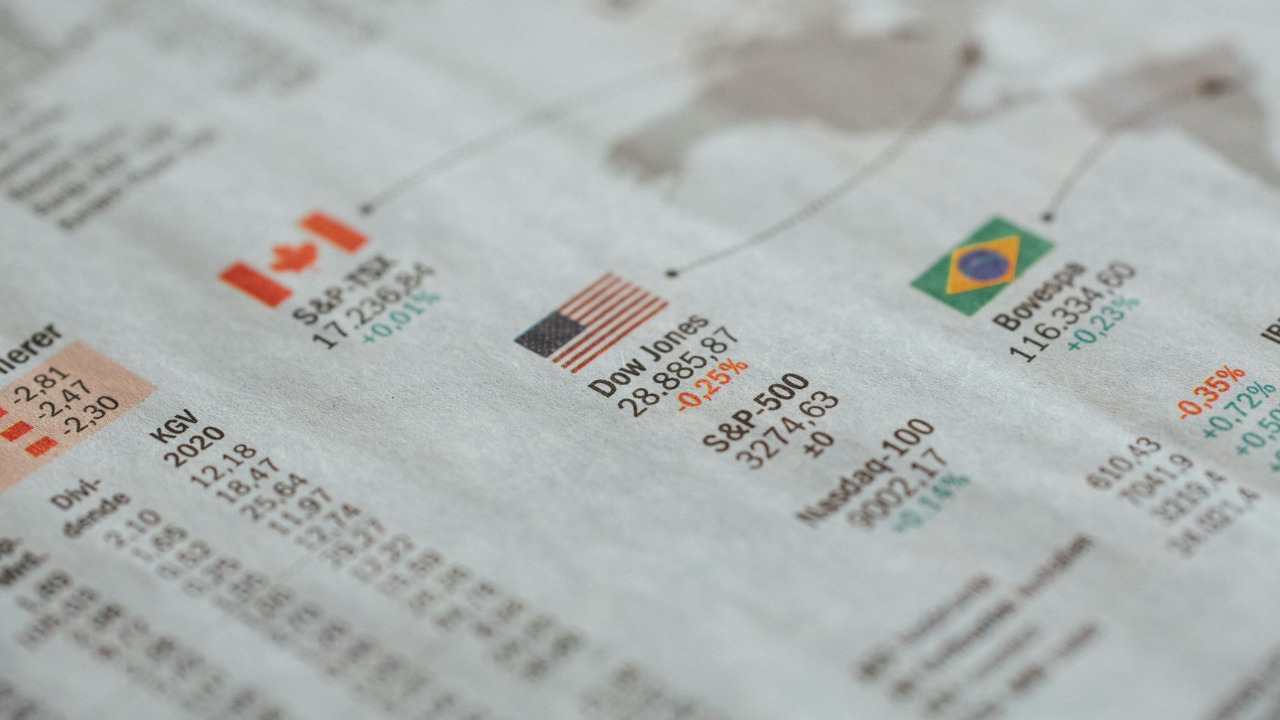
The Dow Jones Industrial Average plunged 821.91 points on Monday, February 23, 2026, closing at 48,804.06 after President Donald Trump unleashed a brutal tariff hike in the form of an abrupt import surcharge escalation that spooked investors and triggered a broad sell-off across U.S. equities. The S&P 500 dropped 1% to 6,837.75 and the Nasdaq fell 1.1% to 22,627.27, with traders pointing to the tariff shock and a repricing of AI-related stocks as the twin forces behind the rout. The sell-off landed just hours before a sweeping 10% import surcharge was set to take effect, raising hard questions about the cost of the policy for American consumers, supply chains, and retirement portfolios.
What the White House Order Actually Does
A presidential proclamation dated February 20, 2026, invoked Section 122 authority of the Trade Act of 1974 to impose a 10% ad valorem temporary import surcharge on virtually all goods entering the United States. The surcharge took effect at 12:01 a.m. EST on February 24, 2026, and is scheduled to last 150 days. The administration justified the action by citing a goods trade deficit of approximately $1.2 trillion, framing the measure as a response to what it called “fundamental international payments problems” and portraying the surcharge as a tool to rebalance trade rather than a conventional, targeted tariff.
Trump then went further. In a post on Truth Social, he announced that the tariff rate would rise to 15%, a claim that was quickly scrutinized by trading partners. A detailed statement from Singapore noted that the legal instruments actually implemented capped the surcharge at 10%. That higher 15% rate did not survive contact with the courts: a Supreme Court ruling constrained the implementation to the original 10%, creating a gap between the president’s public rhetoric and the policy in force. The disconnect between announcement and execution added to market confusion and amplified investor anxiety heading into Monday’s session, as companies scrambled to understand which rate would govern contracts already in transit.
Markets Reacted Before the Tariff Even Hit
Monday’s sell-off was notable for its speed and breadth. The Dow’s 821.91-point decline, roughly 1.7%, represented one of the sharpest single-day drops in months. The S&P 500 and Nasdaq moved in tandem, falling 1% and 1.1% respectively, according to closing data from AP. Traders cited two converging pressures: the tariff escalation itself and a separate repricing across AI-linked stocks that had been building for weeks. Together, these forces created a feedback loop in which uncertainty about trade policy compounded sector-specific selling, particularly in highly valued technology names that had powered much of the market’s gains.
For ordinary investors, the practical impact is direct. A 1.7% single-day loss on the Dow translates into billions of dollars in erased market value across index funds, 401(k) plans, and pension portfolios. The timing matters, too. The sell-off occurred before the surcharge formally took effect, meaning markets were pricing in expected damage to corporate earnings and consumer spending rather than reacting to actual import cost data. That forward-looking pessimism suggests Wall Street sees the tariff as more than a short-term negotiating tactic. It also underscores how quickly policy uncertainty can ripple through retirement accounts, especially when combined with volatility in fast-growing sectors like artificial intelligence.
Legal Challenge Limits the White House’s Reach
The Supreme Court case constraining the tariff rate is Learning Resources, Inc. v. Trump, docket number 24-1287. The challengers argue that the president’s use of emergency trade authority, including reliance on the International Emergency Economic Powers Act, exceeds the statutory boundaries Congress intended when it delegated tariff powers. While the case addresses broader questions about executive authority over trade, its immediate effect was to block the jump from 10% to 15% and hold the surcharge at the lower rate, limiting the near-term shock to importers and consumers.
This legal friction introduces a layer of uncertainty that extends well beyond the current 150-day window. If the Court ultimately rules against expansive presidential tariff authority, the administration would lose a tool it has relied on repeatedly, and future presidents could face tighter constraints in using unilateral surcharges to pursue economic or geopolitical goals. If it rules in favor, future surcharges could be imposed at even higher rates with limited legislative oversight. Legal scholars at institutions such as Cornell University have noted that the outcome will help define the balance of power between Congress and the White House on trade, reshaping the framework that importers, exporters, and consumers must navigate for years to come.
Trading Partners Push Back Across Multiple Fronts
The reaction from major economies was swift. The European Union, the United Kingdom, Japan, and Taiwan all voiced concerns about the tariff, according to reporting in the Financial Times coverage, with some signaling the possibility of retaliatory measures if the surcharge remains in place. The breadth of that response is significant. A 10% blanket surcharge does not distinguish between allies and adversaries, which means countries that cooperate closely with Washington on security and technology policy are absorbing the same cost increase as those the administration has identified as trade rivals. That has raised fears of a broader breakdown in the rules-based trading system at a time when supply chains are already under strain.
Singapore, a key U.S. trade partner in Southeast Asia, issued its own detailed response through its public communications portal, documenting the timeline and legal basis of the surcharge and advising businesses on compliance. The government’s statement also underscored the gap between Trump’s 15% announcement and the 10% implementation, a distinction that matters for firms trying to plan around actual costs rather than political messaging. For multinational manufacturers with supply chains running through Asia and Europe, the tariff creates immediate cost pressure on components, raw materials, and finished goods. Over time, those higher input costs are likely to flow through to retail prices, complicating central banks’ efforts to keep inflation in check.
The 150-Day Clock and What Comes Next
Most coverage of the tariff has focused on the immediate market reaction, but the more consequential question is what happens during the 150-day window the proclamation established. That clock is already shaping strategy on all sides. U.S. negotiators can point to the surcharge as leverage in talks over market access and currency practices, while trading partners may calculate that simply waiting out the measure is less costly than making concessions. Businesses, meanwhile, must decide whether to absorb the surcharge temporarily, pass it on to consumers, or accelerate efforts to diversify suppliers in anticipation of future disruptions.
The compressed timeline also affects how quickly companies can respond operationally. Reconfiguring supply chains typically takes months or years, not weeks, especially for industries that rely on specialized components or regulatory approvals. As firms race to adapt, many are turning to government channels for clarity on implementation details and potential exemptions. In Singapore, authorities have pointed companies to tools such as the national reporting portal to flag problems and seek guidance on trade-related systems, underscoring how technical and legal issues intersect when new border measures roll out. In the United States, lobbyists are pressing for carve-outs and clearer rules as they brace for the possibility that the surcharge could be extended or replaced with a different set of tariffs once the initial period expires.
For investors, the next phase will hinge on three variables: the trajectory of the Supreme Court case, the willingness of trading partners to retaliate, and the administration’s own appetite for escalation or compromise. If courts narrow executive authority and allies hold off on countermeasures, markets may begin to treat the surcharge as a one-off shock with limited long-term impact. But if the White House doubles down on tariffs and foreign governments respond in kind, the February sell-off could prove to be a prelude rather than an isolated event. Either way, the episode has already delivered a clear message: in an era of activist trade policy and fragile supply chains, political decisions in Washington can redraw the investment landscape overnight.
More From The Daily Overview
*This article was researched with the help of AI, with human editors creating the final content.

Grant Mercer covers market dynamics, business trends, and the economic forces driving growth across industries. His analysis connects macro movements with real-world implications for investors, entrepreneurs, and professionals. Through his work at The Daily Overview, Grant helps readers understand how markets function and where opportunities may emerge.

