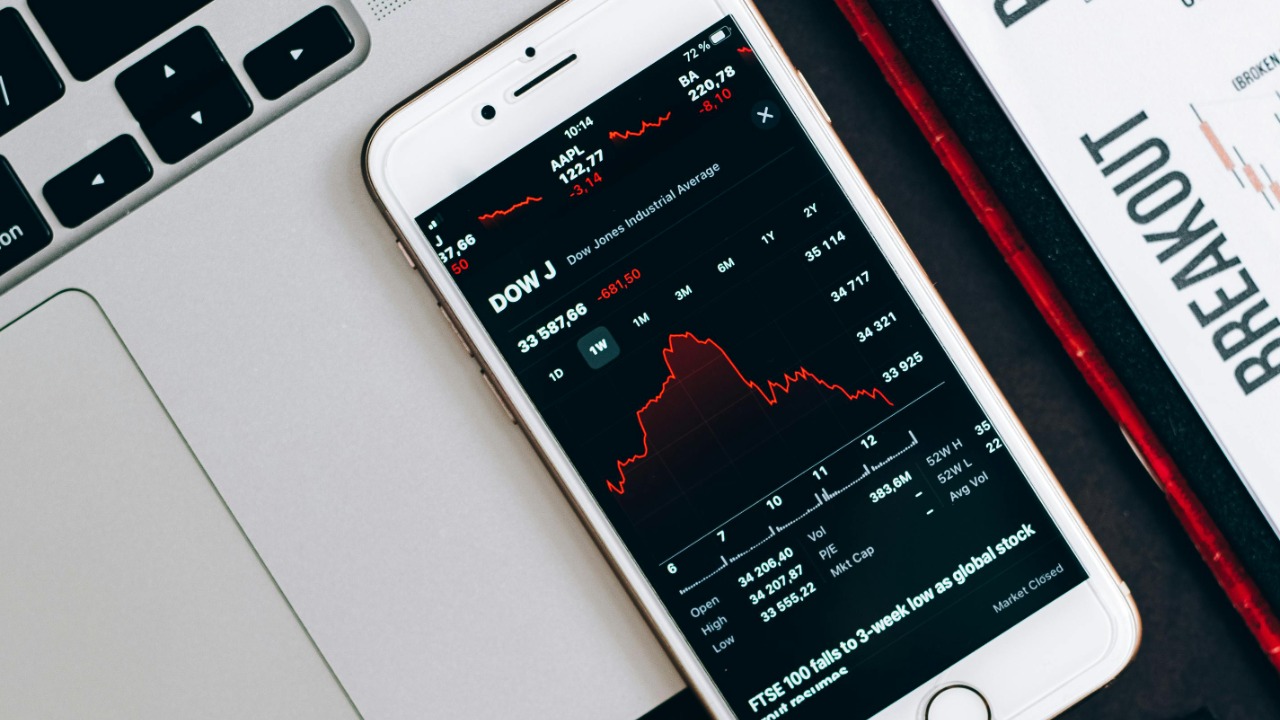
The Dow Jones Industrial Average has vaulted into uncharted territory, closing above 50,000 points for the first time and capping a stunning reversal from a bruising three day sell off. The move crowns a decade of extraordinary gains and crystallizes how central large cap American companies have become to both household wealth and political narratives. It also raises a harder question that investors and policymakers now have to confront: whether this milestone reflects durable economic strength or a market racing ahead of fundamentals.
The Dow’s surge to 50,000 points arrived with unusual force, powered by a rally that cut across sectors and fed on optimism about artificial intelligence, corporate earnings and the resilience of the United States economy. As traders celebrated on the floor and on trading apps, the index’s new level instantly became a shorthand for the country’s financial mood, a benchmark that will frame debates over growth, inequality and risk for years to come.
The day the Dow broke 50,000
The Dow did not simply edge over 50,000 points, it smashed through the barrier in a dramatic session that saw the index soar more than 1,200 points on Friday, its best single day in months. That intraday leap, which carried the benchmark to a close above the historic line, underscored how quickly sentiment had flipped after a volatile stretch of selling earlier in the week, with traders shifting from fear to relief as buyers rushed back into blue chips and other major Stocks. The sheer size of the move highlighted how concentrated the Dow has become in a handful of heavyweight companies whose swings can add or erase hundreds of points in minutes.
The Dow Jones Industrial Average, tracked under the ticker DJI, crossed 50,000 for the first time as part of a broader rebound that also lifted the S&P 500 and the Nasdaq. After three sessions of heavy selling, investors rotated back into both defensive and cyclical sectors, signaling renewed confidence that the economy could navigate higher borrowing costs without tipping into recession. The Dow’s close above 50,000 capped a week that began with anxiety about growth and ended with traders betting that corporate America still has room to run.
AI, earnings and the “1,200-Point” rocket
Behind the fireworks on the ticker, the rally reflected a deeper story about how artificial intelligence and technology spending are reshaping corporate profits. A wave of enthusiasm around AI related hardware, cloud services and software has helped turn the index’s biggest technology constituents into engines of gains, and on the day the Dow broke 50,000 Miles, that enthusiasm translated into a 1,200-Point rocket. Investors have been rewarding companies that show they can harness AI to cut costs or open new revenue streams, and those expectations were front and center as traders piled into the names seen as winners in the next phase of digital transformation.
Corporate earnings have reinforced that optimism, with many of the Dow’s components reporting solid revenue growth and resilient margins despite higher interest expenses. Financial firms, industrial giants and health care leaders have all contributed to the climb, while technology and communication services names have amplified it, helping push the broader Stock market to fresh all time highs. That mix of old economy stalwarts and high growth innovators is part of what makes the Dow’s 50,000 level symbolically powerful: it reflects both the industrial past and the digital future of the United States economy.
Politics, Trump and the symbolism of 50,000 points
Market milestones have always been political, and 50,000 points is no exception. President Donald Trump quickly celebrated the new record, using the moment to argue that his policies have supported growth and to warn that Democrats will CRASH the Economy, a message that fits squarely into his long running effort to tie stock performance to his stewardship of the White House. His reaction, shared in public comments and social media posts, turned the Dow’s latest record into another front in the partisan battle over economic narratives, with supporters pointing to the index as proof of prosperity and critics highlighting the gap between market wealth and wage growth for ordinary workers.
The Dow Jones Industrial Average’s close above 50,000 points also arrived as investors weighed geopolitical risks, domestic policy debates and the path of interest rates, all of which could shape how durable this level proves to be. Reporting on the record noted that the benchmark’s climb has been fueled by gains in sectors such as health care and technology, even as some cyclical industries remain more sensitive to global tensions and trade frictions. The fact that the Dow Jones Industrial could notch such a milestone despite those headwinds has given the administration fresh ammunition to argue that its economic strategy is working, while opponents counter that the benefits are unevenly distributed.
How the broader market and crypto joined the party
The Dow’s record did not happen in isolation, it was part of a wider risk on swing that lifted other major indexes and even digital assets. Over the same stretch, the S&P 500 and Nasdaq rebounded sharply from their earlier slump, helped by a bounce in megacap technology and renewed appetite for growth stocks. Bitcoin also climbed back above $70,000, a move that underscored how quickly sentiment can flip across asset classes when investors decide the worst of a sell off has passed, according to market coverage by Aaron Rennie, a former Senior Publishing Editor on the Dow Jones Newswires team at The Wall Street Journal.
Within equities, the rally was broad but not uniform, with some sectors and commodities standing out. As the Dow Jones hit record 50,000 points for the first time, gold and silver posted modest gains, with gold up about 0.8 percent and silver adding 0.2 percent, while energy and industrial names also participated in the upswing. Coverage of the move by By Stephanie Weaver
What 50,000 means for everyday investors
For individual savers, the Dow’s new level is less about bragging rights and more about what it signals for retirement accounts, college funds and home buying plans. A sustained period above 50,000 points would translate into higher balances for 401(k)s and IRAs that are heavily invested in large cap United States stocks, especially for workers who stayed the course through recent volatility. At the same time, the speed of the climb is a reminder that markets can overshoot, and that chasing performance after a 1,200 point surge can be risky for those without a long time horizon or a diversified mix of assets, a point echoed in coverage of how Stocks have powered through recent tumultuous geopolitical events.
Professional traders and analysts are already debating whether 50,000 points will act as a new floor or a ceiling that proves hard to hold. Some point to the fact that the Dow has climbed more than 50 percent since 2025 as evidence that valuations are stretched, while others argue that productivity gains from AI and continued earnings growth justify higher multiples, a tension captured in reporting Caroline Valetkevitch and. For everyday investors, the practical takeaway is to treat 50,000 as a milestone, not a signal to abandon discipline: rebalancing portfolios, keeping an eye on fees and resisting the urge to time the market remain more important than whether the index sits at 49,000 or 51,000.
More From The Daily Overview
*This article was researched with the help of AI, with human editors creating the final content.

Grant Mercer covers market dynamics, business trends, and the economic forces driving growth across industries. His analysis connects macro movements with real-world implications for investors, entrepreneurs, and professionals. Through his work at The Daily Overview, Grant helps readers understand how markets function and where opportunities may emerge.