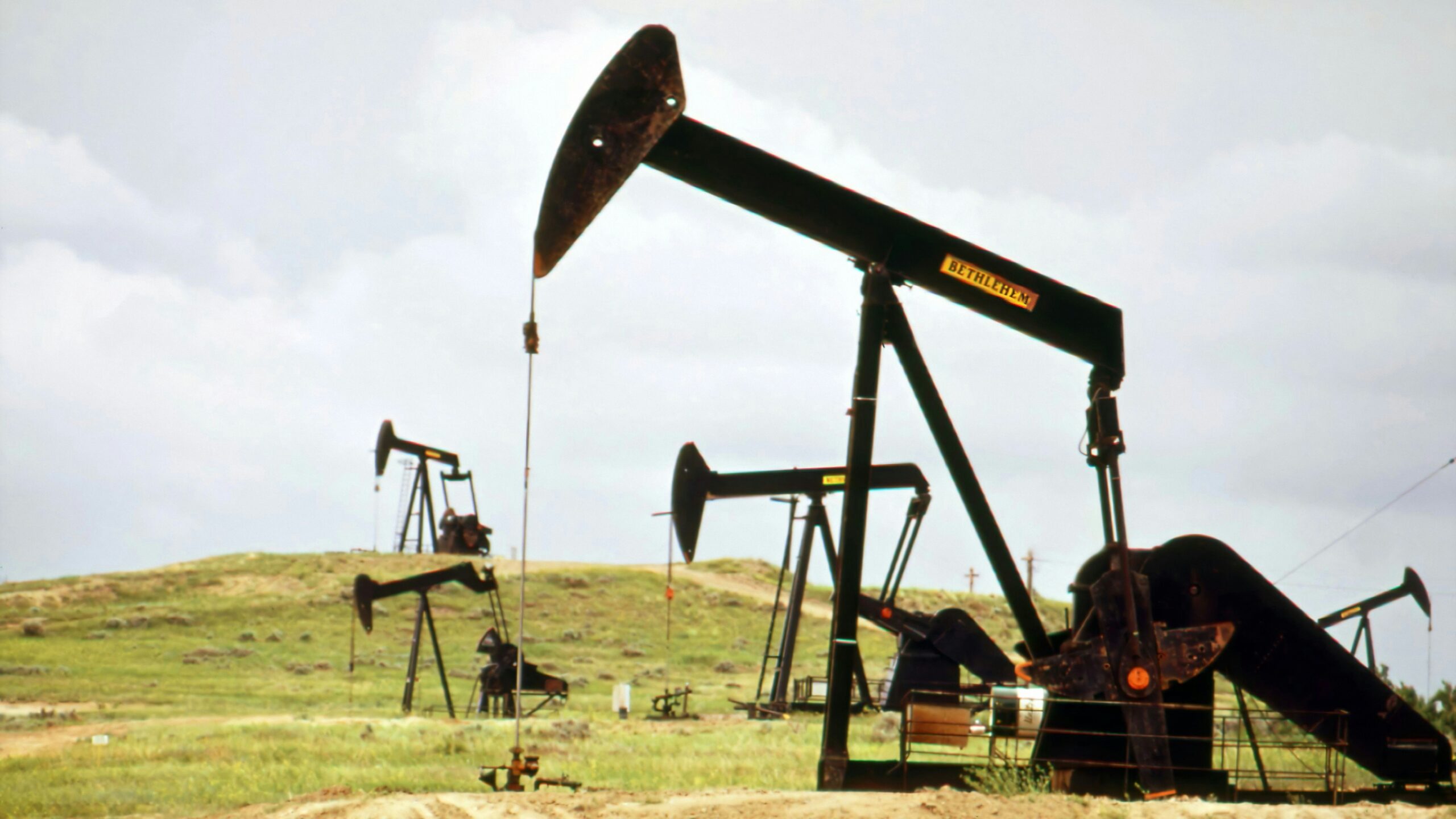
Oil markets are entering 2026 with a paradox that should worry drivers as much as drillers: forecasts point to a glut of crude, yet a leading economist is warning that a financial squeeze on Big Oil could still choke future supply and send gasoline prices sharply higher. The tension between today’s comfortable inventories and tomorrow’s potential shortfall is already shaping investment decisions from Texas shale fields to global trading desks. If capital spending keeps tightening just as geopolitical risks flare, the current cushion could vanish faster than consumers expect.
At the center of that warning is Ray Perryman, an economist who argues that aggressive pressure on large producers, from investors and policymakers alike, risks undercutting the very capacity that has kept fuel affordable. His concern collides with official projections that currently assume lower crude and pump prices over the next two years, raising a critical question for households and businesses that depend on cheap energy: are we sleepwalking into the next price spike?
The economist sounding the alarm on a future crunch
Ray Perryman has spent decades dissecting the economics of oil, and his latest message is blunt: if the industry is starved of capital long enough, supply will eventually fall short of demand and consumers will pay the price. As founder of the Perryman Group in Texas, he has watched repeated cycles in which low prices and political backlash push companies to slash drilling budgets, only for tight supply to send prices surging later. He argues that the current push to constrain Big Oil’s footprint, without a fully built-out alternative energy system, risks repeating that pattern on a larger scale.
His warning lands at a moment when many executives are already bracing for leaner returns. A recent survey by the Federal Reserve Bank of Dallas found that 39% of oil and gas executives expected capital spending to decrease in 2026, a striking figure for an industry that usually leans into expansion when prices are relatively firm. When nearly 4 in 10 decision makers are planning to pull back, it reinforces Perryman’s concern that the sector could be underinvesting just as the global economy continues to grow.
Official forecasts say “glut,” not shortage, for now
On paper, the near term looks anything but tight. Analysts tracking global flows expect swelling output from major producers to outpace modest demand growth in 2026, keeping Oil prices under pressure. One outlook describes energy markets entering 2026 in a downbeat mood as new oil and liquefied natural gas projects come online, adding to an already comfortable buffer of supply. That sense of abundance is echoed in broader coverage of an Energy glut looming as oil and LNG supply surges.
Market participants are largely aligned with that view. Virtually all of the world’s biggest traders see the oil market in a state of oversupply early next year, with one analysis noting that Virtually every major house expects a surplus. The International Energy Agency has similarly highlighted expectations for a supply surplus in 2026, with global oil production projected to exceed demand by as much as 4 million barrels per day next year according to one International Energy Agency based assessment. Several analysts have gone further, arguing that the problem is not a shortage at all but that the oil market is currently oversupplied, with Several warning that new barrels from countries like Venezuela could immediately put downward pressure on prices.
Gasoline relief today could mask tomorrow’s risk
For drivers, the most tangible piece of this puzzle is what they pay at the pump. The U.S. Energy Information Administration expects lower gasoline prices in 2026 and 2027 as crude oil prices fall, projecting that the national average will drop by about 20 cents per gallon in 2026, a decrease comparable to the declines seen in 2024 and 2025 according to its gasoline analysis. In a more detailed breakdown, the agency notes that in 2026 and 2027 it expects retail gasoline prices to average the lowest annual level since 2020, reinforcing the sense that consumers are in for a period of relative relief at the pump in its Jan update.
Those projections are rooted in the agency’s broader Short Term Energy Outlook, which anticipates that Global oil prices will ease as supply growth outpaces consumption, albeit at a slower pace than in previous years. In its more detailed STEO discussion, the agency underscores that this is the first outlook to include forecasts for 2027, and it still sees enough supply growth to keep benchmark prices contained. For households budgeting for commuting costs or small businesses managing delivery fleets, that is welcome news, but it also risks dulling the urgency of Perryman’s warning that underinvestment today can set the stage for a painful reversal later.
Consolidation, capital discipline and the “era of efficiency”
Behind the scenes, the structure of the oil and gas industry is shifting in ways that could amplify any future squeeze. A wave of mergers has concentrated prime drilling acreage in the hands of a few giants, ushering in what some analysts describe as an “era of efficiency” in 2026. One assessment notes that in 2026 these companies face an “existential headwind,” because With the best acreage locked up by giants, smaller players are relegated to less productive ground and struggle to match the efficiencies of their larger neighbors, a dynamic detailed in a recent Feb analysis. That consolidation can keep costs low in the short run, but it also means fewer independent operators ready to ramp up quickly if prices spike.
Another look at the same trend emphasizes that while giants like SLB and other majors can weather lower prices, the long term impact of consolidation could reshape the entire North American energy complex, as described in a companion With the report. That could leave the market more reliant on a handful of boardrooms to decide how much to invest in new supply. If those companies prioritize shareholder payouts and emissions targets over aggressive drilling, the capacity cushion that underpins today’s low gasoline prices could erode even if demand growth slows.
Geopolitics and the fragile “Goldilocks” price band
Even in a world of apparent surplus, geopolitics can upend the balance overnight. Earlier this week, Global energy markets were jolted as Brent crude surged to six month highs, with prices breaching the critical $72 per barrel threshold amid an intensifying U.S. Iran nuclear standoff, a move chronicled in a detailed Global account. That same report notes that Brent’s jump to $72 underscored how quickly traders can shift from worrying about a glut to pricing in disruption risks tied to Russia, Venezuela and Iran, three producers that one major bank has flagged as key wildcards for 2026 in its While assessment.
At the same time, some analysts argue that there is a “Goldilocks” zone for crude that keeps both consumers and producers relatively comfortable. One recent commentary describes a Goldilocks Indicator measured by the price per barrel, noting that at the current price, around $55, the market delivers real affordability for households without crushing investment incentives, a balance laid out in a Goldilocks Indicator discussion that explicitly cites $55 as a sweet spot. The challenge, as Perryman would likely argue, is that sustained political and financial pressure on Big Oil could push producers to behave as if prices were much lower, cutting back on long lead time projects even when benchmarks are in that Goldilocks range.
More From The Daily Overview
*This article was researched with the help of AI, with human editors creating the final content.

Grant Mercer covers market dynamics, business trends, and the economic forces driving growth across industries. His analysis connects macro movements with real-world implications for investors, entrepreneurs, and professionals. Through his work at The Daily Overview, Grant helps readers understand how markets function and where opportunities may emerge.

