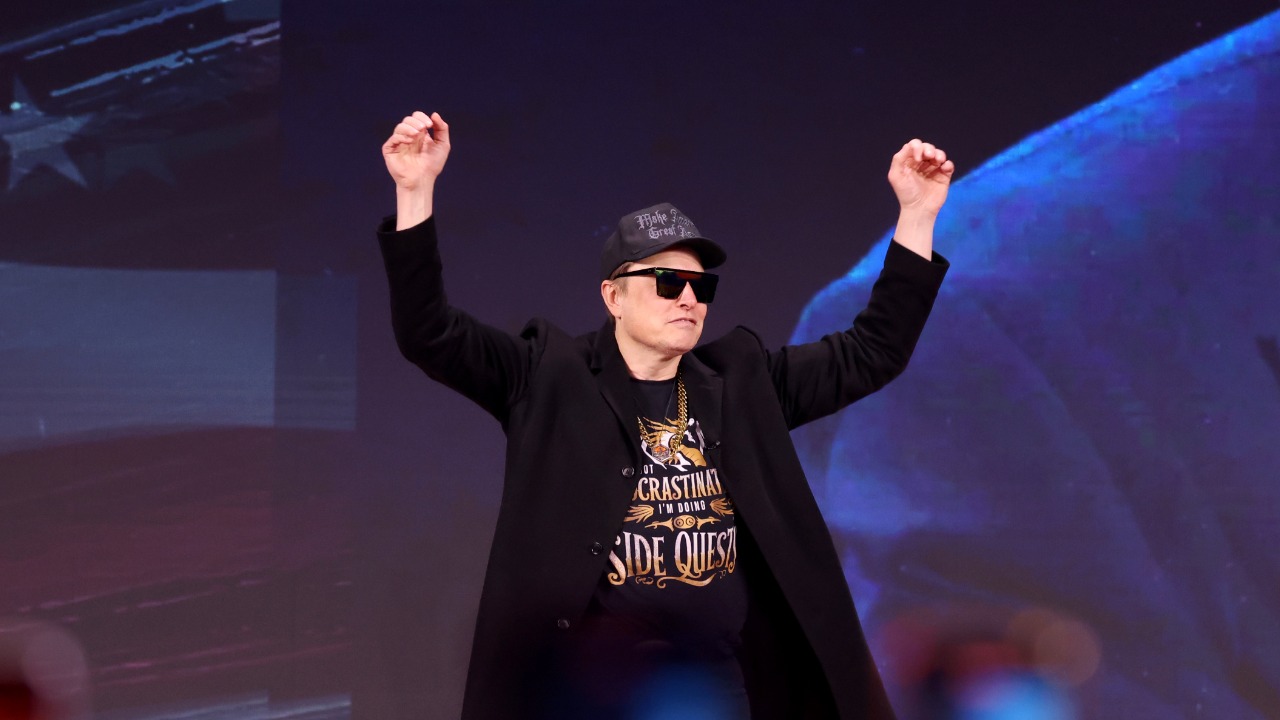
Elon Musk is once again trying to reset expectations about what a “job” even means, arguing that artificial intelligence and robotics will advance so quickly that most people will not need to work at all within the next two decades. Instead of scrambling for a paycheck, he envisions a world where income is guaranteed, labor is optional, and human effort looks more like a hobby than an obligation.
That vision lands at a moment when workers are already questioning the five‑day grind and younger graduates are nervously watching AI creep into entry‑level roles. Musk’s prediction is not just a tech soundbite, it is a provocation about how societies will share wealth, define purpose, and prepare for a future in which machines do almost everything people are currently paid to do.
Inside Musk’s latest “no work” prediction
At the center of the current debate is a simple claim from Elon Musk: in the future, working will be optional rather than compulsory. In a recent conversation with Nikhil Kamath, he framed it bluntly, saying that his prediction is that people will work because they want to, not because they have to, and that this shift could arrive in roughly 10 to 20 years as artificial intelligence and advanced automation take over most productive tasks. That framing turns the usual conversation about job loss on its head, suggesting a world where the main question is not how to keep your role, but what you choose to do once your role is no longer essential for your survival.
His, as he put it, is not a minor tweak to the labor market but a wholesale redefinition of what counts as work, and he tied that to the rapid progress he expects from AI systems and robots that can already perform tasks from driving cars to drafting code. In that discussion with Kamath, he argued that as these systems scale, they will generate so much economic value that societies can afford to decouple income from employment, making working a lifestyle choice rather than a necessity, a view he laid out while speaking on a podcast that has since been widely cited as his prediction.
From four‑day weeks to zero‑day work
For years, the frontier of progressive workplace reform has been the four‑day workweek, a model that trims hours without cutting pay. Musk’s latest comments effectively leapfrog that entire conversation, suggesting that the real endgame is not shaving a day off the schedule but eliminating the need for a schedule at all. He has argued that within less than 20 years, people may not have to work in the conventional sense, because AI and robots will be capable of handling the vast majority of tasks that keep the global economy running today.
That idea resonates in particular with Gen Z graduates who are entering the labor market just as generative AI tools are starting to automate internships, junior analyst roles, and basic creative work. Many of those younger workers are looking for reassurance that there will still be meaningful entry‑level jobs, yet Musk is effectively telling them to imagine a world where the concept of an “entry‑level job” itself is obsolete, a scenario that has been framed as a shift from the four‑day week to a future where you might not have to work at all in less than 20 years.
“Optional” work and the hobby economy
Musk has not only talked about fewer hours, he has described a world where work itself feels more like a pastime. He has suggested that as AI and robots take over the drudgery, the remaining human roles will resemble hobbies, with people choosing to build, design, or care for things because they enjoy it, not because they need the paycheck. In that framing, the traditional distinction between leisure and labor blurs, and the prestige of a job may come less from its salary and more from its creative or social value.
That idea of work as a hobby is not just a throwaway line, it is central to how Musk imagines people will relate to their time once machines handle the basics. He has said that AI and robots will make jobs optional in 10 to 20 years, and that the world’s richest individuals, including him as the World’s Richest Man, are already thinking about how to manage that transition, a point he underscored while explaining that people will work only if they want to, “like a hobby, pretty much,” during a conversation that has been summarized under the banner And Robots Will Make Jobs Optional In Years World Richest Man Makes Big Prediction On Nikhil Kamath.
AI, robots and the end of “must‑have” jobs
Underpinning all of this is Musk’s belief that AI and robotics are on track to outperform humans at most economically valuable tasks. He has argued that as these systems improve, they will not just assist workers but replace entire categories of jobs, from manufacturing and logistics to white‑collar analysis and customer service. In his view, the combination of machine learning, humanoid robots, and autonomous vehicles will create a production system that can generate abundance with minimal human input, making the idea of a “must‑have” job increasingly outdated.
He has been explicit that this is not a distant science‑fiction scenario but something he expects within roughly two decades, pointing to the rapid progress of AI models and factory robots as early proof points. Musk has said that AI and robotics could make work optional within 20 years, and he has tied that forecast to the way digital systems already handle tasks like online shopping and logistics, arguing that running a store is far easier when software and machines do most of the heavy lifting, a perspective captured in his comments that Elon Musk predicts AI and robotics could make work “optional”.
When money itself starts to look obsolete
Musk’s forecast does not stop at jobs, it extends to the foundations of the financial system. He has suggested that if AI and robots can produce almost everything people need at near‑zero marginal cost, the traditional concept of money could start to erode. In that world, he argues, currency might become less relevant because the scarcity it is designed to manage would be dramatically reduced, and societies would need new ways to allocate resources and recognize contribution.
He has linked this idea to the evolution of AI, saying that as these systems spread, they could force money as a concept to disappear or at least shrink in importance. Musk has described a future in which people no longer have to cluster in cities for jobs, and where working is optional in less than 20 years, while also speculating that at some point currency becomes irrelevant and that AI itself could function as a kind of de facto currency, a line of thinking he laid out while discussing how the AI evolution will force money as concept to disappear.
From city offices to backyard gardens
One of the more vivid parts of Musk’s narrative is his description of how daily life might look once work is no longer compulsory. He has painted a picture of people spending their time on creative projects, community activities, or even tending a backyard vegetable garden, rather than commuting to an office or clocking in at a factory. In that scenario, the pressure to live in expensive urban centers for the sake of a job diminishes, and people can choose where to live based on lifestyle rather than employment.
He has also warned that the path to that world will not be smooth, acknowledging that the transition from a job‑centric economy to one where work is optional will involve disruption, policy experimentation, and social tension. Musk has said that in the future, people will be able to live almost anywhere and still access the benefits of AI‑driven abundance, and he has contrasted the stress of traditional employment with the calmer image of growing your own food, a contrast he highlighted in a post that described how the shift may “not be smooth” but could leave more time for tending a backyard vegetable garden.
Work as choice, not compulsion
Across his recent comments, Musk keeps returning to a single phrase: working will be optional. He has argued that as AI systems become more capable, they will generate enough value to fund some form of universal income or social support, allowing people to step away from traditional employment without falling into poverty. In that world, he says, those who continue to work will do so because they find meaning or enjoyment in their roles, not because they are forced by economic necessity.
He has framed this as a fundamental shift in how societies think about obligation and choice, suggesting that the moral weight currently attached to having a job will need to be reexamined. Musk has said that in the future it will not be a case that you have to be in a city for a job, and that his guess is that if you want to do a job you can, but you will not have to, a view he elaborated while predicting that working will be optional in less than 20 years and that AI could become a kind of de facto currency.
How Musk’s own companies fit his forecast
Musk’s prediction is not just theoretical, it is closely tied to the technologies his companies are building. As Tesla CEO Elon Musk, he oversees a business that is pushing hard into self‑driving software and humanoid robots, both of which are designed to automate tasks that currently require human labor. The same executive who talks about optional work is also deploying factory robots, autonomous driving systems, and AI‑powered software that could eventually displace drivers, warehouse workers, and even some office staff.
He has argued that these advances are necessary steps toward a future where machines handle most routine work, freeing people to focus on higher‑level creativity or personal pursuits. Speaking during a recent event, Tesla CEO Elon Musk said that in the coming years work may no longer be a necessity for people, and that working will become optional like a hobby within 20 years as AI advances rapidly, a point that underlines how his corporate strategy and his public predictions are intertwined, as reflected in coverage of how Elon Musk Says Work will be optional in 20 years.
The 20‑year countdown and what comes next
Musk’s timeline of roughly 10 to 20 years is aggressive, but it is also specific enough to force a practical question: what should governments, companies, and workers do now if they take him even half seriously? If AI and robots really can make jobs optional within that window, then education systems built around preparing people for lifelong careers will need to adapt, and social safety nets will have to evolve from unemployment insurance to something closer to a permanent income floor. The political debate over who owns and benefits from AI‑generated wealth will only intensify as the technology spreads.
I see Musk’s prediction less as a guaranteed outcome and more as a stress test for our assumptions about work. His insistence that AI and robots will make jobs optional in 10 to 20 years, and that people will work only if they want to, forces leaders to confront scenarios that once belonged to science fiction but are now being discussed in mainstream finance and policy circles, a shift that was underscored when his comments were framed under the line AI And Robots Will Make Jobs Optional In 10–20 Years, even as skeptics point out that technology alone will not decide whether people truly stop working or simply find new ways to be employed.
More From TheDailyOverview
- Tennessee loses $2.6B megafactory and faces major layoffs
- Retired But Want To Work? Try These 18 Jobs for Seniors That Pay Weekly
- What to do with your pennies after the U.S. stops minting them
- Home Depot CEO warns of a troubling customer trend in stores

Grant Mercer covers market dynamics, business trends, and the economic forces driving growth across industries. His analysis connects macro movements with real-world implications for investors, entrepreneurs, and professionals. Through his work at The Daily Overview, Grant helps readers understand how markets function and where opportunities may emerge.