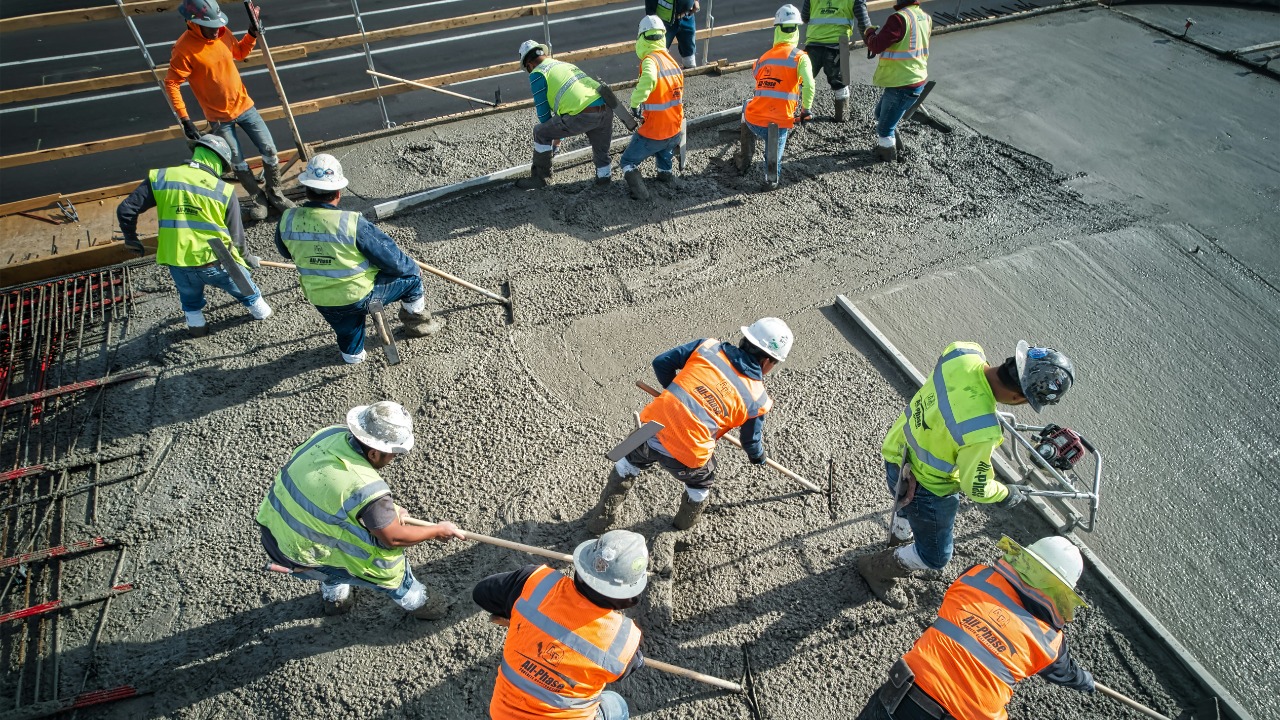
The AI buildout is not just minting fortunes in Silicon Valley boardrooms, it is rewriting pay scales on dusty job sites where data centers rise out of farmland and exurbs. As hyperscale facilities multiply to feed machine learning models, the tradespeople who pour the concrete, pull the wire, and install the cooling systems are suddenly among the biggest winners.
Across the United States, contractors are racing to staff up for a wave of complex projects that look more like industrial plants than office parks, and the imbalance between demand and supply is pushing wages sharply higher. The result is a rare moment when carpenters, electricians, and equipment operators can command premium rates, choose among competing offers, and build long-term careers around the physical backbone of artificial intelligence.
The AI boom’s unexpected winners on the job site
When people talk about artificial intelligence, they usually picture coders and data scientists, not ironworkers in hard hats. Yet the current surge in AI investment is translating directly into higher pay and steadier work for the crews assembling the massive data centers that keep those algorithms running. As Nov reports on construction workers cashing in on The AI boom, the most lucrative opportunities are often far from coastal tech hubs, in places where land is cheap and power is abundant, but skilled labor has historically been underpaid.
I see a clear shift in who benefits from the digital economy’s next chapter. Instead of only enriching software founders and venture capital funds, the AI wave is funneling money into hourly paychecks and per diem allowances for welders, pipefitters, and site supervisors. The projects are so capital intensive and time sensitive that developers are willing to pay a premium to keep schedules on track, a dynamic that is turning once routine construction roles into high earning positions tied directly to the growth of The AI economy.
Inside the data center building spree
The scale of the current buildout helps explain why pay is rising so quickly. A single hyperscale facility can cover hundreds of thousands of square feet, with multiple phases of construction stretching over years and requiring a small army of trades. According to Jul reporting on the hidden job opportunities in data center construction, the construction of a single large site can involve thousands of workers across excavation, structural steel, electrical systems, mechanical equipment, and specialized commissioning, all coordinated under intense schedule pressure.
These are not generic warehouses. They are dense, power hungry complexes packed with servers, switchgear, and precision cooling that must meet strict uptime and security standards. That complexity multiplies the number of specialized tasks and inspections, which in turn multiplies the labor hours that owners must buy. As developers race to secure more data center construction contracts to support AI workloads, the pipeline of projects is stretching into the second half of the decade, giving workers a rare degree of visibility into future demand and reinforcing the sense that this is a sustained boom rather than a short term spike in activity, as highlighted in the same Jul analysis.
From software headlines to steel and concrete
Public attention still gravitates toward AI chatbots and foundation models, but the real bottleneck for growth is increasingly physical infrastructure. While headlines focus on artificial intelligence potential, the less glamorous work of building secure shells, robust power distribution, and precision engineered infrastructure is where much of the new money is landing. Jul coverage of these hidden roles notes that the AI narrative often skips over the electricians wiring backup generators, the HVAC technicians tuning cooling loops, and the low voltage specialists threading fiber through labyrinthine conduits.
I find that disconnect striking. The digital story is incomplete without the analog backbone, and the market is starting to price that in. As more executives realize that delays in steel delivery or switchgear installation can derail AI product roadmaps, they are treating construction capacity as a strategic asset rather than a commodity. That shift is elevating the status of trades that used to be taken for granted, and it is turning data center projects into some of the most coveted assignments in commercial construction, a trend underscored by the focus on precision engineered infrastructure in the second While segment of the Jul report.
Wage spikes and premium perks on AI builds
On the ground, the AI buildout is showing up in paychecks. America is seeing construction pay rise fastest on projects tied to data center work, where owners are competing aggressively for crews with the right mix of safety records and technical experience. Reporting on Construction Pay Rises on AI Data Center Boom describes how America’s hottest new technologies are transforming software fortunes and, at the same time, lifting hourly rates and overtime opportunities for the people installing the physical systems that keep those technologies online.
Worker positions pay high at these Data Center Sites, especially on hyperscale jobs that run around the clock and require strict adherence to commissioning milestones. Contractors are layering on travel stipends, housing allowances, and retention bonuses to keep teams intact through multi year builds, a pattern that is particularly visible in markets where Associated Builders and Contractors track tight labor conditions. In my view, that combination of elevated base pay and rich project specific perks is what turns a cyclical upswing into a genuine windfall for skilled trades, as detailed in the Construction Pay Rises coverage of the Data Center Boom in America.
A labor shortage measured in the hundreds of thousands
The flip side of this boom is a severe shortage of qualified workers. The Breakdown of the Data Center Construction Labor Crisis makes clear that the industry is already struggling to staff current projects, let alone the next wave of announced facilities. The Data Center Labor Shortage is not a vague concern, it is quantified in projections that Right now, the data center sector will need roughly 300,000 additional workers by 2025 to meet demand, a gap that is forcing owners and contractors to rethink everything from apprenticeship pipelines to project sequencing.
From my perspective, that number explains why wages are rising so quickly and why even mid career tradespeople are being courted with aggressive offers. When a single region needs thousands of extra electricians and mechanical installers, there is simply no way to fill the gap without pulling talent from other sectors or accelerating training programs. Firms like Staffing at KT Black argue that their solution directly addresses the need to connect employers with the skilled talent their business demands, but even the most efficient recruiters cannot conjure experienced foremen or commissioning engineers overnight, as the The Breakdown of the Data Center Construction Labor Crisis analysis makes painfully clear.
Why 2026 is shaping up as a peak hiring year
Looking ahead, the hiring surge is not expected to taper off quickly. Data Center Construction Boom: 2026 Hiring Surge and Career Opportunities research points to 2026 as a peak year for data center construction, with a particularly intense need for both temporary build crews and permanent operations staff. The Birmingha recruiters behind that forecast describe a pipeline in which each new facility can require between 1,000 and 2,000 construction workers at peak activity, followed by 50 to 150 permanent operations roles once the site is live.
I read those figures as a roadmap for anyone considering a pivot into this niche. The short term opportunity lies in the build phase, where overtime and project bonuses are richest, but the long term stability comes from the operations side, where technicians, facility managers, and controls specialists keep the lights on and the servers cool. If 2026 does become the high water mark for new starts, the years that follow will still need a deep bench of people to maintain what has already been built, a dynamic that The Birmingha team highlights in its Data Center Construction Boom and Hiring Surge and Career Opportunities outlook.
New roles and career ladders on hyperscale sites
As data center projects grow more complex, the job descriptions on site are evolving too. Traditional trades remain essential, but they are now joined by specialists in commissioning, quality control, and digital project management who bridge the gap between engineering plans and field execution. Coverage of Worker Positions Pay High at Data Center Sites notes that on these hyperscale jobs, owners are creating new positions that blend construction know how with familiarity in IT systems, security protocols, and even remote project management tools.
In my view, that hybridization is one of the most important shifts for workers thinking about their long term prospects. A journeyman electrician who learns to interpret network diagrams or a mechanical foreman who becomes fluent in building automation software can move into roles that are less physically punishing and more resilient to economic cycles. As America’s hottest new technologies reshape the mix of skills needed on site, the Office of the owner’s representative is no longer the only path to advancement, and new positions are emerging that keep experienced tradespeople close to the field while giving them a bigger voice in design and scheduling, as described in the Worker Positions Pay High reporting on Data Center Sites.
AI as a magnet for the next generation of builders
The industry is not just building AI infrastructure, it is also using AI tools to attract and train the people who will build it. AI as a Recruiting Tool: Attracting Next-generation Construction Workers describes how the construction industry is at a critical juncture, facing both a demographic cliff as older workers retire and a surge in demand from data center projects. To bridge that gap, recruiters are leaning on digital platforms, predictive analytics, and immersive simulations that make the work more visible and appealing to younger candidates who might otherwise gravitate toward purely digital careers.
I see a certain symmetry in that approach. The same technologies that are driving the need for more data centers are helping contractors find and onboard the workforce to construct them. By framing field roles as high tech careers that interact with advanced equipment, robotics, and sophisticated scheduling software, companies can reposition construction as a modern, tech infused path rather than a last resort. The answer increasingly lies in technology, as the Recruiting Tool and Attracting Next analysis of Construction Workers makes clear.
The data center gold rush and what comes next
All of this adds up to what some observers are calling a data center gold rush for skilled trade workers. As tech companies race to accelerate their AI ambition, the surge in data center construction is sharply increasing demand for electricians, plumbers, HVAC technicians, and heavy equipment operators who can keep projects moving. Nov reporting on skilled trade workers cashing in on this gold rush notes that the competition for talent is so intense that contractors are sometimes poaching crews mid project, a sign of just how tight the market has become.
For workers, the opportunity is real but not guaranteed to last forever. The smartest move, in my view, is to treat the current boom as a springboard into durable skills and credentials that will remain valuable even if AI investment cools. Certifications in high voltage systems, critical facility operations, and advanced safety protocols can turn a few years on data center sites into a career that spans hospitals, semiconductor fabs, and other mission critical environments. As Nov coverage of this gold rush suggests, the workers who cash in most effectively will be those who use the AI buildout not just to earn more today, but to position themselves at the center of the next generation of high stakes infrastructure.
More From TheDailyOverview
- Tennessee loses $2.6B megafactory and faces major layoffs
- Retired But Want To Work? Try These 18 Jobs for Seniors That Pay Weekly
- What to do with your pennies after the U.S. stops minting them
- Home Depot CEO warns of a troubling customer trend in stores

Grant Mercer covers market dynamics, business trends, and the economic forces driving growth across industries. His analysis connects macro movements with real-world implications for investors, entrepreneurs, and professionals. Through his work at The Daily Overview, Grant helps readers understand how markets function and where opportunities may emerge.

