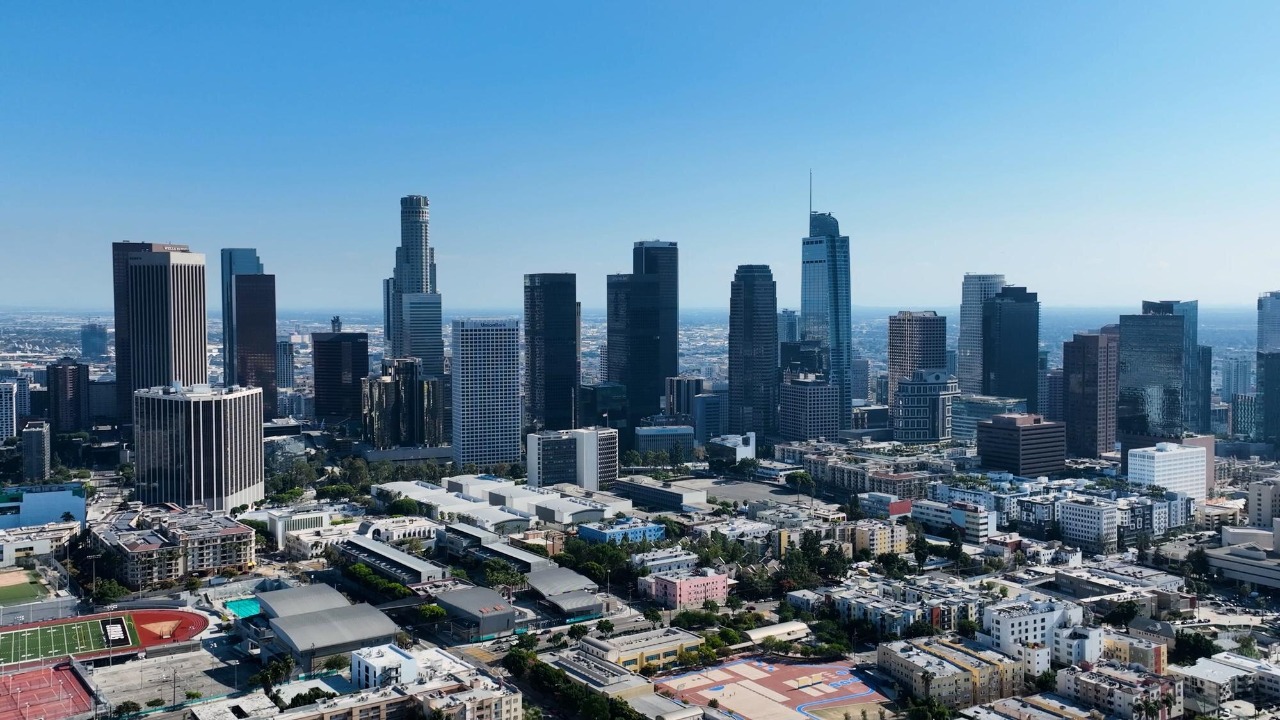
Los Angeles is betting that its glut of vacant office space can become part of the solution to its chronic housing shortage. The city has moved to expand adaptive reuse rules that allow older commercial buildings to be converted into apartments, a strategy that could unlock thousands of new units without breaking ground on new construction. The effort raises a sharp question: can regulatory incentives alone close the gap between empty cubicles and livable homes, or will the economics of conversion prove more stubborn than the policy suggests?
What the Expanded Ordinance Actually Changes
The core mechanism is a broadening of geographic scope. Los Angeles previously limited its adaptive reuse incentives to designated areas, mostly concentrated in and around downtown. The city adopted the Citywide Adaptive Reuse Ordinance as Ordinance No. 188,793, extending eligibility across the city, according to the Los Angeles Department of City Planning’s adaptive reuse overview. Buildings generally need to be at least 15 years old to qualify, though certain buildings between 5 and 15 years old can gain approval through a Zoning Administrator, per the same planning department page.
The practical incentives for developers are significant. According to the Department of City Planning, the ordinance eliminates minimum unit size requirements and provides faster approval pathways. Those two changes address common complaints from developers who say rigid zoning codes make office-to-residential conversions financially unworkable. Without a floor on apartment square footage, a developer can fit more units into a single building, improving the revenue math on projects that often carry high structural retrofit costs. Streamlined approvals also reduce holding costs, which can be decisive when interest rates and construction expenses are elevated.
How the Law Fits Into LA’s Broader Housing Strategy
The adaptive reuse expansion does not exist in isolation. It is one of six strategies under the Citywide Housing Incentive Program, itself part of the city’s Housing Element Rezoning Program, according to Los Angeles City Planning’s rezoning program materials. That broader effort aims to increase affordable housing production, reduce greenhouse gas emissions, and revitalize historic structures. The adaptive reuse track specifically targets the last two goals. Converting existing buildings avoids the carbon footprint of demolition and new construction while keeping older architecture intact.
The legislative trail runs through Council File CF 21-1230-S9, which concerns the Citywide Adaptive Reuse Code Amendment and the rescission of the older Adaptive Reuse Incentive Areas Specific Plan. That earlier plan had confined incentives to narrow geographic corridors. By rescinding it and replacing it with a citywide framework, the city council signaled that the housing crisis demands tools that work across all neighborhoods, not just in the downtown core where most prior conversions took place. The council file and related documents are accessible through the city’s official council file system, which tracks the ordinance’s progress and amendments.
Adopted Rules Versus Proposed Expansion
One area of confusion in the public record deserves attention. The Department of City Planning describes the Citywide Adaptive Reuse Ordinance as adopted under Ordinance No. 188,793, yet a separate planning department page describes a “proposed” ordinance that would expand existing incentives to all areas of Los Angeles outside of specific zones. That planning page explains that the proposed citywide expansion would not only push incentives into additional areas but could also introduce new requirements to provide affordable housing on site.
For residents and developers tracking the policy, the distinction matters. The adopted ordinance already broadens eligibility well beyond the old specific plan boundaries and establishes the basic framework for adaptive reuse across much of the city. But the proposed expansion, still working through the city’s legislative process outlined on the official city government portal, could add new affordability mandates alongside new geographic reach. Whether those mandates help or hinder actual production depends on how aggressively the city calibrates them. Too little affordability and the conversions serve only market-rate tenants; too much and the added cost deters developers from pursuing projects at all, especially in marginal locations where rents are lower.
Why Office Conversions Are Harder Than They Sound
Eliminating minimum unit sizes and speeding up permits remove real barriers, but they do not erase the structural challenges of turning an office floor plate into apartments. Office buildings typically have deep floor plans with limited windows, centralized plumbing stacks, and HVAC systems designed for open layouts rather than individual units. Retrofitting those systems is expensive and technically complex. Developers must carve out light wells, add new shafts, or accept interior bedrooms, each of which can affect livability and cost. Seismic retrofits, accessibility upgrades, and fire-life-safety improvements add further expense, particularly in older high-rises.
That dynamic could produce an uneven geographic pattern. Transit-rich neighborhoods in central and western Los Angeles may see a wave of conversion activity, while suburban office parks in the San Fernando Valley or other peripheral areas may attract little interest despite their new eligibility. The ordinance’s citywide scope is a necessary condition for broad housing production, but it is not a sufficient one. Market fundamentals, including land values, construction costs, and achievable rents, will determine where conversions actually happen. In some cases, owners may conclude that holding out for a future office rebound or selling for redevelopment into ground-up housing is more attractive than undertaking a complicated conversion.
A Needed Tool With Clear Limits
The most common framing of adaptive reuse laws treats them as elegant solutions: vacant buildings become homes, and everyone wins. That framing glosses over important tradeoffs. Converting office buildings into apartments removes commercial space from the market, which could tighten supply and raise rents for businesses if the office market recovers. It also concentrates new housing in areas zoned for commercial use, which may lack the schools, parks, and grocery stores that residential neighborhoods need. Cities that have pursued aggressive conversion programs, including New York and others, have found that the resulting units tend to skew toward smaller, higher-rent apartments rather than family-sized affordable housing, in part because smaller units are easier to fit into existing floor plates.
Los Angeles is right to expand its adaptive reuse toolkit. The city faces a severe housing deficit, and its office vacancy rates remain elevated years after the pandemic accelerated remote work. But the ordinance works best as one component of a broader strategy that also includes upzoning near transit, funding for deeply affordable housing, and reforms to parking and design standards that keep construction costs in check. Adaptive reuse can deliver a meaningful number of units, particularly in older commercial corridors where new construction is difficult, but it cannot on its own close the city’s housing gap.
Ultimately, the success of Los Angeles’s adaptive reuse push will hinge on execution. Clear rules, predictable timelines, and coordination among planning, building, and fire departments will determine whether the streamlined approvals promised on paper materialize in practice. The city will also need to monitor outcomes: how many units are created, where they are located, what share are affordable, and how conversions affect surrounding commercial activity. If the data show that incentives are producing mostly luxury micro-units in a handful of neighborhoods, policymakers may need to recalibrate requirements or pair adaptive reuse with complementary programs that support family-sized and income-restricted housing.
For now, the expanded ordinance signals a willingness to rethink how Los Angeles uses its existing built environment. Instead of treating vacant offices as stranded assets, the city is trying to fold them into its housing solution set. Whether that bet pays off will depend less on the elegance of the policy language and more on the gritty details of finance, construction, and neighborhood planning that determine whether empty offices can truly become livable homes.
More From The Daily Overview
*This article was researched with the help of AI, with human editors creating the final content.

Elias Broderick specializes in residential and commercial real estate, with a focus on market cycles, property fundamentals, and investment strategy. His writing translates complex housing and development trends into clear insights for both new and experienced investors. At The Daily Overview, Elias explores how real estate fits into long-term wealth planning.

