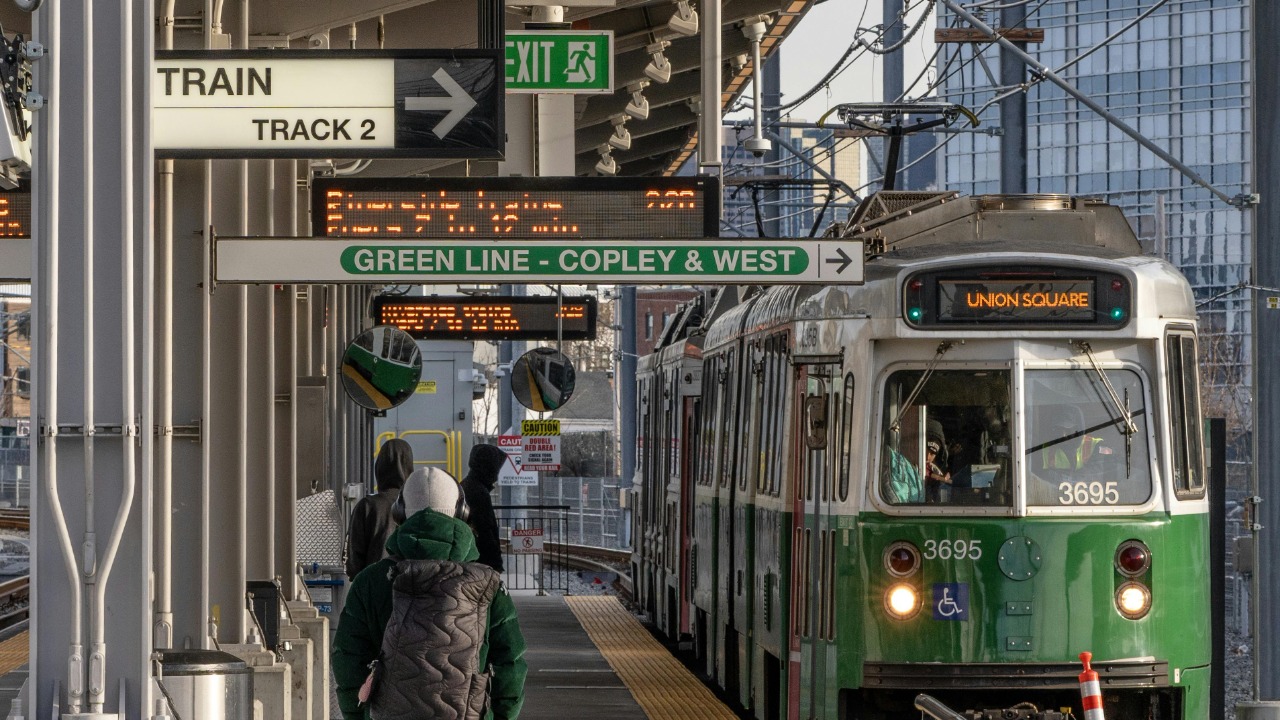
Federal transit systems across the United States are receiving more money than ever before, yet many agencies are still carrying fewer riders than before the pandemic even as others recover faster. With formula funding for fiscal year 2025 approaching $20.5 billion and ridership still below historical peaks in many systems, the disconnect between investment and actual use is prompting questions about how funds are allocated, what outcomes they are buying, and how vulnerable major capital plans are to shifts in federal policy.
Record Federal Dollars Flow Into Transit
The scale of federal transit investment has reached levels that would have seemed unlikely a decade ago. According to the Federal Transit Administration, fiscal 2025 formula programs are distributing close to $20.5 billion in transit support, as detailed in the agency’s current apportionment tables. That total reflects funding authorized under the Infrastructure Investment and Jobs Act and sustained through full-year appropriations, locking in elevated support for several years rather than providing a one-time stimulus. In practice, this means transit agencies can count on a predictable stream of federal dollars, even as local conditions and travel patterns shift around them.
A more granular breakdown shows that this money is spread across multiple grant programs, including urbanized area formulas, state-of-good-repair funds and rural assistance, all itemized in the FTA’s fiscal 2025 appropriations table. The Congressional Research Service has separately traced how these authorizations flow to individual states and territories from fiscal 2022 through 2026, offering a state-level view of who benefits most from the IIJA’s transit provisions. Because most federal transit support is embedded in multiyear surface transportation laws, the current spending trajectory was effectively set in Washington years ago, leaving limited room to react quickly to ridership shocks or changing commuter behavior.
Riders Have Not Kept Pace With Spending
While the funding trajectory is locked in, rider behavior has been anything but stable. The FTA’s Travel Trends Report notes that nationwide transit use is rising and that the vast majority of trips occur in large metropolitan areas where transit helps manage congestion and supports walkable neighborhoods, with the agency highlighting a roughly 4.6 percent increase in trips over the past decade in its ridership summary. Yet that long-run uptick masks the depth of the pandemic-era collapse and the uneven nature of the recovery. Systems that relied heavily on nine-to-five commuters, especially commuter rail and express bus, remain far below their pre-2020 baselines, even as some light-rail and frequent urban bus lines rebound more quickly.
That divergence creates a structural tension between capital planning and day-to-day service. Federal capital dollars continue to arrive because they are authorized by statute, but operating revenue from fares depends entirely on riders returning to trains and buses. The FTA’s National Transit Database provides detailed, mode-by-mode and city-by-city statistics that show just how fragmented the recovery has been, with some agencies approaching or exceeding their pre-pandemic ridership while others lag far behind. Without that granular data, the broad narrative that “ridership is rising” can conceal serious weaknesses on specific routes and in specific regions, complicating decisions about whether to expand service, cut back, or simply hold the line and hope riders come back.
New York’s MTA Illustrates the Billions at Stake
No single transit system better illustrates both the promise and the risk of this funding environment than New York’s Metropolitan Transportation Authority. The Office of the New York State Comptroller, led by Thomas P. DiNapoli, reports that the MTA’s current capital strategy depends heavily on both new local revenue and federal support, with congestion pricing projected to yield about $15 billion for the 2020–2024 capital plan and roughly $14 billion in federal funds anticipated for the 2025–2029 program, according to the comptroller’s assessment of MTA finances. Those dollars are earmarked for big-ticket investments such as signal modernization, accessibility upgrades and resiliency projects intended to keep the region’s subways, buses and commuter rails functional for decades.
The same report warns that federal policy shifts could upend those plans by delaying or reducing expected grants, leaving the MTA with a multibillion-dollar gap that local sources alone cannot easily close. Oversight tools like the state comptroller’s public reporting portal help track how money is spent and whether projects stay on schedule, but they cannot insulate the agency from national political debates over transit priorities or broader budget showdowns in Washington. Because the MTA carries millions of riders on a typical weekday and anchors the economic life of the New York metropolitan region, any disruption in its capital program would ripple far beyond the five boroughs, illustrating how dependent even the largest and most complex systems have become on the continued flow of federal transit dollars.
Formula Funding Favors Size Over Need
Beneath the headline numbers, the structure of federal formula funding raises questions about whether money is reaching the communities that need it most. By design, formula programs weight factors such as urbanized area population, existing service levels and transit vehicle miles, which means that the largest metropolitan regions and the systems that already run the most service capture the biggest shares of federal support. The CRS analysis of IIJA-era distributions shows that states housing major transit networks receive significantly more per capita than rural states, reinforcing historic patterns in which big-city agencies build and maintain extensive systems while smaller communities struggle to launch or expand even basic bus networks.
Supporters of the current approach argue that concentrating resources in high-ridership systems delivers the greatest overall benefit, because each federal dollar supports more trips and reduces more congestion when it flows to dense urban corridors. Critics counter that this logic can leave lower-income riders in smaller cities, suburbs and rural areas with infrequent or unreliable service, despite facing acute transportation insecurity. When funding formulas reward past service levels, they can inadvertently lock in disparities, making it harder for emerging regions to catch up or for agencies to experiment with new models like on-demand microtransit or flexible shuttle routes that might better match post-pandemic travel patterns.
Aligning Investment With Riders’ Realities
The growing gap between record federal transit investment and uneven ridership recovery is not simply a matter of numbers on a balance sheet; it reflects deeper questions about what public transportation is supposed to accomplish. If the primary goal is to maintain legacy systems and keep existing infrastructure in a state of good repair, then the current surge of capital funding may be doing exactly what lawmakers intended, even if trains and buses are not yet full. But if policymakers also expect transit to advance climate goals, reduce traffic, and expand access to jobs and services, then the mismatch between where the money goes and where riders actually are becomes harder to ignore. In many regions, agencies are still operating pre-pandemic route maps in a world where commuting is more flexible, service-sector jobs have shifted, and off-peak travel has grown in relative importance.
Bridging that gap will likely require a mix of more flexible operating support, data-driven service redesigns and closer coordination between federal, state and local decision-makers. National datasets, state-level oversight and system-specific reports already provide the raw information needed to understand where transit dollars are flowing and how riders are responding. The harder task is political: revisiting formulas, rebalancing capital and operating priorities, and, in some cases, accepting that the most effective use of new money may be to rethink long-standing assumptions about who transit is for and how it should fit into daily life. As agencies navigate that transition, the tension between record funding and lagging ridership will remain a central test of whether today’s unprecedented federal investments are building the transit systems riders will actually use tomorrow.
More From The Daily Overview
*This article was researched with the help of AI, with human editors creating the final content.

Grant Mercer covers market dynamics, business trends, and the economic forces driving growth across industries. His analysis connects macro movements with real-world implications for investors, entrepreneurs, and professionals. Through his work at The Daily Overview, Grant helps readers understand how markets function and where opportunities may emerge.

