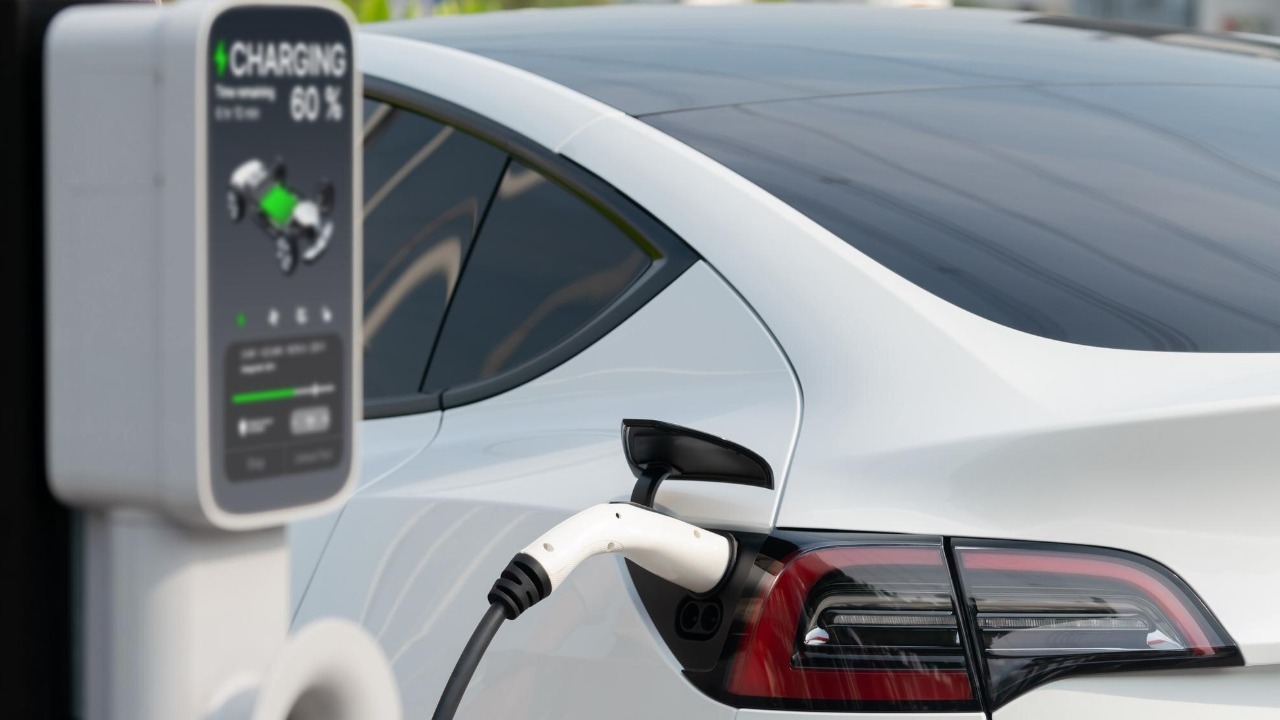
Across the American South, the electric vehicle boom that once promised a new industrial era is suddenly looking fragile. Automakers and battery companies that poured money into new plants are slowing production, delaying projects, and cutting jobs, leaving factory workers and local officials scrambling to understand what comes next. The pullback is hitting hardest in communities that bet big on EVs as the future of Southern manufacturing.
The region’s auto belt, stretching from Texas through the Carolinas, is now a test case for how quickly a global transition can stall when consumer demand, policy signals, and corporate strategy fall out of sync. Instead of a smooth glide from gasoline to batteries, the South is confronting a jagged adjustment that is putting thousands of jobs on edge and raising questions about whether the United States is ceding ground in the global EV race.
The South’s EV bet meets a colder market
For more than half a century, the South has been a magnet for auto plants, luring foreign and domestic manufacturers with lower labor costs, generous incentives, and a nonunion workforce. When electric vehicles surged to the top of corporate agendas, that same region became the preferred landing spot for new battery factories and EV assembly lines. Automakers, battery makers, and suppliers directed hundreds of billions of dollars into projects across the United States, with a particularly heavy concentration in the Southeastern U.S., according to investment tallies that track the sector’s rapid buildout.
Now that wave is colliding with a cooler market. Consumer enthusiasm has not matched the most optimistic forecasts, and higher borrowing costs, charging gaps, and price-sensitive buyers have slowed adoption. Analysts describe a clear EV pullback, with companies trimming production targets and rethinking timelines for new plants in the South even as long term climate and competitiveness pressures still point toward electrification.
States that chased the boom now face the whiplash
Southern governors and local leaders aggressively courted EV projects, branding their states as the new heart of clean transportation manufacturing. In Tennessee, sprawling campuses for batteries and electric SUVs were sold as anchors of a high tech future, while in Georgia and neighboring states, officials touted thousands of promised jobs and billions in private capital as proof that the region could leapfrog older industrial hubs. For most of the past two decades, the majority of EV related investments have flowed into Republican led districts, especially across the Southeast, a political twist that underscored how climate policy and industrial strategy had begun to overlap.
That makes the current slowdown particularly jarring. The same Republican officials who celebrated groundbreakings are now watching companies pause or stretch out hiring plans, leaving communities that cleared land and upgraded infrastructure waiting for jobs that may arrive more slowly than advertised. In some cases, local leaders are learning that the “target” employment figures attached to incentive packages were always contingent on market conditions, a reality highlighted in recent analyses of how EV investments in Republican districts are being revised.
Factory floors feel the slowdown first
On the ground, the shift shows up as canceled shifts, temporary furloughs, and outright layoffs. Companies that once could not hire fast enough for new EV lines are now “right sizing” their workforces, a euphemism that often means hundreds of people suddenly out of work. A recent tally of corporate announcements found that Companies hit the brakes on EVs and laid off thousands of workers across multiple states, a pattern that is especially visible in Southern auto towns where a single plant can dominate the local economy.
In Middle Tennessee, the strain is already visible. Local television coverage has documented how another company tied to electric vehicles announced layoffs in Middle Tennessee, with the supplier Mobili cutting staff in Spring Hill as part of a broader retrenchment. A separate clip of the same report, shared online, shows how residents are trying to process the news that Mobili is scaling back just a few years after the EV buildout was framed as a once in a generation opportunity.
Suppliers are in distress across the auto chain
The pain is not limited to headline grabbing assembly plants. The EV slowdown is rippling through the supplier base that feeds parts, electronics, and materials into every vehicle that rolls off a Southern line. A detailed “supplier distress tracker” finds that auto suppliers have cut more than 60,000 jobs across North America, a figure that underscores how quickly financial pressure is building as companies juggle legacy combustion contracts and newer EV programs.
Those cuts, spread across North America, are especially destabilizing in the South, where many smaller firms retooled to chase EV work and now face thinner order books. The Automotive News tracker notes that by Decem, virtually every major supplier was making changes to some degree, a sign that the industry is not simply trimming at the margins but reworking entire production plans in response to the EV market’s slower than expected trajectory.
Corporate strategy shifts and federal rollbacks
Behind the factory level turmoil sits a series of strategic pivots in corporate boardrooms. Automakers including GM, Ford, Hyundai, Kia, Toyota, and multiple battery partners are scaling back EV plans, delaying factories, or converting some projects into hybrid or combustion capacity, putting thousands of expected jobs in question. One industry synopsis notes that these Automakers are responding both to softer demand and to shifting policy signals from Washington.
Policy has become a central variable. After President Donald Trump’s deep electric vehicle rollbacks, General Motors announced it would cut 1,200 factory jobs at its Detroit plant where it builds electric vehicles, a move that sent a chill through the broader industry. The statement from WASHINGTON highlighted how weaker federal standards and incentives can reduce pressure on companies to push EVs aggressively, reinforcing the sense among Southern workers that decisions made far from their communities are reshaping their livelihoods.
Global race, local risk
While the United States hesitates, other regions are accelerating. Analysts warn that America is falling behind in the global EV race, a shift that could cost the US auto industry market share and technological leadership as Europe and Asia push ahead. At the 2026 Detroit Auto Show, the spotlight quietly shifted away from all electric lineups toward hybrid models and incremental efficiency improvements, a symbolic moment that captured how the domestic conversation has cooled even as global competitors double down.
Experts writing for America focused outlets argue that the U.S. pullback on EV production is not simply a climate problem, since gasoline powered vehicles are a major contributor to greenhouse gas emissions, but also a competitiveness issue. They point out that while domestic electric car sales slowed between 2014 and 2024, the rest of the world is accelerating, a gap that could leave Southern factories stranded with outdated products if global demand continues to shift toward cleaner technologies.
Demand shock and the Tesla warning sign
The market’s cooling is perhaps most visible in the fortunes of Tesla, the company that once defined the EV boom. Tesla profits slumped 46 percent last year as it lost its crown as the top EV seller, a dramatic reversal that has rattled investors and suppliers alike. Meanwhile, the electric vehicle market in the U.S. has taken a substantial hit, with Sales already underperforming expectations and raising questions about what demand would look like without federal tax credits that help offset higher sticker prices, according to recent coverage of Meanwhile Tesla’s slump.
For Southern plants that were counting on a steady ramp in EV orders, those numbers are a warning sign. If the most recognizable brand in the segment is struggling to maintain growth, smaller players and new entrants may find it even harder to justify aggressive expansion in places like Detroit’s orbit or the newer hubs in the Southeast. That uncertainty feeds back into hiring decisions, with companies preferring to delay or phase in jobs rather than commit to the full headcounts they once advertised.
More From TheDailyOverview
*This article was researched with the help of AI, with human editors creating the final content.

Grant Mercer covers market dynamics, business trends, and the economic forces driving growth across industries. His analysis connects macro movements with real-world implications for investors, entrepreneurs, and professionals. Through his work at The Daily Overview, Grant helps readers understand how markets function and where opportunities may emerge.

