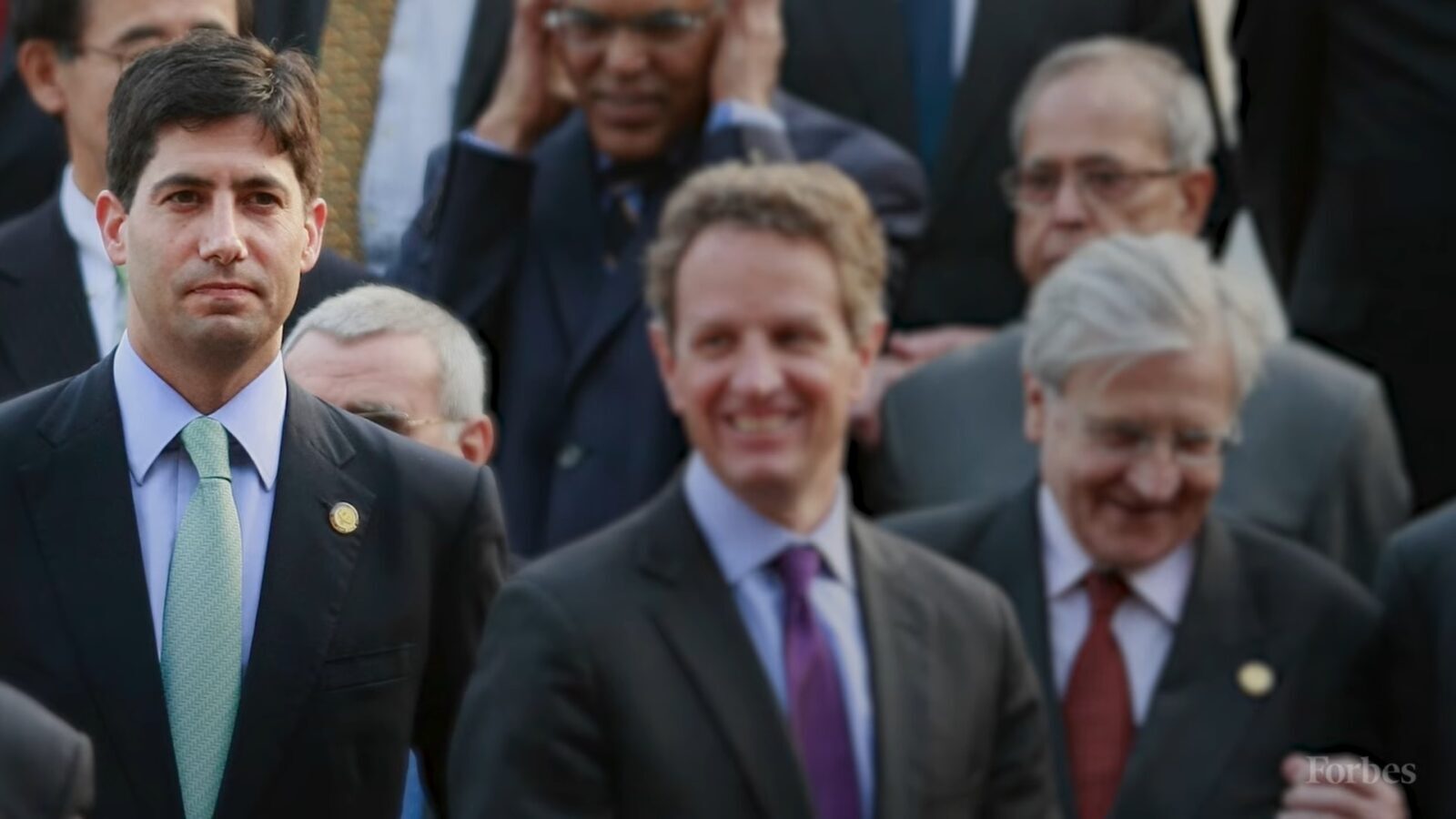
President Donald Trump’s decision to tap Kevin Warsh as the next chair of the Federal Reserve is not just a political or Wall Street story. It is a direct line to what happens to your savings account, your credit card bill, and the size of your paycheck over the next few years. The person who runs the Fed helps decide how expensive it is to borrow, how rewarding it is to save, and how aggressively the central bank fights inflation versus protecting jobs.
With Warsh set to succeed Fed Chair Jerome Powell if the Senate confirms him, households are effectively getting a new referee for the cost of money in the economy. I am looking at what his nomination signals about interest rates, how markets are already reacting, and how that could filter into everything from federal paychecks to 30‑year mortgages.
Why Kevin Warsh matters for your wallet
President Donald Trump announced that he picked Kevin Warsh to lead the Federal Reserve, naming him as the choice to succeed Jerome Powell as chair of the central bank. In a separate remark, President Donald Trump said Friday that Kevin Warsh would take over as chair of the Federal Reserve, underscoring how central this role is to the administration’s economic strategy. Those decisions put Warsh in line to become the most powerful voice on interest rates, bank regulation, and the Fed’s response to inflation, all of which shape what savers earn and what borrowers pay.
Warsh is not an unknown quantity inside the central bank system. Reporting on who Kevin Warsh is, as Trump’s pick to replace Fed Chair Jerome Powell, notes his prior experience as a Fed governor and his close ties to financial markets, which suggest he will bring a market‑attuned lens to decisions that affect everyday consumers. If confirmed by the Senate, Warsh would take over as Fed chair in May, a timing detail that matters because it means he could quickly influence how the Fed responds to still‑elevated borrowing costs and persistent price pressures that are weighing on household budgets.
Rates, inflation and the value of your savings
The Fed’s leadership has spent years in what many economists describe as a “hawkish” stance on inflation, favoring higher interest rates to prevent prices from rising too fast. After that period, Warsh is stepping into a debate over whether to keep rates elevated to finish the job on inflation or to start cutting to relieve pressure on borrowers. Analysis of his nomination notes that after years of a “hawkish” stance on inflation, Warsh is expected to weigh how much more restraint the economy can handle without tipping into a downturn, a judgment that will directly affect the returns on savings accounts and certificates of deposit.
For savers, higher rates can be a mixed blessing. On one hand, elevated borrowing costs are acting like a form of second inflation, pushing mortgages, car loans and credit card bills to levels that make big purchases harder to afford. On the other hand, the same high‑rate environment has finally delivered better yields on savings and money‑market funds, and how the Fed’s new leadership approaches interest rates will determine whether those gains stick. That makes the Fed’s leadership especially consequential, and on Friday, President Donald Trump nominated Kevin Warsh to succeed the current head of the Fed, a move that will shape how the central bank approaches interest rates and, by extension, the real value of your cash over time.
Borrowing costs, mortgages and big‑ticket purchases
For anyone with a mortgage or hoping to buy a home, the identity of the Fed chair is not an abstract concern. What Trump’s Fed chair pick, Kevin Warsh, could mean for mortgage rates is already under scrutiny, because Warsh has said he believes the central bank can help affordability by stabilizing inflation and avoiding wild swings in borrowing costs. If he leans toward keeping rates higher for longer to ensure inflation is contained, that could keep 30‑year fixed mortgage rates elevated, making it harder for first‑time buyers to get into homes and for existing owners to refinance.
Those elevated borrowing costs are acting like a form of second inflation, pushing mortgages, car loans and credit card bills to levels that make big purchases more expensive even as headline price increases cool. Earlier this year, the Federal Reserve and Chairman Jerome Powell held interest rates steady despite calls from President Trump to cut the Fed’s key interest rate, a reminder that the central bank has so far resisted political pressure to ease. With Warsh in the chair, the balance between resisting inflation and responding to White House preferences could shift, and that will ripple through everything from the monthly payment on a 2024 Toyota RAV4 financed over six years to the interest rate on a new rewards credit card.
Paychecks, federal raises and job security
The Fed chair’s decisions do not set your salary directly, but they help determine how tight or loose the job market feels, which in turn shapes wage growth. They also interact with explicit pay decisions for federal workers and the Military, which are made at the White House and implemented through formal orders. President Donald Trump’s executive order finalized a 1% federal pay raise for 2026, while Military members are also on track to receive a larger base pay raise of 3.8% for 2026, illustrating how the administration is pairing modest civilian increases with a bigger bump for uniformed service members.
Those figures did not appear out of nowhere. Earlier, Trump Proposes a 1% Federal Employee Pay Raise for 2026, in a breakdown that contrasted the 1% figure with a 3.8 increase for service members as part of a Federal Employee Pay Raise Breakdown that framed the move as part of his final year in office. The President has since signed an Executive order to implement the January 2026 pay adjustments, and pursuant to the President’s alternative plan, agencies are now applying those raises across the federal workforce. While the Fed chair does not write those orders, the central bank’s stance on growth and inflation will influence whether such raises feel like real gains or are swallowed up by higher prices and borrowing costs.
Market jitters and what they signal about your investments
Financial markets have already delivered a verdict of sorts on Warsh’s nomination, and that reaction offers clues for household investors. When Trump tapped Warsh for Fed chair, silver had its worst day since 1980 and the dollar rebounded, while stocks slid as traders reassessed the path of interest rates and the strength of the economy. People passing the New York Stock Exchange might not see those shifts in real time, but they translate into volatility in retirement accounts, college savings plans, and taxable brokerage portfolios that hold broad index funds tied to the S&P 500.
Those swings are not just a one‑day story. US futures and world shares slipped as worries over Trump’s Fed chief pick and artificial intelligence policy filtered through global markets, with commentary stressing that the Fed chair has a big influence on the economy and markets worldwide by helping to dictate where the U.S. central bank moves interest rates. That global sensitivity reinforces a basic point for individual investors: a more aggressive Fed under Warsh could mean higher yields on bonds and cash but more pressure on growth stocks, while a quicker pivot to cuts could buoy equities but erode the purchasing power of cash savings if inflation re‑accelerates.
More From TheDailyOverview
*This article was researched with the help of AI, with human editors creating the final content.

Grant Mercer covers market dynamics, business trends, and the economic forces driving growth across industries. His analysis connects macro movements with real-world implications for investors, entrepreneurs, and professionals. Through his work at The Daily Overview, Grant helps readers understand how markets function and where opportunities may emerge.

