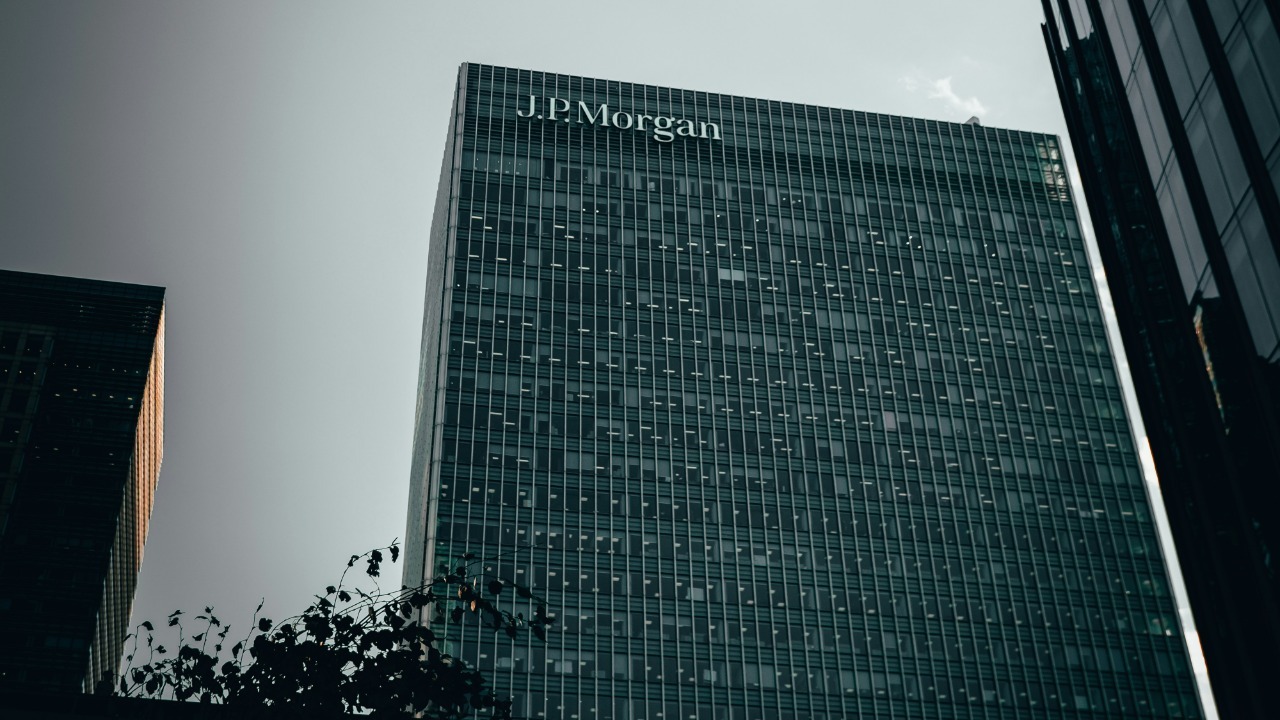
The race to build artificial intelligence infrastructure has turned into one of the most aggressive lending booms in modern finance, and the biggest Wall Street banks are at its center. JPMorgan and Citi are now deeply tied to the fortunes of AI data centers, with multibillion‑dollar loans that could supercharge profits if demand holds, or backfire if the buildout overshoots what the economy can absorb.
As the scale of this credit wave becomes clearer, market voices are starting to warn that the exposure is no longer a niche risk. The concentration of loans in a single, still‑experimental technology cycle means that any stumble in AI adoption, power availability, or regulation could ricochet through bank balance sheets, corporate bond markets, and even derivatives tied to this new infrastructure.
The warning that put JPMorgan and Citi in the spotlight
Concerns about bank exposure moved from specialist circles into the mainstream when a market expert publicly argued that big lenders like JPMorgan and Citi are now “massively exposed” to AI data center loans. In that segment, the commentator from The Bear Traps Re framed the issue not as a marginal credit story but as a systemic vulnerability building inside the largest institutions, highlighting how quickly balance sheets have tilted toward this single theme. The warning was pointed enough that it immediately raised questions about how much of the current AI infrastructure boom is being underwritten by a handful of global banks.
The same appearance, which aired on a high‑profile business program, stressed that this exposure is concentrated in a relatively small number of borrowers and projects, rather than spread across a broad base of traditional corporate clients. By calling out JPMorgan and Citi by name, the expert suggested that the lending surge has outpaced the industry’s ability to fully price the risks of long‑dated, capital‑intensive data centers that depend on still‑evolving AI business models, a concern that was reiterated in a related Market expert warns clip featuring Jan and Market discussing Citi and The Bear Traps Re.
A lending frenzy built on an AI data center boom
Behind those warnings sits a simple reality: there is a frenzy of development underway to support the AI revolution, and it is being financed with an equally intense appetite for debt. Developers and hyperscalers are racing to secure land, power, and chips, and they are leaning heavily on bank loans and capital markets to do it. One detailed analysis described how there is “a frenzy of development going on to support the AI revolution, and with it an insatiable demand for debt to fund new data centers,” capturing the way financing has become as central to the story as the technology itself.
That same reporting noted that the boom is already sparking fears of a glut, as projects stack up faster than some analysts believe end‑user demand can justify. If too many facilities come online at once, operators could be forced to cut prices or pay more to borrow, pressuring the very cash flows that are supposed to repay the loans. The risk of overcapacity, and the possibility that some borrowers will have to refinance on tougher terms, is why the lending frenzy around AI data center boom projects is now being scrutinized as a potential fault line for banks like JPMorgan and Citi.
JPMorgan’s flagship bet on OpenAI’s Stargate
JPMorgan’s exposure is not theoretical; it is written into some of the most high‑profile AI infrastructure deals in the world. Earlier in the current buildout, the bank finalized a $7 billion loan to back OpenAI’s ambitious Stargate data center initiative, a project designed to anchor the next generation of AI compute. The financing package, which was structured to support construction and early operation of the facility, signaled that JPMorgan was willing to commit balance sheet capacity on a scale usually reserved for national‑scale energy or telecom projects.
Details of that transaction show how central JPMorgan has become to the AI ecosystem. The Stargate financing was described as a $7 billion commitment, with completion expected by mid‑2025, underscoring both the size and the speed of the bank’s move into this space. By putting its name and capital behind Stargate, JPMorgan effectively tied part of its future earnings to OpenAI’s ability to keep AI demand growing fast enough to fill a mega‑facility that did not exist a few years ago.
“Lend more than $7 billion”: how far JPMorgan has gone
The Stargate deal is only one piece of a broader push. Separate reporting described how JPMorgan Chase is providing more than $7 billion for an OpenAI data center, with key points emphasizing that the bank is not just arranging the financing but also holding a significant portion of the risk on its own books. The phrase “Lend More Than” and “Billion for” in that context underlines that this is not a symbolic participation in a syndicated loan, it is a core exposure that will sit on JPMorgan’s balance sheet for years.
Those same key points make clear that this is a data center project of unusual scale, with JPMorgan Chase stepping in as the primary lender for a facility that will require enormous power, cooling, and hardware investments to operate. By agreeing to Lend More Than $7 billion for the Data Center, the bank has effectively made a concentrated bet that OpenAI’s revenue and funding model will remain robust enough to service a loan that would be transformative, in size, for many entire utilities or regional infrastructure systems.
Citigroup’s view: AI capex and rising systemic risk
While JPMorgan has been writing some of the largest individual checks, Citi has been shaping the narrative about how much more spending is coming. Citigroup analysts, in a widely cited research note, forecast that hyperscalers would spend even more on AI infrastructure in the coming year, arguing that the current wave of capital expenditure is only the beginning. They framed AI data centers as a multi‑year investment cycle that will keep drawing on bank lending, corporate bonds, and structured products, rather than a short‑lived bubble that might deflate quickly.
At the same time, those Citigroup analysts warned that this surge in AI infrastructure borrowing could expose the broader economy to greater risk if it is not matched by sustainable cash flows. Their Key Takeaways highlighted that the combination of rising leverage at hyperscalers and aggressive lending by banks like Citi could amplify any downturn in AI demand or any regulatory shock that slows deployment. By flagging these concerns in a note released on a Tuesday, the analysts effectively acknowledged that Citi is both a beneficiary and a potential casualty of the same AI infrastructure boom it is helping to finance, a tension captured in the Key Takeaways from Citigroup’s Tuesday research.
A $5 trillion buildout that touches every debt market
The scale of the AI data center wave is staggering even by Wall Street standards. Analysts at JPMorgan have projected that global data center and AI infrastructure spending will reach about $5 trillion over the next several years, a figure that instantly reframes the conversation from niche tech to macroeconomic driver. One detailed report on this outlook noted that AI’s $5T data‑center boom will dip into every debt market, with Analysts estimating that some $1.5 trillion of investment will need to be financed through various forms of borrowing rather than equity.
Another breakdown of the same forecast drilled into how that funding would be structured. It said that the next five years will see around $150bn come from leveraged finance, and up to $200bn in data center securitizations, as banks slice and package loans into bonds that can be sold to investors. That analysis also highlighted a funding gap of $1.5tn over five years, underscoring how much of the $5 trillion total will depend on continued access to credit. For JPMorgan and Citi, which sit at the center of leveraged loans, securitizations, and corporate bonds, this means the AI buildout is not just a client opportunity but a multi‑trillion‑dollar exposure embedded across their trading and lending books, as described in the $150 and $1.5 trillion projections from Nov Analysts.
The record $38B Oracle package and JPMorgan’s syndication role
Beyond OpenAI, JPMorgan has also taken a leading role in financing AI infrastructure for established enterprise players. A notable example is a record $38B AI infrastructure debt package tied to Oracle data centers in Texas and Wis, where JPMorgan and MUFG are leading the syndicate. The size of that package, and the fact that it is anchored to a single corporate name and a specific cluster of facilities, shows how concentrated some of these exposures have become.
In that deal, JPMorgan and MUFG are not only arranging the financing but also helping Oracle lock in long‑term funding for new capacity that will support AI workloads, including capacity earmarked for OpenAI. The fact that the package is described as a record $38B underscores how quickly ticket sizes have grown from hundreds of millions to tens of billions. For banks like JPMorgan, this means that a handful of transactions, such as the one linked to $38 of Oracle capacity in Texas and Wis, can materially shift their overall risk profile.
Hyperscalers’ $121 billion debt binge and what it means for banks
The other side of the ledger sits with the borrowers themselves. Hyperscalers, the tech giants building and leasing much of this AI capacity, have added $121 billion in new debt in a single year, more than four times their average annual issuance over the previous decade. That figure captures how dramatically the financing needs of companies led by figures like Sam Altman, Elon Musk, and Mark Zuckerberg have expanded as they chase AI leadership and scramble to secure enough compute.
For banks like JPMorgan and Citi, that $121 billion surge is both a revenue engine and a warning sign. On one hand, it translates into underwriting fees, trading income, and interest payments on loans and bonds. On the other, it means that a growing share of their credit exposure is tied to a small group of highly leveraged hyperscalers whose business models are still being tested in real‑world markets. Some reporting has already noted discomfort in the derivatives market linked to this debt, suggesting that investors are starting to hedge against the possibility that not every AI data center bond will perform as advertised. The sheer scale of the $121 billion raised by Hyperscalers is therefore a direct channel through which AI infrastructure risk flows back into the banking system.
From niche sector bet to systemic exposure
Put together, these strands show how a once‑niche sector bet has morphed into a systemic exposure for the world’s largest banks. JPMorgan’s $7 billion commitment to Stargate, its decision to Lend More Than $7 billion for an OpenAI Data Center, and its leadership in the $38B Oracle package in Texas and Wis are not isolated deals; they are part of a pattern in which AI data centers have become a core use of the bank’s balance sheet. Citi, through its Citigroup analysts and their Key Takeaways, has both financed and publicly mapped the next leg of AI infrastructure spending, acknowledging that the same loans and bonds driving growth could magnify any downturn.
At the macro level, projections of a $5T data‑center boom, a $1.5 trillion funding gap, and $150bn to $200bn in leveraged finance and securitizations show that AI infrastructure is now woven into every major debt market that JPMorgan and Citi touch. When a market expert goes on air to say that big banks like JPMorgan and Citi are massively exposed to AI data center loans, referencing Jan, Market, Citi, The Bear Traps Re and a related Fox Business Vid, it is this web of loans, bonds, and derivatives that sits behind the soundbite. Whether that exposure ultimately looks visionary or reckless will depend on how smoothly the AI buildout transitions from speculative boom to durable, cash‑generating infrastructure, a shift that will test the risk management of JPMorgan, Citi, and the entire financial system they anchor.
More From TheDailyOverview

Silas Redman writes about the structure of modern banking, financial regulations, and the rules that govern money movement. His work examines how institutions, policies, and compliance frameworks affect individuals and businesses alike. At The Daily Overview, Silas aims to help readers better understand the systems operating behind everyday financial decisions.

