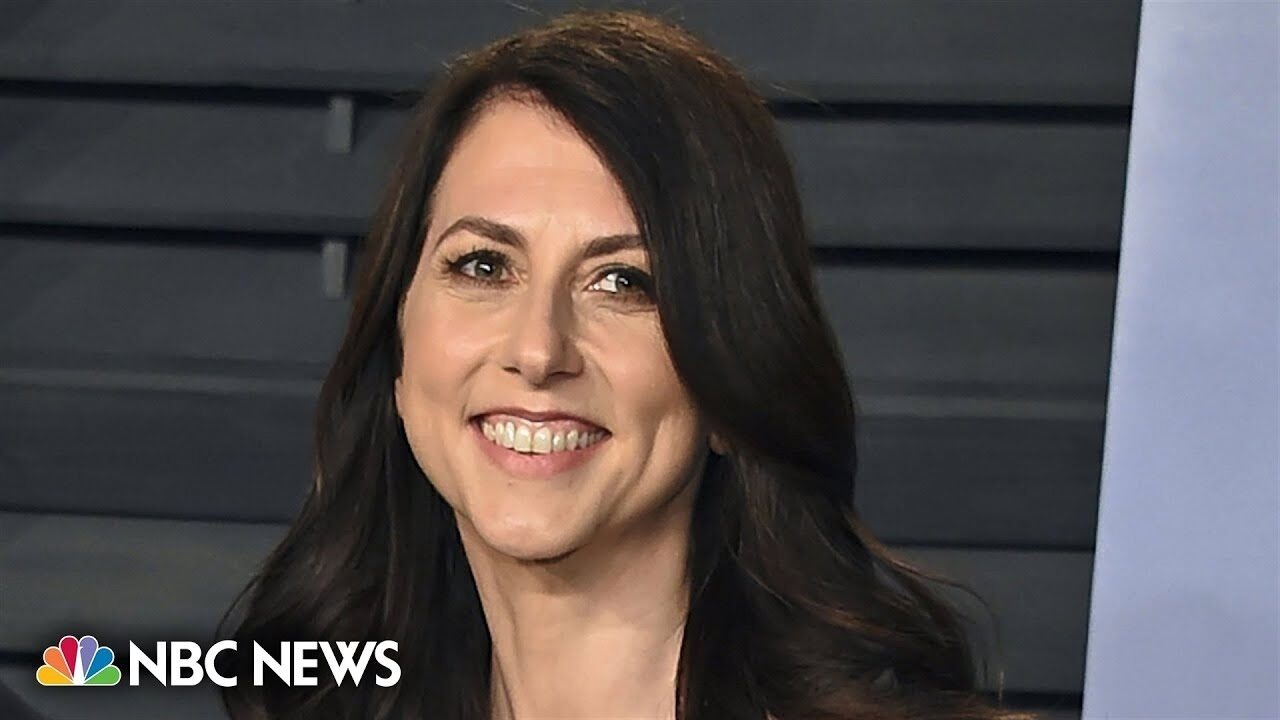
MacKenzie Scott has become one of the most influential private donors in American public life, moving billions of dollars into nonprofits that often sit at the center of political and cultural fights. Her latest gifts, including money for a group facing federal scrutiny over alleged ties to anti-Israel activism, show how her philanthropy is colliding with the national security and regulatory agendas of President Donald Trump’s administration. I see a growing test of how far “no strings attached” giving can go when recipients are under investigation by the same government whose gaps her money is helping to fill.
At the same time, Scott is pouring record sums into historically Black colleges, disaster relief networks and cultural preservation projects, reshaping entire sectors with a single announcement. The tension between those widely celebrated grants and the controversy around a nonprofit under federal probe captures the stakes of her experiment in large scale, trust based philanthropy.
Scott’s vast giving machine meets a harder political edge
Scott’s philanthropy is now operating at a scale that rivals major public programs, which makes every controversial grant more consequential. She has already committed more than $7.1 billion to nonprofits in a single recent cycle, a figure that reflects how quickly she is moving money out the door compared with other ultra wealthy donors who often prefer endowments and tightly controlled foundations. When a private individual can shift that much capital in a year, any decision to back a nonprofit that federal agencies are scrutinizing is not just a personal choice, it becomes a national political event.
Her pace has accelerated over time. Dec, Scott and her team disclosed that she had moved $7.1 billion in one round of giving, on top of earlier distributions that included $2.1 billion in 2023, underscoring how she is using her fortune as a kind of parallel funding stream to government and corporate budgets that have been shrinking or redirected in the Trump era, according to $7.1 billion. That scale helps explain why her decision to send millions to a nonprofit that critics say is aligned with anti Israel activism has drawn intense scrutiny from lawmakers and advocacy groups who see her as underwriting organizations that the federal government is simultaneously probing.
The nonprofit under federal probe and why Scott backed it
The flashpoint in the latest controversy is a nonprofit that supports anti Israel activism and has been accused by critics of aligning with groups hostile to U.S. policy in the Middle East. Federal officials have zeroed in on the organization’s ties to a progressive funding hub that channels money to advocacy campaigns, some of which target the government that runs the Gaza strip. In one case, a figure identified as Nizar was cited by critics for statements that, in their view, amounted to direct incitement of violence against U.S. national security interests, language that has helped justify closer federal scrutiny of the nonprofit’s activities.
Scott’s decision to send millions to this group, even as it faces that level of attention, reflects her willingness to fund organizations that sit far outside the bipartisan comfort zone. Jan, Nizar’s comments were described as “direct incitement of violence against U.S. national security interests by advocating for” actions against American allies, a charge that has fueled calls for the Justice Department and other agencies to examine the nonprofit’s relationships with entities connected to the government that runs the Gaza strip, according to reporting on how MacKenzie Scott sends millions to the group. By writing a large, unrestricted check into that storm, she is effectively betting that her model of trust based giving can withstand the pressure of federal probes and national security politics.
How her “no strings” model collides with federal oversight
Scott has built her reputation on a simple premise, that the people closest to a problem are best positioned to decide how to spend money to solve it. She has repeatedly emphasized that her grants come with no programmatic directives, no naming rights and minimal reporting requirements, a sharp contrast with traditional philanthropy that often dictates line item budgets and multi year metrics. That philosophy is now being tested by the reality that some of her grantees are operating in spaces where federal law enforcement and regulators are actively investigating alleged misconduct or extremist ties.
Her approach is visible in the way she has given to historically Black colleges and universities, where she has made large, unrestricted gifts that administrators can use for scholarships, faculty hiring or campus infrastructure without donor micromanagement. One recent example is a $70 m commitment, described as $70 million, that she directed to a group of historically Black colleges and universities as part of a broader wave of support that has reached more than 2,000 nonprofits, a pattern that illustrates how she prefers to trust institutional leaders rather than impose her own agenda, according to a report that noted $70 m. When that same “no strings” model is applied to a nonprofit under federal probe, it raises a harder question for regulators and the public, whether a donor’s hands off stance absolves them of responsibility for how their money is ultimately used.
DEI, cultural heritage and the African American Cultural Heritage Action Fund
Even as critics focus on the nonprofit facing federal scrutiny, Scott has been expanding her support for organizations that sit squarely in the mainstream of diversity, equity and inclusion work. One of the clearest examples is her relationship with The African American Cultural Heritage Action Fund, a division of the National Trust for Historic Preser that focuses on preserving Black historic sites and narratives that have long been underfunded. Her latest gift to the Action Fund is a $40 million donation that effectively triples down on her earlier support and signals that she sees cultural heritage as a core pillar of her giving strategy.
Oct, the Action Fund announced that it had received a $40 million gift that was twice the size of Scott’s previous donation to the same organization in 2021 and represented 20 percent of the fund’s total resources, a scale that instantly changed what projects it could take on, according to the group’s description of how The African American Cultural Heritage Action Fund operates. A separate analysis framed the same $40 million as evidence that Oct, Scott was “triples down on DEI,” underscoring how her money is not only preserving buildings and landmarks but also shoring up the intellectual and community infrastructure behind diversity initiatives that have come under attack in state legislatures and school boards, as highlighted in coverage of how Scott triples down on DEI.
Record breaking gifts to HBCUs and the symbolism of WSSU
Scott’s support for historically Black colleges and universities has become one of the most visible parts of her philanthropy, both because of the dollar amounts and because of the symbolic weight of these institutions. She has framed these gifts as a way to correct for generations of underfunding that left HBCUs with smaller endowments, fewer research facilities and less cushion to weather enrollment shocks than predominantly white institutions. By writing checks that instantly become the largest in a school’s history, she is not just filling budget gaps, she is rewriting what is financially possible for these campuses.
Nov, Scott gave $50 m to WSSU, a sum described as $50 million and identified as the largest single gift in the university’s 133-year history, a milestone that administrators said would allow them to expand scholarships, academic programs and community partnerships in ways that had been on the wish list for decades, according to reporting on the record breaking donation to WSSU. Her broader pattern of HBCU giving has been so aggressive that social media posts have dubbed her “Big Bank Kenzie,” with one Nov update noting that Billionaire MacKenzie Scott had intensified her historic philanthropic streak by contributing more than $400 million to historically Black colleges and universities this fall alone, a wave of support that has reshaped the financial landscape for these schools, as captured in an Instagram post that referred to Big Bank Kenzie.
Disaster relief, FEMA cuts and the Trump administration backdrop
Scott’s giving has also moved into areas where federal funding has been constrained or restructured under President Trump, particularly disaster relief. As climate driven storms, wildfires and floods strain local budgets, she has directed large grants to organizations that step in when official aid is delayed or insufficient. Those choices are not explicitly partisan, but they do function as a kind of private counterweight to policy decisions in Washington that have reduced or redirected certain emergency management resources.
Oct, she committed $60 million to disaster relief efforts, a gift that analysts interpreted as a sign that private philanthropy is being asked to do more as federal agencies like FEMA adjust to budget cuts and new priorities, according to coverage of MacKenzie Scott’s latest $60 million donation. In that context, a spokesperson emphasized that President Trump is committed to rightsizing the federal government while empowering state and local governments, a philosophy that leaves more room, and arguably more need, for donors like Scott to fill gaps in disaster response, housing recovery and long term resilience planning.
Inside Scott’s strategy: scale, speed and 2,700 gifts
What sets Scott apart from many of her billionaire peers is not just the size of her checks but the speed and breadth of her giving. She has signaled that she wants to move money out the door quickly rather than build a permanent philanthropic empire, a choice that has led her to back thousands of organizations across education, health, climate, racial justice and the arts. That approach has earned her both praise, for getting resources where they are needed now, and criticism, from those who worry that such rapid deployment can overlook due diligence, especially when recipients are operating in politically sensitive arenas.
Jan, She was credited with donating more than $7 billion in a single year, bringing her total donations since 2020 to $26 billion and more than 2,700 g, a tally that underscores just how many nonprofits are now tied to her largesse, according to an analysis of how Thi explains her strategy. Dec, another summary described how Billionaire philanthropist MacKenzie Scott announced the final tally for her 2025 charitable donations, which totaled billions of dollars across more than 2,700 gifts, reinforcing the idea that her philanthropy is less about building a single flagship institution and more about seeding a vast ecosystem of organizations, as highlighted in an Instagram post detailing how Billionaire philanthropist MacKenzie Scott spread her 2025 giving.
Why some of her grantees draw federal and political fire
Against that backdrop of scale and speed, it is perhaps inevitable that some of Scott’s recipients would end up in the crosshairs of federal investigators and political opponents. The nonprofit supporting anti Israel activism is not the only group she has funded that operates in contested territory, but it is the one that most clearly illustrates the collision between her trust based model and the national security lens of the Trump administration. When a donor moves billions with relatively light vetting, critics argue, the risk of inadvertently empowering actors who clash with U.S. foreign policy or domestic law enforcement priorities increases.
In the case of the nonprofit tied to Nizar and the progressive funding hub, the concern from some lawmakers is that Scott’s millions could indirectly support campaigns that undermine U.S. allies or even violate sanctions regimes, depending on how funds are routed and used. The reporting that described Nizar’s statements as direct incitement of violence against U.S. national security interests has been cited in letters urging federal agencies to scrutinize not just the nonprofit itself but also its major donors, including Scott, as detailed in the account of how the progressive funding hub operates. For her part, Scott has not publicly signaled any shift in strategy in response to these probes, leaving open the question of whether future grants will be adjusted to account for federal investigations or whether she will continue to prioritize the autonomy of grantees even when they are under official scrutiny.
The broader stakes for philanthropy, regulation and democracy
As I weigh the pattern of Scott’s giving, from the African American Cultural Heritage Action Fund to WSSU, from disaster relief networks to a nonprofit under federal probe, the throughline is her belief that private wealth can and should move quickly to address structural inequities and policy failures. That belief has produced tangible benefits, like the preservation of Black historic sites through The African American Cultural Heritage Action Fund and the transformation of HBCU balance sheets through gifts like the $50 m to WSSU, but it has also pushed her into direct tension with parts of the federal government that are wary of how some grantees operate. The Trump administration’s emphasis on rightsizing the federal government and empowering states has only heightened the visibility of large private donors who step into the resulting gaps.
For regulators and lawmakers, Scott’s model raises hard questions about whether existing disclosure and oversight rules are adequate when a single Billionaire can move $7.1 billion in one cycle and distribute more than 2,700 gifts across the nonprofit landscape. For other donors, her willingness to fund organizations facing federal scrutiny will be a test case, if she emerges from these controversies without major legal or reputational damage, it could embolden more philanthropists to back politically risky causes, while a backlash could push the sector toward more cautious, establishment friendly giving. Either way, the story of MacKenzie Scott sending millions to nonprofits that federal agencies are probing is no longer just about one donor’s choices, it is about how American democracy manages the growing power of private money in public life.
More From TheDailyOverview

Grant Mercer covers market dynamics, business trends, and the economic forces driving growth across industries. His analysis connects macro movements with real-world implications for investors, entrepreneurs, and professionals. Through his work at The Daily Overview, Grant helps readers understand how markets function and where opportunities may emerge.