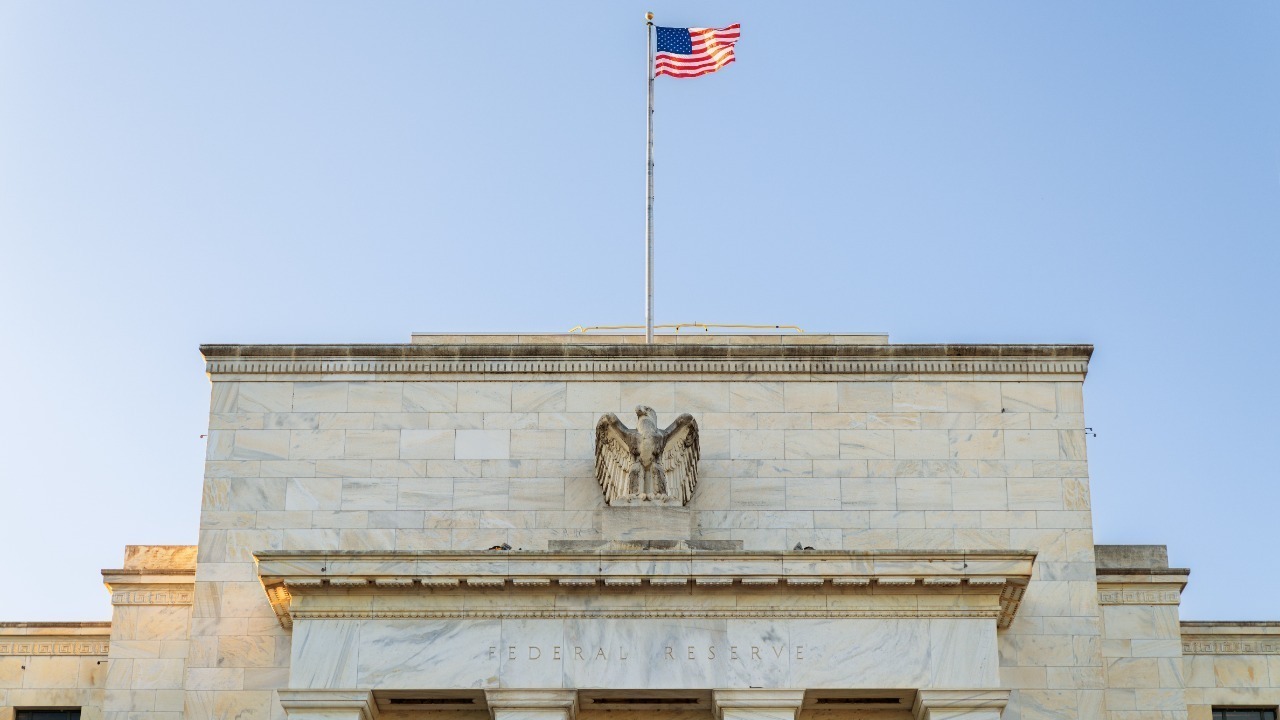
The Federal Reserve has chosen to hold its benchmark interest rate in a range of 3.5 to 3.75 percent, resisting direct pressure from President Donald Trump to ease more aggressively even as major stock indexes flirt with or surpass record highs. The move underscores a widening gap between a White House eager for cheaper money and a central bank that sees more risk in moving too fast than too slow. With Wall Street celebrating fresh peaks, the question now is how long the Fed can keep policy steady while politics and markets both demand more.
I see the decision as a stress test of the Fed’s independence at a moment when financial conditions are already loose and asset prices are buoyant. By refusing to validate the rally with an immediate cut, policymakers are signaling that their focus remains on inflation, employment, and financial stability, not on the daily level of the S&P 500.
The rate hold that defied the White House
At its first policy meeting of the year, the central bank kept the federal funds rate in a target band of 3.5 to 3.75 percent, opting for continuity rather than the deeper cuts President Donald Trump has urged. Officials framed the decision as a response to “elevated” uncertainty around the outlook, a phrase that captures both lingering inflation concerns and questions about global growth. By holding steady, the Federal Reserve is effectively telling markets that the bar for additional easing is higher than political rhetoric might suggest.
Market participants had largely anticipated a pause, with federal funds rate expected to remain at 3.5% to 3.75% while investors still price in the possibility of cuts later in the year. Analysts note that, while the Fed acknowledges some improvement in economic conditions, it is not yet convinced that inflation is on a durable path back to target. In that sense, the decision is less a surprise than a statement of priorities: stability first, politics later.
Inside the Fed’s calculus: growth, inflation and risk
In its formal statement, the Federal Reserve said that Available indicators suggest economic activity is expanding at a solid pace, language that helps explain why officials are in no rush to cut. Growth that is steady rather than spectacular gives the central bank room to watch incoming data without feeling cornered by recession fears. At the same time, inflation that remains above target, even if off its peak, argues against delivering the kind of rapid easing President Trump has demanded.
Officials are also weighing financial stability risks that come with very low borrowing costs at a time when asset prices are already elevated. The benchmark rate, which stands between 3.5%, is a significant step down from the peak reached in the last tightening cycle, which has already eased pressure on rate‑sensitive sectors like housing and autos. By pausing here, policymakers are trying to balance their dual mandate with a third, unofficial one: avoiding the kind of speculative excess that can build when money is too cheap for too long.
Trump’s pressure campaign meets Fed independence
President Trump has not been shy about his preference for lower rates, repeatedly calling on the Federal Reserve to cut more aggressively after it reduced the policy rate three times last year. His argument is straightforward: with inflation off its highs and global competition intense, cheaper credit would, in his view, supercharge growth and support his broader economic agenda. The latest decision to hold rates unchanged, even as Trump continues to insist they be lowered, is therefore more than a technical tweak, it is a public rebuff.
Fed Chair Jerome Powell has responded to this pressure by stressing that the institution has not lost its independence and that he does not believe it will. That message is aimed not only at the White House but also at investors, who need to trust that rate decisions are driven by data rather than politics. The fact that The Federal Reserve kept the interest range at 3.5% to 3.75% while still emphasizing both sides of its dual mandate, as reflected in its live‑tracked decision, reinforces that institutional stance.
Wall Street’s record highs and the market reaction
Even as the Fed held firm, Wall Street continued to trade near historic peaks, a sign that investors see steady policy as a green light rather than a constraint. Ahead of the announcement, In the bond market, Treasury yields held relatively steady, reflecting confidence that the decision would not derail the expansion. Equity traders, for their part, appear to be betting that a patient Fed will eventually deliver cuts if growth slows, but not so quickly that it signals panic.
By the close, major stock indexes were little changed but still hovering around record territory, with The Fed’s policy committee having voted to keep its key rate flat at 3.5% to 3.75%, as summarized in market. That reaction suggests investors are comfortable with a central bank that is neither slamming the brakes nor flooring the accelerator. In effect, Wall Street is treating the pause as a promise of stability, a backdrop in which corporate earnings and global developments, rather than sudden policy shifts, will drive the next leg of the rally.
Political scrutiny and the communications challenge
The decision is unfolding under intense scrutiny from both the White House and Congress, with critics questioning whether the Fed is being too cautious in the face of moderating inflation. Coverage of the meeting highlighted how the Federal Reserve is navigating mounting political and legal scrutiny, a backdrop that raises the stakes for every word in its post‑meeting statement and press conference. When politics heats up, communication becomes policy, and any hint of bias can erode trust.
That is why officials and commentators alike are emphasizing the importance of clear forward guidance. One veteran policymaker, Mester, has argued that The Fed is in a very good position to hold for a while and see how the economy actually evolves, a stance that underscores the value of patience. I read that as a reminder that central banking is as much about managing expectations as it is about setting a single overnight rate.
More From TheDailyOverview
*This article was researched with the help of AI, with human editors creating the final content.

Grant Mercer covers market dynamics, business trends, and the economic forces driving growth across industries. His analysis connects macro movements with real-world implications for investors, entrepreneurs, and professionals. Through his work at The Daily Overview, Grant helps readers understand how markets function and where opportunities may emerge.

