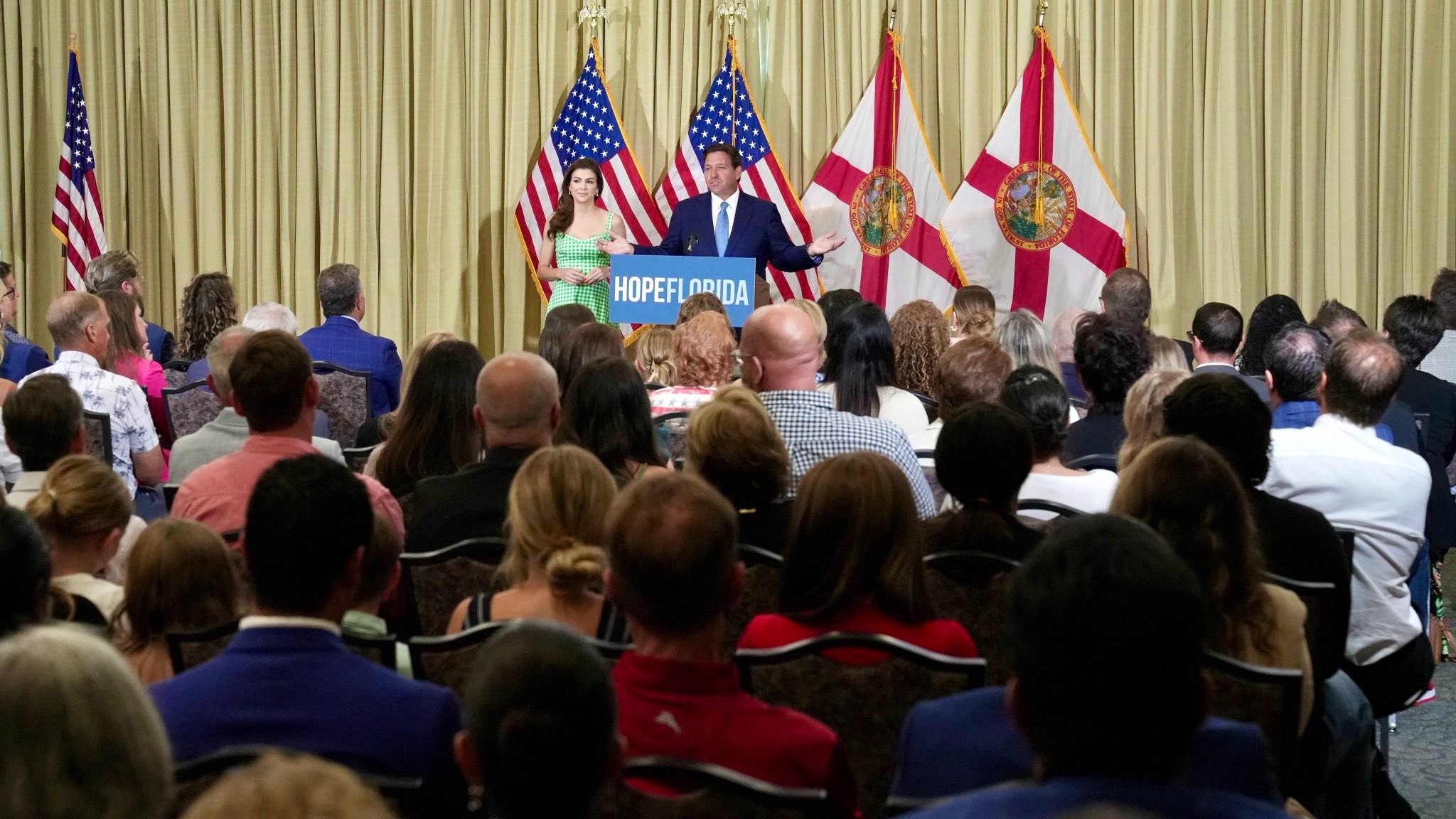
Florida Republicans have been handed a blunt warning: solve the affordability crisis or watch the state’s promise of the American dream slip away. Under Gov. Ron DeSantis, the state has drawn wealth and national attention, but the same boom is now squeezing the workers and families who make Florida function. If housing and basic costs keep climbing, the political coalition that turned the state deep red could start to crack.
The stakes reach beyond one state. Florida has been a showcase for low taxes, rapid growth and culture-war politics, promoted as a model for conservatives nationwide. If that model ends with teachers, nurses and service workers priced out, it will not just be an economic problem; it will be a warning about what happens when a party ignores the daily math of rent, mortgages and paychecks.
Florida’s boom and its breaking point
Under Gov. Ron DeSantis, Florida has attracted a surge of wealth, high-income residents and investment, helped by its lack of a state income tax and its appeal as a warm-weather refuge. According to one recent newspaper column, that influx has been a clear political and economic win for Republicans, who point to population gains and business relocations as proof that their model works. Yet the same growth has driven up demand for housing faster than supply, leaving middle-income residents struggling to stay in the communities where they work.
The columnist argues that Florida’s progress now risks being undermined if housing problems are left to fester, warning that the state’s success story could flip if families start “packing up a U-Haul” in search of cheaper lives elsewhere. That assessment frames affordability not as a niche concern but as a direct threat to the version of the American dream Republicans say they are defending. The analysis is blunt: Republicans must address affordability to save that dream, particularly in Florida, where the cost squeeze is colliding with their own political brand.
The GOP brand vs. the cost of living
Republicans in Florida have campaigned on the promise that low taxes and light regulation would keep life affordable and opportunity within reach. That message caught on with retirees seeking to stretch fixed incomes and with workers looking to escape higher-tax states. But when housing, insurance and basic services climb faster than wages, the promise of affordability begins to ring hollow. Voters may still appreciate the tax structure, yet daily experience is defined less by what they pay in April than by what they owe on the first of every month.
This tension hits especially hard for the very voters Republicans claim as their base: sheriffs’ deputies who cannot buy homes in the counties they patrol, nurses commuting long distances because nearby rents are out of reach, and young families who moved south for a better life only to find themselves competing with out-of-state cash buyers. When the party in power talks about defending the American dream while residents feel it slipping away, a credibility gap opens. Over time, that gap can become more politically dangerous than any single scandal or news cycle, especially if more families quietly join the flow of people loading up trucks and leaving.
Housing as a test of conservative governance
Housing policy is often treated as a technical issue, but in Florida it has become an exam for conservative governance. If Republicans insist that markets work best with minimal interference, they need to show how that philosophy can still produce enough homes at prices workers can afford. Otherwise, critics will argue that the state has become a showcase for a model that benefits high earners and investors while leaving the rest of the population scrambling for scraps of inventory.
The column’s warning that Florida’s progress could be undone by housing pressures suggests a broader test: can a party that has focused heavily on cultural and education battles pivot to the unglamorous work of land use, zoning reform and infrastructure planning? Those decisions rarely go viral, but they determine whether a booming region becomes a sustainable community or a playground for the rich. If Republicans fail that test, they risk confirming their opponents’ claim that they are more interested in symbolic fights than in the budgets and leases that dominate ordinary lives.
What the numbers say about the squeeze
The affordability problem is not just a mood; it shows up in hard numbers that are starting to shape the political debate. The column points to a figure of 698, describing that many dollars as the monthly gap some typical households face between what they earn and what it now costs to cover housing, insurance and other basics in parts of Florida. For a family already watching every bill, an extra $698 a month is not a small adjustment; it can mean credit card debt, skipped savings and hard choices about food, medicine or gas.
Other statistics deepen the picture. In one example cited by the columnist, a local teacher would need to work 36 extra hours each month, on top of a full-time job, just to close that kind of budget shortfall. Another case describes a nurse who can find hospital work but would have to drive 33 miles each way because the neighborhoods near the job have become too expensive. These snapshots are not statewide averages, but they show how rising costs are reshaping daily life and forcing workers to stretch their time, their commutes and their paychecks to stay afloat.
What happens if Republicans stall
If Republicans do not move quickly on affordability, the first cracks are likely to appear not in statewide election results but in local politics and personal decisions. Residents who feel locked out of homeownership may start to look for nearby counties or states where their paychecks stretch further. Local school districts and hospitals could struggle more with staffing as workers weigh whether loyalty to a community is worth years of financial strain. These shifts can be quiet at first, but they add up over time to a different electorate and a different economy.
One reasonable prediction is that, by the next major election cycle, Republicans will face sharper questions from their own voters about why a party that controls the governor’s office and the legislature has not delivered relief on housing and insurance. Another likely outcome is that Democrats and independents will frame affordability as the central test of competence, arguing that a government that cannot keep basic shelter within reach has failed in its most practical duty. The column’s argument that Republicans must address affordability to preserve the American dream in Florida hints at this future debate, where cost-of-living complaints replace abstract ideological disputes as the main driver of discontent.
More From The Daily Overview
*This article was researched with the help of AI, with human editors creating the final content.

Grant Mercer covers market dynamics, business trends, and the economic forces driving growth across industries. His analysis connects macro movements with real-world implications for investors, entrepreneurs, and professionals. Through his work at The Daily Overview, Grant helps readers understand how markets function and where opportunities may emerge.

