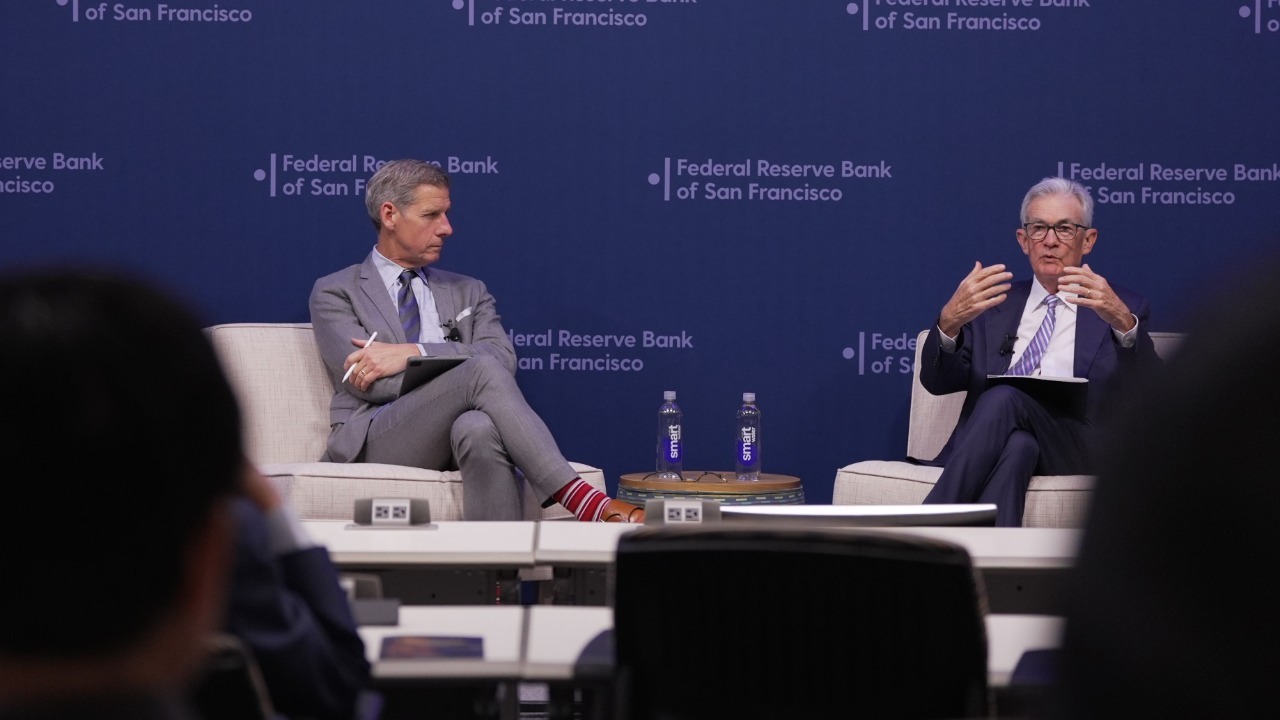
The Federal Reserve has shifted into a lower gear, cutting interest rates again even as a leading economist warns that millions of Americans are already stretched to their limits. The central bank is trying to guide the economy toward a softer landing, but the warning signs around household finances and the job market suggest the margin for error is shrinking fast.
Rate relief is arriving just as a growing share of Americans are living on what Mark Zandi calls the “financial edge,” with little room to absorb another shock. The question now is whether cheaper borrowing costs will be enough to stabilize that fragile reality, or whether the cuts themselves are a signal that the economy is closer to a downturn than most people want to believe.
The Fed’s third straight cut, and what it signals
The Federal Reserve has now cut interest rates for a third meeting in a row, a clear sign that policymakers see more risk in holding borrowing costs too high than in easing off too soon. The Fed’s policy committee lowered its influential benchmark again in Dec, extending a rate-cutting cycle that began earlier this year and underscoring how quickly the conversation has shifted from fighting inflation to protecting growth. In its latest decision, the Committee said it was acting “in support of its goals” and in light of a shift in the balance of risks, language that points to growing concern about the durability of the expansion and the path back to its 2 percent inflation objective, as laid out in the official Committee statement.
By cutting again in Dec, the Fed has now delivered what one detailed analysis described as Fed Cuts Interest Rates For a Third Meeting In a Row, a sequence that would have been hard to imagine when inflation was running hot and policymakers were still talking about “higher for longer.” The central bank’s influential rate is the reference point for everything from credit card APRs to auto loans and corporate debt, and the decision to trim it yet again reflects a judgment that the economy is closer to “neutral” than to overheating. As one breakdown of the move noted, the Fed’s policy committee cut its influential interest rate at this Dec meeting, reinforcing the sense that the rate-cutting cycle is now well established and that the Fed is trying to steer carefully between lingering price pressures and the risk of a sharper slowdown, a balance that was highlighted in the Fed Cuts Interest Rates For a Third Meeting In a Row coverage.
Americans on the financial edge
While the Fed is easing policy, the lived reality for many households is that there is almost no slack left in their budgets. Top economist Mark Zandi has been blunt about this, warning that a large share of Americans are already “living on the financial edge,” with savings depleted and debt burdens elevated after years of volatile prices and borrowing costs. In one recent video segment, the situation was framed starkly as the Fed cuts rates as a top economist warns Americans living on the financial edge, a pairing that captures the tension between macro policy and micro stress as The Federal Reserve reduces rates while businesses cut thousands of jobs and families juggle higher costs, a dynamic laid out in the Fed cuts rates as top economist warns Americans living on financial edge report.
Zandi has sharpened that warning in multiple interviews, arguing that the economy is generating “fodder for a recession” because so many Americans are already stretched. In one detailed account, the phrase Fodder for a recession was used to describe how Americans are “already living on the financial edge,” with the economist stressing that this fragility is the product of a K-shaped recovery in which some households built up buffers during the pandemic while others burned through theirs. That same analysis emphasized that Americans who did not benefit from the frenzy of the pandemic housing and stock market boom are now more exposed to layoffs and income shocks, a point that was underscored in the Fodder for a recession warning.
Mark Zandi’s recession alarm
Mark Zandi is not just describing household stress, he is connecting it directly to the risk of a broader downturn. In his view, an economy in which a significant slice of the population is already on the brink is far more vulnerable to a negative shock, whether that comes from a weaker job market, renewed inflation, or a policy mistake. In an interview that ran earlier this month, Zandi told Fortune that many Americans already reside “on the financial edge,” and he linked that vulnerability to what he described as a “low fire” job market that could flare into something more serious if layoffs accelerate, a perspective captured in the Mark Zandi recession warning coverage.
Another detailed account of his thinking framed the situation as Fodder for a recession, with Economist Mark Zandi warning about Americans “living on the financial edge” and pointing to a K-shaped economy that is “close to a jobs recession” as layoffs mount. In that analysis, he stressed that Americans who did not benefit from the asset boom are now facing rising delinquencies and thinner safety nets, while the labor market shifts from a hiring frenzy to a more cautious stance. The same report highlighted his concern that the economy is “close to” a jobs recession, with layoffs and hiring freezes spreading beyond the most obvious sectors, a pattern that was laid out in detail in the Fodder for a recession analysis.
Is the Fed almost done cutting?
Even as the Fed delivers another cut, there is an active debate about how much further it can or should go. Some analysts argue that the central bank is now approaching a neutral setting, where rates are neither stimulating nor restraining the economy, and that moving much lower would risk reigniting inflation or signaling panic. A detailed breakdown of the Dec meeting noted that The Fed cut its key interest rate by another quarter of a percentage point and suggested that policymakers may be nearing the end of this rate-cutting cycle, with the Key takeaway that The Fed is weighing how close it is to neutral and how much more easing the economy can absorb without sending the wrong signal, a balance that was explored in the Key Fed meeting analysis.
Mark Zandi has gone further, warning that any additional interest rate cuts after this latest move could themselves be interpreted as a sign of deeper trouble. In one pointed comment, he cautioned, “Be careful what you wish for,” arguing that if the Fed feels compelled to cut again in early 2026, it would likely be because the economy is deteriorating more quickly than expected. That warning was captured in a report that described how a Top economist warns any additional interest rate cuts after today would signal the economy is weakening, and that The Federal Reserve is likely to pause while it assesses incoming data before considering any move in January, a stance detailed in the Top economist warns coverage.
What households should do with lower rates
For individual Americans, the Fed’s pivot raises a practical question: how to respond when borrowing costs start to fall but recession risks are rising. Financial planners are urging households to treat the latest cuts as an opportunity to shore up their positions rather than a green light to take on more debt. One detailed guide framed the moment as The Fed Just Cut Rates Again, We Asked Experts What Americans Should Do Next, and the experts emphasized that while lower rates can ease some pressure on variable-rate debt, they may not move the needle much on a household’s budget unless people use the breathing room to pay down balances and rebuild savings, a point laid out in the Experts What Americans Should Do Next guidance.
That advice aligns with the broader view that the Fed is trying to guide the economy toward a soft landing while acknowledging that the risks are no longer evenly balanced. As one synthesis of the Dec decision put it, the Fed’s rate-cutting cycle is part of a broader effort to support growth while inflation drifts back toward target, but the benefits of lower rates will arrive unevenly across the population. The same analysis stressed that The Fed is cutting in Dec as part of a deliberate strategy to ease financial conditions without reigniting the price surge of the past few years, and that Americans who are already on the financial edge should see the cuts as a chance to reduce vulnerability rather than to stretch further, a perspective that was echoed in the Fed cuts rates as Americans live on the edge segment.
More From TheDailyOverview

Grant Mercer covers market dynamics, business trends, and the economic forces driving growth across industries. His analysis connects macro movements with real-world implications for investors, entrepreneurs, and professionals. Through his work at The Daily Overview, Grant helps readers understand how markets function and where opportunities may emerge.

