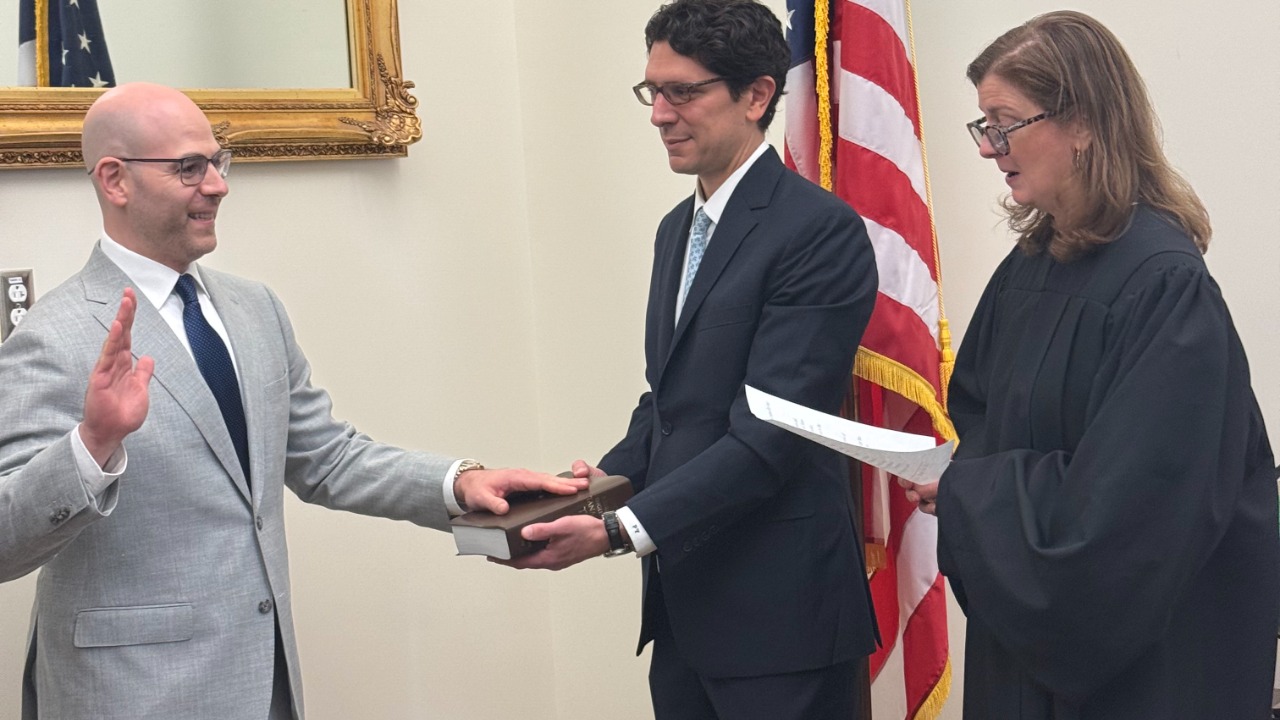
Federal Reserve governor Stephen Miran is arguing that the central bank should move quickly and aggressively to cut interest rates, warning that the current policy stance is too tight for an economy already losing momentum. His case hinges on the view that inflation is largely back under control while growth, hiring, and credit conditions are softening in ways that could tip the United States into an unnecessary downturn.
Why Miran says policy is “too tight” for a slowing economy
Miran’s core claim is that the Fed is holding rates at levels that no longer match the economic reality, with restrictive borrowing costs now weighing more heavily on growth than on inflation. He points to a combination of moderating price pressures, slower job creation, and weaker business investment as evidence that the balance of risks has shifted from overheating to underperformance. In his view, keeping the federal funds rate elevated as these trends deepen risks amplifying the slowdown rather than guiding the economy toward a soft landing, a concern that has grown as more data show cooling demand and easing wage gains in sectors from manufacturing to retail Miran economy needs large cuts.
He also frames the current stance as out of step with the Fed’s dual mandate, arguing that the inflation side of the ledger has improved enough that the employment side deserves more weight. With core inflation readings drifting closer to the 2 percent target and long-term expectations remaining anchored, Miran contends that the central bank has room to ease without reigniting a price spiral. He notes that credit-sensitive areas such as housing, commercial real estate, and small business lending are already feeling the strain of higher rates, which can translate into slower hiring and weaker income growth if left unaddressed. That combination, he argues, is precisely why “large” cuts are warranted rather than the incremental moves markets had been expecting earlier in the year large rate cuts now.
The inflation backdrop Miran sees as safe enough for bold easing
For Miran’s argument to hold, inflation has to be not just falling, but falling in a way that looks durable, and he has been explicit that recent data meet that test. He highlights the steady decline in core personal consumption expenditures inflation, the Fed’s preferred gauge, along with signs that pandemic-era distortions in goods prices and supply chains have largely unwound. Shelter inflation, a key driver of earlier price spikes, has also shown signs of easing as new leases reset at lower increases, which feeds gradually into official measures. Taken together, Miran reads these trends as evidence that the worst of the inflation shock is behind the economy, reducing the need for a punishingly high policy rate to keep prices in check inflation backdrop.
He further argues that inflation expectations, which central bankers watch closely for signs of a wage-price spiral, have remained contained despite the earlier surge in prices. Surveys of households and market-based measures such as Treasury inflation-protected securities point to long-run expectations that are still clustered around the Fed’s 2 percent goal, suggesting that credibility has not been lost. In Miran’s reading, that credibility is an asset the Fed can now use, allowing it to cut rates more decisively without convincing businesses or workers that the central bank is abandoning the fight against inflation. By leaning on anchored expectations and the visible cooling in actual price data, he contends that the risk of easing too slowly now outweighs the risk of easing too fast anchored expectations.
Recession risks, financial stability, and the politics of moving fast
Behind Miran’s call for sizable cuts is a clear warning about recession risk if the Fed waits too long. He notes that interest-sensitive sectors are already flashing caution, with higher mortgage rates sidelining homebuyers and elevated corporate borrowing costs discouraging new projects and hiring plans. As bank lending standards tighten and households work through excess savings built up during the pandemic, the drag from restrictive policy can compound quickly. Miran argues that by the time unemployment rises sharply, it will be too late for gradualism, so the central bank should act preemptively while the labor market is still relatively strong and financial markets remain orderly recession risk.
He also acknowledges that rapid easing carries its own financial stability questions, particularly after a cycle in which higher yields have already exposed vulnerabilities in areas like regional banks and commercial property. Miran’s answer is that a controlled, clearly communicated series of cuts is less destabilizing than a delayed scramble in response to a sharper downturn. By signaling a shift toward a more neutral stance while inflation is still trending lower, he believes the Fed can reduce the odds of disorderly market moves and avoid the kind of emergency interventions that followed past policy overshoots. That stance puts him at the more dovish end of the current policy debate, but it is grounded in a straightforward calculus: with inflation easing and growth softening, he sees aggressive rate reductions as the lesser of two risks for both the real economy and the financial system policy debate.
More From TheDailyOverview

Grant Mercer covers market dynamics, business trends, and the economic forces driving growth across industries. His analysis connects macro movements with real-world implications for investors, entrepreneurs, and professionals. Through his work at The Daily Overview, Grant helps readers understand how markets function and where opportunities may emerge.

