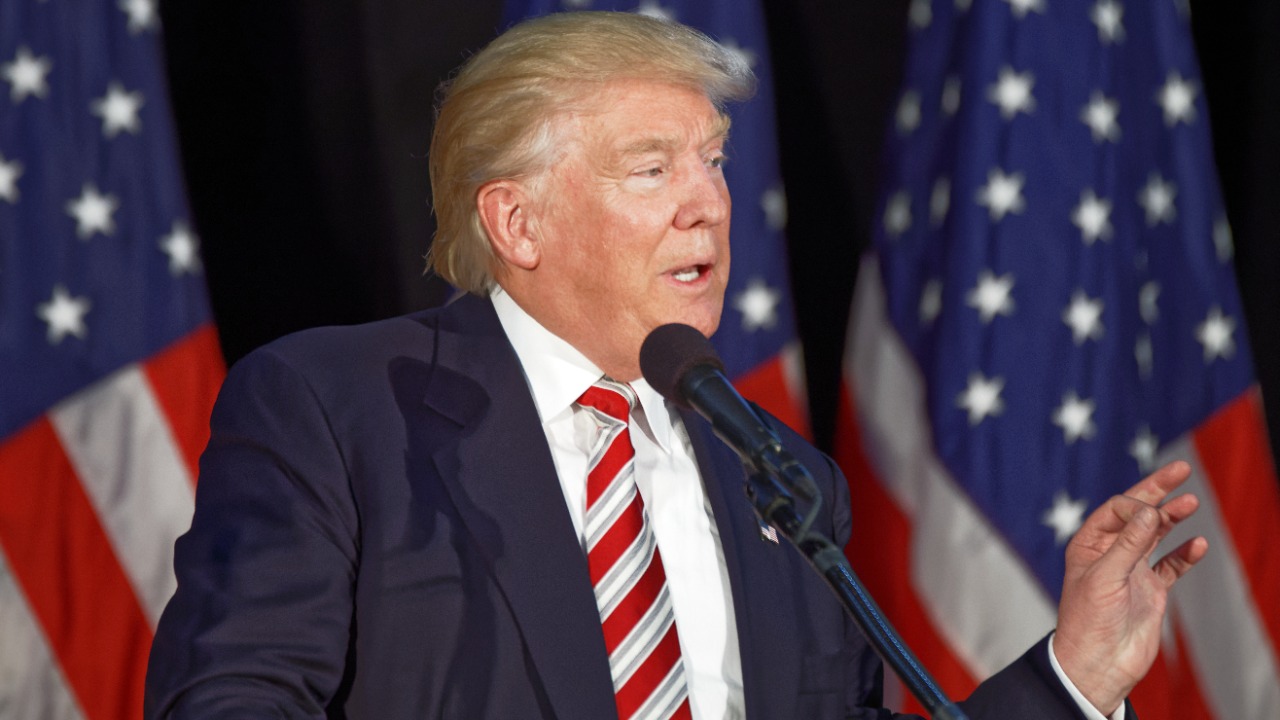
Donald Trump’s pledge to push for a $2,000 standard deduction for every taxpayer has quickly turned into a kitchen-table question: how much would that actually change what you owe in 2026. The answer depends on how Congress rewrites the tax code next year, how the expiring Trump-era cuts are handled, and where your income and family situation put you on the IRS worksheets. I want to walk through what is known, what is still political theater, and how you can start gaming out the numbers before the next filing season sneaks up.
What Trump actually promised and how it fits into the 2026 tax fight
Trump’s $2,000 promise is not a standalone rebate check, it is a pledge to raise the standard deduction by that amount per filer as part of the broader 2026 tax reset. The existing individual income tax cuts from the Tax Cuts and Jobs Act are scheduled to expire after the 2025 tax year, which means the default for 2026 is a return to pre-2018 brackets and deduction rules unless Congress acts. Trump has framed the $2,000 figure as a way to shield middle-income households from a stealth tax hike when those provisions sunset, tying it directly to the looming debate over whether to extend or reshape the current law, as detailed in the reporting on the expiring individual cuts.
To understand the stakes, I look first at how the current standard deduction works and what happens if Congress does nothing. Under the TCJA, the standard deduction roughly doubled while personal exemptions were eliminated, a tradeoff that simplified filing for many but also changed who benefits most from itemizing. Analysts tracking the 2025 cliff note that if the law simply snaps back, the standard deduction would shrink and personal exemptions would return, a shift that would affect families and single filers differently according to the Congressional analysis of the scheduled expiration. Trump’s $2,000 bump would layer on top of whatever baseline Congress sets for 2026, which is why the promise sounds simple but is actually embedded in a much larger rewrite.
How a $2,000 higher standard deduction could change your 2026 bill
At its core, a higher standard deduction lowers the slice of your income that is exposed to federal income tax, but it does not change how much you pay in payroll taxes or how refundable credits like the Earned Income Tax Credit work. If Congress adopted Trump’s proposal as described, a single filer who would otherwise claim, for example, a $15,000 standard deduction in 2026 would instead claim $17,000, meaning the first $17,000 of income would be shielded from federal income tax. Tax policy researchers point out that the value of that extra $2,000 depends entirely on your marginal rate: someone in a 12 percent bracket would save about $240, while someone in a 22 percent bracket would save about $440, a pattern that shows up in distribution tables for changes to the standard deduction.
The flip side is that if you itemize, a higher standard deduction only matters if it changes your decision to itemize at all. Since the TCJA, far fewer households have itemized because the standard deduction became more generous relative to typical mortgage interest, state and local taxes, and charitable contributions. Analysts who modeled the TCJA’s impact found that raising the standard deduction again would likely pull even more people out of itemizing, especially in states where the $10,000 cap on state and local tax deductions still bites, as shown in the breakdown of who itemizes. For 2026, that means Trump’s $2,000 promise would be most visible for filers who are already standard-deduction users, while higher-income households with large deductible expenses might see little change unless the broader law also adjusts SALT caps or mortgage rules.
Who stands to benefit most, and who might see little change
When I look at the distributional work on standard deduction changes, a clear pattern emerges: low and middle earners get a modest but real benefit, while the largest dollar gains accrue to upper-middle-income households that still take the standard deduction. For a married couple filing jointly, a $2,000 increase per filer would mean $4,000 more income shielded from tax, which could translate into several hundred dollars in savings for a family earning, say, $90,000 in wages. Tax microsimulation models that examine similar increases show that households in the middle quintiles tend to see average tax cuts that are meaningful but not transformative, often in the low hundreds of dollars, as reflected in the distribution tables for increasing the deduction.
By contrast, very high-income households often benefit less from a standard deduction bump as a share of their income because they are more likely to itemize and because a flat $2,000 per filer is a smaller fraction of a six- or seven-figure salary. At the other end of the spectrum, very low-income workers who already owe little or no federal income tax may see limited change in their final refund or balance due, since the standard deduction cannot reduce tax below zero and does not directly increase refundable credits. Analysts who have studied the TCJA’s impact on low-income filers note that the biggest levers for that group are the Child Tax Credit and the Earned Income Tax Credit, not the standard deduction itself, a point underscored in evaluations of how the 2017 law affected low-income families. In practice, Trump’s $2,000 promise would likely tilt more toward middle-income households that already have some tax liability and rely on the standard deduction rather than itemizing.
Interaction with expiring Trump-era cuts, credits, and brackets
The $2,000 headline number is only one piece of what your 2026 return could look like, because the entire Trump-era individual tax architecture is scheduled to change at the same time. If Congress allows the TCJA provisions to expire, marginal tax rates would rise for many brackets, the Child Tax Credit would shrink and become less refundable, and the old personal exemptions would return, all of which would reshape how much a higher standard deduction actually matters. Policy briefs on the 2025 cliff emphasize that extending the current law without changes would itself be a large tax cut relative to the pre-TCJA baseline, while layering on a bigger standard deduction would further reduce revenue, as highlighted in projections of the fiscal impact of extension.
Credits are especially important for families with children, and they are on the table alongside the standard deduction. Under current law, the Child Tax Credit is scheduled to fall back to $1,000 per child with stricter income and refundability rules, compared with the higher amounts and broader eligibility that have applied since the TCJA. Analysts warn that if Congress boosts the standard deduction but lets the credit shrink, some families could see a smaller tax bill on paper but still lose out overall because their refundable credits drop, a tradeoff explored in detail in studies of the TCJA’s Child Tax Credit changes. For 2026, the real question is not just whether Trump’s $2,000 idea passes, but how it is paired with decisions on brackets, credits, and exemptions that can easily outweigh the effect of a single line on the 1040.
What Congress, the IRS, and your planning window mean for 2026
Even if Trump keeps pressing for a $2,000 higher standard deduction, it will be Congress that writes the actual numbers into law, and the timing of that work matters for how you plan. Lawmakers have a history of waiting until late in the year to finalize tax packages, which can leave the IRS scrambling to update forms and software providers like TurboTax and H&R Block racing to adjust their calculators. Reports on past late-breaking tax deals describe how the IRS has had to delay the start of filing seasons or issue last-minute guidance when Congress changed rules close to year-end, as seen in coverage of prior late tax legislation. For 2026, that means you may not know the exact standard deduction or credit structure until relatively close to the filing year, even if the broad outlines are debated in public much earlier.
From a practical standpoint, I focus on what you can control: keeping good records, understanding whether you are likely to itemize, and watching how proposals like Trump’s interact with your own income bracket. If you are a standard-deduction filer now, you can use current IRS tables as a baseline and then mentally subtract a few hundred dollars from your projected 2026 bill to approximate the effect of a $2,000 bump, recognizing that this is only a rough sketch until Congress acts. Financial planners often recommend running side-by-side scenarios using tax software, plugging in both a “current law extended” case and a “pre-TCJA rules” case, a strategy that aligns with how analysts model the personal tax changes. As the 2025 debate heats up, the most useful move is to track not just the headline promises but the full package of rates, deductions, and credits that will ultimately decide what your 2026 tax bill looks like.
More From TheDailyOverview
- Dave Ramsey says these two simple questions show whether you’re rich or poor
- Retired But Want To Work? Try These 18 Jobs for Seniors That Pay Weekly
- IRS raises capital gains thresholds for 2026 and what’s new
- 12 ways to make $5,000 fast that actually work

Julian Harrow specializes in taxation, IRS rules, and compliance strategy. His work helps readers navigate complex tax codes, deadlines, and reporting requirements while identifying opportunities for efficiency and risk reduction. At The Daily Overview, Julian breaks down tax-related topics with precision and clarity, making a traditionally dense subject easier to understand.

