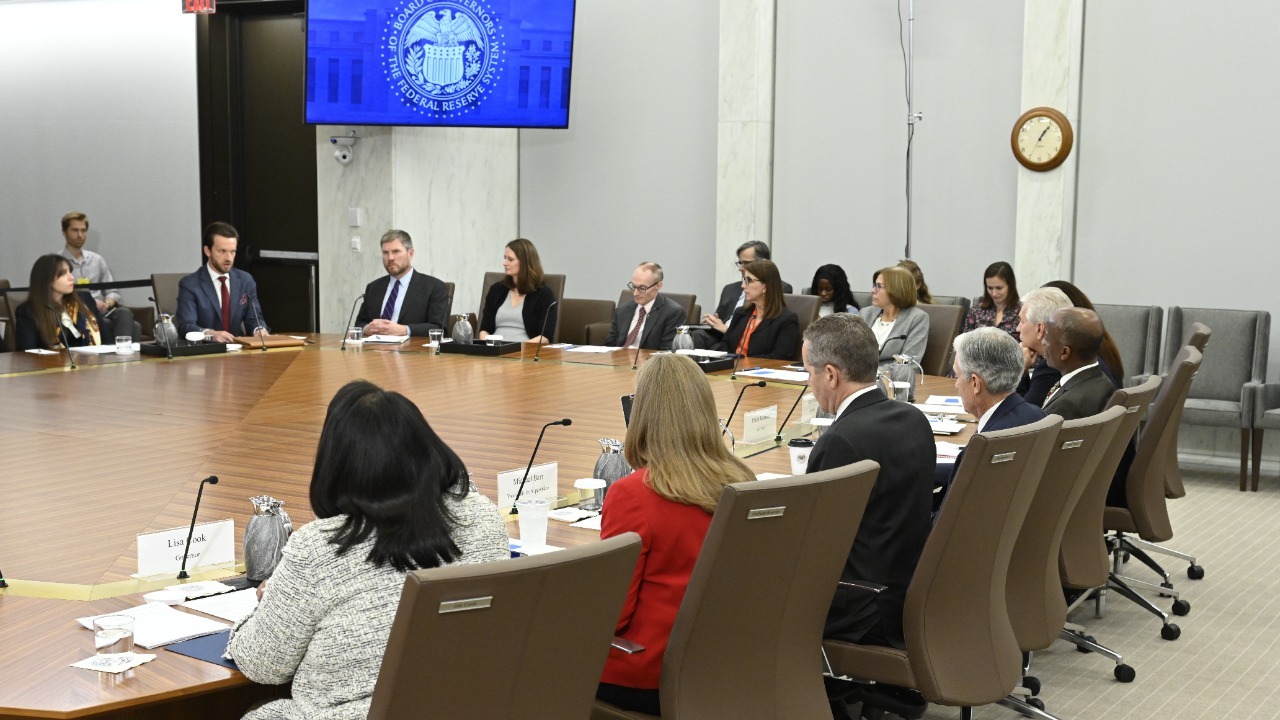
Federal Reserve officials spent much of this year absorbing unusually personal attacks from the White House, yet they now find themselves aligned with a new political mantra: the central bank should quietly sit in the back seat. The same Fed insiders who bristled at public pressure for rapid rate cuts are embracing a lower profile that lets markets and the broader economy, not presidential tweets, do the talking. The shift reflects a rare convergence of interests between a bruised institution and a political team that wants credit for growth without owning every basis point of monetary policy.
From public punching bag to strategic silence
After months of criticism from President Donald Trump and his aides, senior officials at the Federal Open Mark have settled on a simple response strategy: say less. Internally, I hear that many of them see what one account described as “selective silence” as a way to reclaim independence without escalating the fight. Instead of trading barbs, they are leaning on the Fed’s technocratic routines, letting forecasts, dot plots, and meeting minutes speak while they keep public commentary to a minimum, a posture that has left them only too happy to oblige calls for a quieter, more back-seat role for the central bank, as detailed in one account of selective silence.
The irony is that this retreat into technocratic calm follows a period when the White House itself elevated the Fed into a daily political storyline. Trump’s advisers pushed hard for faster rate cuts, casting the central bank as an obstacle to growth rather than a guardian of stability. By stepping back from the microphone now, Fed insiders are betting that the less they say, the harder it becomes for critics to paint them as partisan actors. In their view, a quiet Fed is not a submissive Fed, but one that lets its decisions, and ultimately the data, do the arguing.
Powell’s defense of the Fed’s lane
Chair Jerome Powell has been the public face of this balancing act, defending the institution without turning it into a political foil. When he responded to personal attacks earlier this year, he framed the Fed’s mission in deliberately narrow terms, saying that officials are “trying to deliver macro stability, financial stability, economic stability, for the benefit of all people” and that politics is not “our bailiwick.” That choice of words, captured in his response to attacks, was not accidental. It signaled that Powell would defend the Fed’s remit, but not the personal reputations of its leaders, and that he would not be baited into a running feud with Trump.
Inside the system, that stance has emboldened policymakers who were already more willing to dissent under Powell than under some of his predecessors. A Fed that is prepared to break with its chair on rate decisions is, by definition, less likely to be swayed by political pressure from the White House. One analysis noted that a Fed that is prepared to dissent under Powell may be even more inclined to dissent under a future chair who commands less personal respect, a dynamic that underscores how institutional norms can outlast any one leader, as described in a piece on a Fed that is prepared to dissent.
Wall Street’s discomfort with the brawl
While the White House saw political upside in berating the Fed, Wall Street had a different reaction. Traders and executives who might have welcomed lower rates grew uneasy as the attacks escalated, worried that the spectacle could undermine confidence in the central bank’s judgment. One account noted that Wall Street grew uncomfortable with the attacks and that, even if it wanted to see rate cuts, it did not want to see the central bank turned into a political prop, a sentiment captured in reporting that Wall Street grew uncomfortable with the spectacle.
That discomfort has practical consequences. Market participants price assets not just on the level of interest rates, but on their confidence that the Fed will act predictably in response to data. If investors start to believe that rate decisions are driven by presidential pressure rather than inflation and employment, risk premiums rise and financial conditions can tighten even when the policy rate falls. The shift toward a more muted Fed, and a White House that now talks about putting the central bank in the back seat, is in part a response to that market feedback. It reflects a recognition that political theatrics around monetary policy can be bad for business, even when they are meant to juice growth.
Trump’s cabinet wants a new regime, not a louder one
Inside Trump’s cabinet, the goal is not to keep the current setup intact, but to reshape it while avoiding another public brawl. Advisers have signaled that they want a new Fed regime that is more aligned with the administration’s growth agenda, even as they talk about letting the central bank fade from the daily news cycle. One account put it bluntly, noting that whatever the creases that will need to be ironed out under a new Fed regime, Trump’s cabinet seems keen for it to happen, a sentiment that underscores how personnel changes can coexist with calls for a quieter institution, as described in coverage that “Whatever the” future regime looks like, the White House wants it soon.
That tension, between wanting a more compliant central bank and a less visible one, is at the heart of the current moment. If Trump nominates a new chair who is perceived as politically loyal, markets and Fed staff alike may respond with more internal dissent and closer scrutiny of every decision. A Fed that has already shown it is prepared to dissent under Powell may be even more assertive under a successor who lacks his credibility. The cabinet’s hope is that a new leadership team can deliver easier policy without reigniting the public fight. The risk is that any sign of overt political influence could trigger the very backlash, from both insiders and investors, that the White House now says it wants to avoid.
“Back-seat” Fed meets “bigger than the Fed” economy
Outside Washington, some of the loudest voices calling for a lower profile for the central bank come from corporate leaders who are tired of every market move being read through the lens of the next Federal Open Mark meeting. Bank of America chief executive Brian Moynihan captured that frustration when he argued that the United States economy is “much bigger” than the Fed and that there is “too much fascination” with its every move. In an interview, Moynihan said that the intense focus on the Fed distracts from private-sector strength and that people should remember that companies and consumers drive growth, comments that framed Moynihan Says Fed Focus Distracts From Private sector strength.
That argument dovetails neatly with the White House’s new rhetoric and with the Fed insiders who are happy to let the economy speak for itself. If growth and employment remain solid, a quieter Fed can claim success without constant public defense. If conditions deteriorate, the institution can point back to its mandate and its data-driven process, rather than to any political promises. For markets, the combination of a “back-seat” Fed and an economy that leaders like Moynihan describe as bigger than any central bank could be stabilizing, as long as investors believe that the silence reflects confidence, not confusion.
Insiders’ relief and the next test of independence
For the staff and policymakers who populate the Federal Open Mark, the new consensus around a less visible central bank feels like a reprieve. Many of them spent the past year fielding questions about whether the Fed had become too political, whether rate decisions were a response to Trump’s latest comments, and whether the institution could still act as an independent check in a polarized environment. The emerging strategy of selective silence, and the political embrace of a back-seat role, gives them space to refocus on the spreadsheets and models that define their day jobs, a shift that one account of Wall Street grew uncomfortable with the earlier attacks suggests is welcome in markets as well.
The real test, however, will come with the next shock. Whether it is a sudden spike in inflation, a financial accident, or a geopolitical crisis, the Fed will eventually face a moment when it must move aggressively and explain itself clearly. At that point, the institution will have to step out of the back seat and back into the spotlight, even if only briefly. The groundwork being laid now, through Powell’s insistence on staying in the Fed’s lane, the cabinet’s desire for a new but quieter regime, and corporate voices arguing that the economy is bigger than any central bank, will shape how credible that return to center stage looks. For now, though, Fed insiders are content to enjoy the rare calm that comes when everyone, from Dec critics to Dec allies, seems to agree that less noise from the central bank is a feature, not a bug.
More From TheDailyOverview

Grant Mercer covers market dynamics, business trends, and the economic forces driving growth across industries. His analysis connects macro movements with real-world implications for investors, entrepreneurs, and professionals. Through his work at The Daily Overview, Grant helps readers understand how markets function and where opportunities may emerge.

