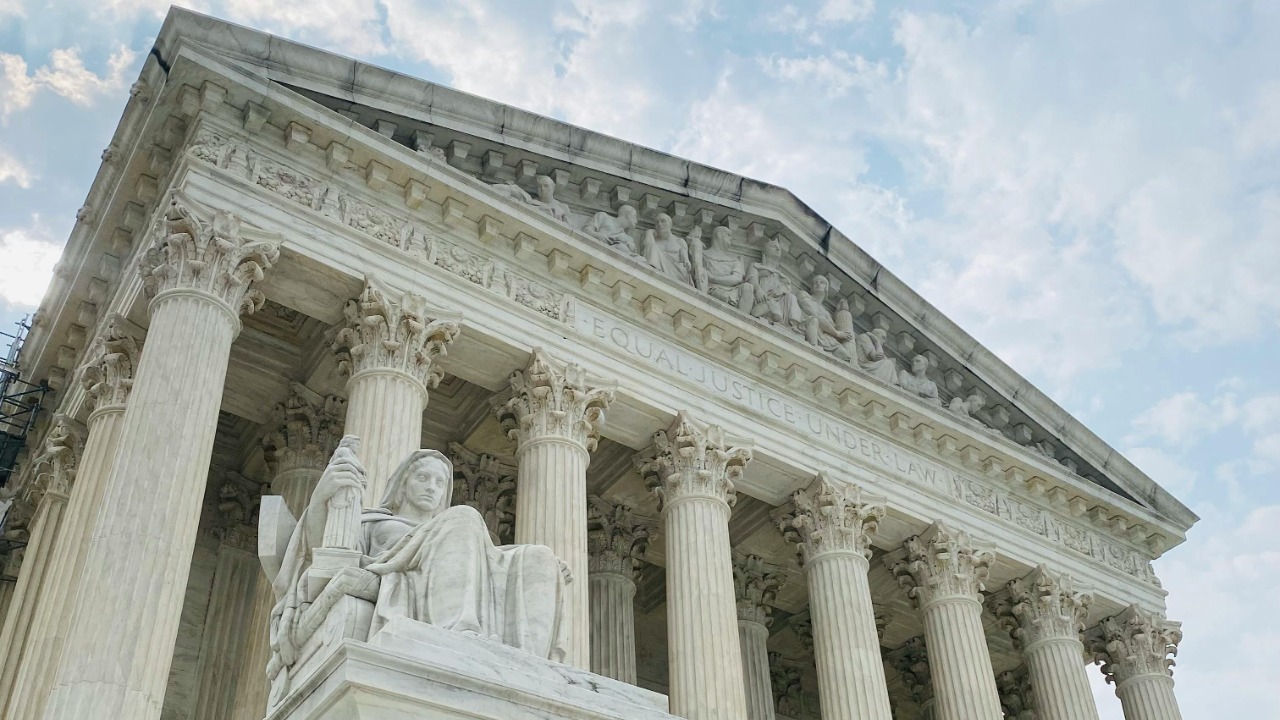
President Donald Trump is escalating his warnings as the Supreme Court of the United States weighs whether to uphold his sweeping tariffs on imported goods. He has boiled the stakes down to a blunt verdict, telling supporters that if the justices strike his authority, “we’re screwed,” and predicting a “complete mess” for the economy and for his own trade agenda. At the same time, the court’s unusual handling of the case and the White House’s scramble for fallback options show how much of Trump’s economic strategy now hangs on a single legal decision.
What is playing out is not just a technical fight over trade law, but a test of presidential power, congressional delegation, and how far the current Supreme Court is willing to let the executive branch stretch old statutes to meet new geopolitical and economic threats.
The case that put Trump’s tariffs in the Supreme Court’s crosshairs
The legal showdown grew out of Trump’s decision to impose global tariffs on a wide range of imports, using a statute that critics say was never meant to support such a broad, long‑running trade war. The justices heard arguments earlier this term on whether that law actually gives the president authority to levy tariffs on this scale, and the case has become a proxy fight over how much discretion Congress can hand to the White House on economic policy. When the Supreme Court of the United States signaled that opinions were possible during a non‑argument session on a Friday, many in the legal community expected a ruling on what one analysis called the core question of “President Trump’s global tariffs,” only to see the day pass without a decision, a reminder of how closely watched and unusually sensitive the case has become for the court itself and for Jan.
Trump’s lawyers have argued that the statute at issue gives the president wide latitude to respond to threats to national security that arise from trade, and they have framed the tariffs as a necessary shield for American industries from unfair foreign competition. During oral arguments, however, several justices signaled unease with that reading. Chief Justice John Roberts noted that the law had never before been used to justify tariffs on this scale, while Justice Neil Gorsuch raised concerns about whether such an open‑ended delegation of power to the president fits with the Constitution’s separation of powers, sharpening doubts about whether the court will bless Trump’s expansive view of his own authority and highlighting the institutional stakes for figures like Chief Justice John and Justice Neil Gorsuch.
‘We’re screwed’ and a ‘complete mess’: Trump’s escalating warnings
As the justices deliberate, Trump has chosen to raise the political temperature rather than lower it, casting the pending ruling as a make‑or‑break moment for the country. In a social media post on a Monday, he warned that if the Supreme Court rules against the United States on tariffs, “WE’RE SCREWED,” a phrase he has repeated in public remarks as he tries to rally supporters around his trade policy and frame any adverse decision as a blow not just to his presidency but to the broader economy, a message that has been amplified in coverage of his comments and in summaries of what Trump said could come as soon as Wednesday.
Trump has also warned that a ruling against him would create what he calls a “complete mess,” arguing that unwinding the tariffs could disrupt supply chains, unsettle financial markets, and force the government to grapple with complex questions about refunds for duties already collected. In one interview, he said “it would be a complete mess” if the US supreme court were to strike down his tariffs, a line that captured his broader claim that the justices would be inviting chaos if they reject his reading of the law, a warning that has been widely quoted in coverage of Donald Trump and his trade fight.
How Trump is selling tariffs as the backbone of his economic agenda
Trump is not just defending his tariffs in legal terms, he is also trying to persuade voters that they are central to the country’s economic strength. He has credited the duties with boosting domestic manufacturing, protecting jobs in sectors like steel and autos, and giving the United States leverage in negotiations with rivals. In recent remarks, he has talked up his tariffs as a key policy achievement, stressing that they were designed to force trading partners to the table and to correct what he sees as decades of one‑sided deals, a case he has made repeatedly as the Supreme Court’s decision looms and as he reminds audiences that the justices heard the case in early November, a timeline highlighted in coverage that noted how Supreme Court weighing his signature trade move.
In his more sweeping rhetoric, Trump has linked the tariffs to a broader vision of American leadership, arguing that if the United States is allowed to “shine brightly” through strong growth and assertive trade policy, the rest of the world benefits as well. “Remember, when America shines brightly, the World shines brightly,” he said in one statement, adding that if the Supreme Court rules against the United States on tariffs, the damage would extend beyond domestic politics to the global economy, a framing that casts the justices’ decision as a test of whether Remember, America and the World can continue to rely on aggressive US trade enforcement.
Inside the Supreme Court’s timing drama and the White House’s backup plans
The timing of the ruling has become a subplot of its own, feeding market jitters and political speculation. Court watchers were on alert when the justices indicated that opinions might be released during a Friday session that was not scheduled for arguments, a rare move that many interpreted as a sign that the tariff case could be resolved sooner rather than later. When no tariff opinion appeared, analysts noted that the delay underscored how contentious the internal deliberations may be, and how carefully the court is calibrating its language on the scope of presidential power, a dynamic that has been closely tracked in coverage of that Friday session.
While Trump publicly insists that the justices should uphold his authority, The White House has been quietly preparing for the possibility that it will lose. Officials have said they will look for alternative avenues to keep pressure on imports if the court does not rule in their favor, including the use of other trade statutes and regulatory tools, even as they acknowledge that any shift could raise complicated questions about whether importers are entitled to refunds for tariffs already paid. That contingency planning reflects how seriously The White House is taking the risk that the justices will curb Trump’s preferred weapon in trade disputes.
Economic stakes, political messaging, and what happens if the tariffs fall
Behind Trump’s dire language is a genuine economic question: what would it mean if the tariffs were suddenly invalidated or sharply limited by the court? Businesses that have spent years adjusting supply chains, pricing, and contracts around the duties could face fresh uncertainty, while consumers might see some prices fall and others rise depending on how quickly companies respond. Trump has warned of a “mess” if the ruling goes against him, arguing that removing tariffs on goods coming into the country would undercut domestic producers and reward foreign competitors, a concern he has voiced repeatedly as he talks about the potential impact on goods and on the broader trade balance.
Supporting sources: ‘WE’RE SCREWED’: Trump.
More From The Daily Overview

Silas Redman writes about the structure of modern banking, financial regulations, and the rules that govern money movement. His work examines how institutions, policies, and compliance frameworks affect individuals and businesses alike. At The Daily Overview, Silas aims to help readers better understand the systems operating behind everyday financial decisions.

