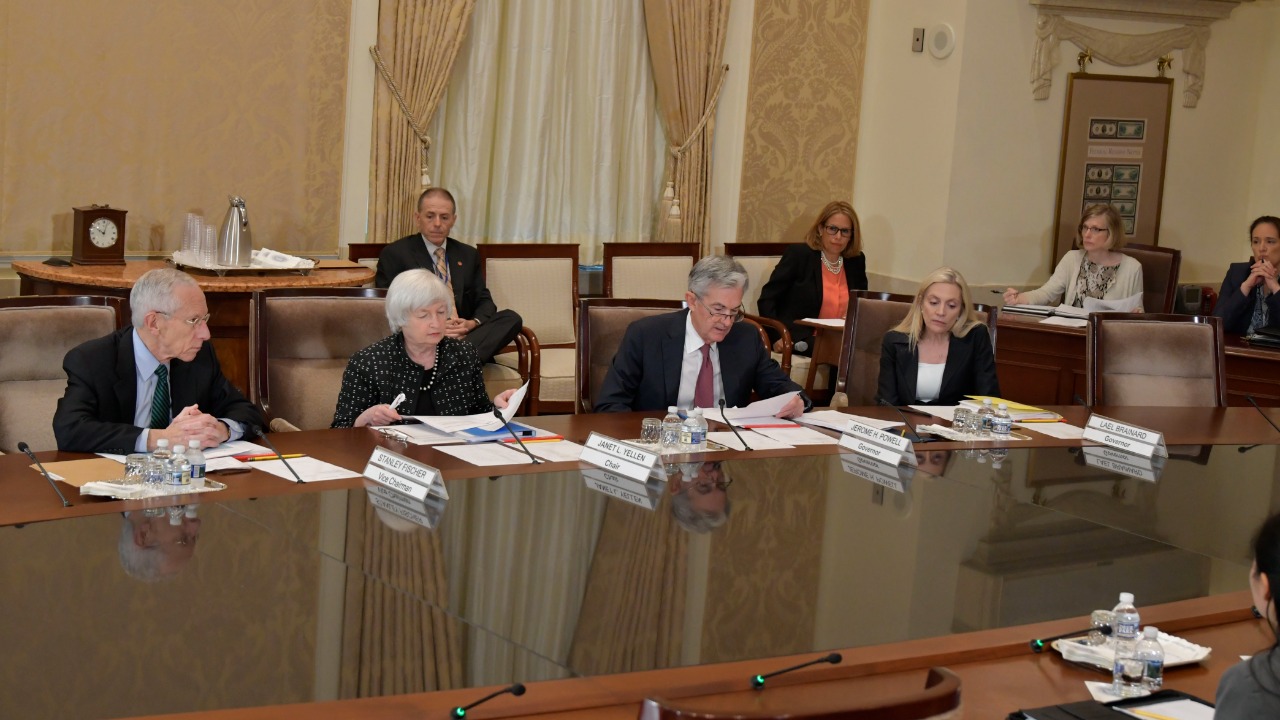
Federal Reserve researchers have presented a compelling argument that tariffs, often viewed as inflationary, actually function as demand shocks that can lower inflation by significantly impacting employment and economic activity. This perspective challenges traditional views on trade policies, suggesting that the reduction in consumer and business spending due to tariffs can help curb price pressures. The report, released on November 15, 2025, highlights how these economic mechanisms unfold, offering a nuanced understanding of tariffs’ role in the economy.
Defining Tariffs as Demand Shocks
In economic terms, tariffs are increasingly being classified as demand shocks rather than supply-side pressures. This classification stems from the way tariffs increase the cost of imported goods, which in turn reduces overall spending in the economy. When tariffs are imposed, the immediate effect is a rise in prices for imported goods, leading to a decrease in demand. This is contrary to the typical supply-side inflation, where prices rise due to increased production costs without a corresponding drop in demand.
The analysis by Federal Reserve researchers underscores this demand-suppressing mechanism. By elevating the costs of imports, tariffs discourage consumer spending and business investment, effectively dampening economic activity. This reduction in demand can help alleviate inflationary pressures, as businesses are less likely to raise prices when consumer spending is curtailed. The report highlights how this dynamic plays out in the broader economy, challenging the conventional wisdom that tariffs are inherently inflationary.
Effects on Employment
Tariffs also have a pronounced impact on employment, particularly in sectors that rely heavily on imported goods. As production costs rise due to tariffs, businesses may be forced to cut costs elsewhere, often resulting in layoffs. This increase in unemployment is a direct consequence of the reduced economic activity that tariffs engender. The November 15, 2025, report details how this “slam on employment” manifests, with significant job losses observed in import-dependent industries such as manufacturing.
The ripple effects of these job losses extend beyond the immediate sectors affected. Higher unemployment rates can lead to decreased consumer confidence and spending, further exacerbating the economic slowdown. This cycle of reduced spending and increased unemployment creates a challenging environment for economic recovery, as businesses face both declining demand and rising costs. The report provides examples of how these dynamics have played out in various industries, illustrating the broader impact of tariffs on the labor market.
Broader Impacts on Economic Activity
The contraction in consumer spending due to tariffs is a significant factor in slowing GDP growth. As prices for goods rise, consumers are likely to cut back on spending, leading to a decrease in overall economic activity. This slowdown is compounded by a decline in business investment, as firms face uncertainty and elevated costs from trade barriers. The Federal Reserve researchers’ analysis points to a clear link between tariffs and the broader economic activity slowdown, highlighting the challenges that businesses face in navigating this environment.
In addition to affecting consumer spending and business investment, tariffs can also lead to a reallocation of resources within the economy. Firms may shift production to domestic sources or seek alternative markets, which can lead to inefficiencies and further slow economic growth. The report emphasizes the importance of understanding these broader impacts, as they have significant implications for economic policy and planning.
Mechanisms Linking to Lower Inflation
The weakened demand resulting from tariffs plays a crucial role in easing upward pressure on wages and prices. As unemployment rises and consumer spending declines, businesses have less incentive to raise prices, leading to a deflationary cycle. This cycle is characterized by high unemployment, reduced bargaining power for workers, and decreased consumption, all of which contribute to lower inflation.
The Federal Reserve researchers’ report ties these mechanisms back to the core claim that tariffs, as demand shocks, ultimately lower inflation. By reducing demand and slowing economic activity, tariffs can help mitigate inflationary pressures, providing a counterintuitive but valuable tool for managing inflation. This perspective offers a new lens through which to view trade policies, highlighting the complex interplay between tariffs, employment, and inflation.
More From TheDailyOverview
- Dave Ramsey says these two simple questions show whether you’re rich or poor
- Retired But Want To Work? Try These 18 Jobs for Seniors That Pay Weekly
- IRS raises capital gains thresholds for 2026 and what’s new
- 12 ways to make $5,000 fast that actually work

Grant Mercer covers market dynamics, business trends, and the economic forces driving growth across industries. His analysis connects macro movements with real-world implications for investors, entrepreneurs, and professionals. Through his work at The Daily Overview, Grant helps readers understand how markets function and where opportunities may emerge.

