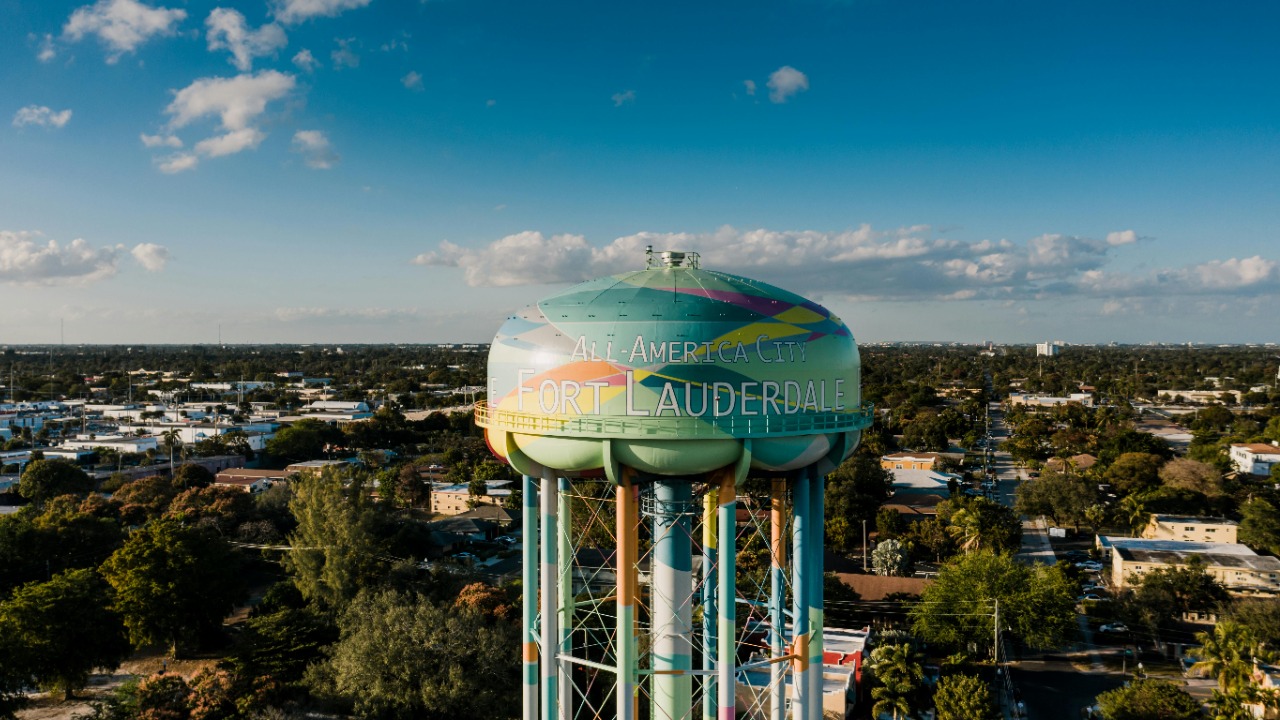
Fort Lauderdale is weighing an unusually simple answer to a very expensive problem: instead of building a new City Hall from the ground up, it may just buy the downtown office tower where staff have been camping out since a catastrophic flood. Commissioners are now openly debating whether acquiring that building could save tens of millions of dollars and shave years off a long‑promised civic makeover.
The choice will shape not only how quickly residents get a permanent City Hall back, but also what kind of downtown they inherit. A sleek new complex on a cleared site would send one message about Fort Lauderdale’s ambitions, while a pragmatic purchase of an existing tower would send another, more fiscally cautious signal.
The long road from flooded basement to blank slate
The current debate only makes sense against the backdrop of how Fort Lauderdale lost its old City Hall in the first place. Historic flooding in 2023 sent water surging into the building’s basement, where critical systems were concentrated, a vulnerability that City officials later acknowledged had been years in the making. The damage was so extensive that the structure could not be salvaged, and demolition followed in 2024, leaving the city without a civic anchor and residents trekking to temporary offices for basic services.
By late 2025, the site of the former City Hall had been fully cleared and prepped, with Demolition of the old complex complete and the land maintained for future development. At the same time, the commission moved ahead with a vision for a new, purpose‑built civic campus, selecting a design team in Dec to create a modern City Hall that could better withstand the kind of extreme weather that has become more common in coastal South Florida, a decision detailed in coverage By Carlton Gillespie.
A pricey new complex versus an $8 million tower
Commissioners have already selected a development team that would deliver a new, modern City Hall on the cleared site, and early estimates put the price tag at a minimum of $200 million, according to reporting on the Fort Lauderdale project. That plan envisions a civic showpiece that could reshape the surrounding blocks and signal that the city is investing heavily in its governmental core. It also assumes that taxpayers are willing to shoulder a nine‑figure construction bill at a time when infrastructure, stormwater and housing costs are all competing for the same dollars.
Into that conversation stepped Commissioner Ben Sorensen, who has urged colleagues to consider a cheaper alternative based on information relayed by City Manager Rickelle Williams in an email in Jan. Sorensen argued that the owners of the downtown building now housing City Hall operations, known as Tower 101, had floated a sale price of about $8 million, a fraction of the projected cost of new construction, a point he raised after City Manager Rickelle Williams’ message was discussed at the end of a commission meeting and later described in Sorensen coverage.
Inside Tower 101, the city’s reluctant home base
Since the flood, City Hall staff have been working out of Tower 101, a downtown high‑rise that quickly became the de facto seat of government even as everyone involved insisted it was temporary. The building, identified in property records as Tower 101, sits at 101 NE 3rd Ave, Fort Lauderdale, FL 33301, placing it squarely in the city’s central business district and within walking distance of the riverfront and courthouse. Its location has made it a convenient stopgap, even if the space was never designed as a civic showpiece.
Now the owners have signaled they are willing to part with the property, offering Tower 101, the new home base for City Hall since the flood of April 2023, for about $8 million, according to a Jan account that framed the offer as a potential windfall for taxpayers if the numbers hold up, a scenario laid out in Jan reporting. The building’s address at 101 NE 3rd Ave, Fort Lauderdale, FL 33301, also appears in commercial listings that describe its footprint and tenant mix, including a 101 NE 3rd Ave entry that underscores how embedded it already is in the downtown fabric.
Commissioners weigh savings, design and storm risk
The political calculus is now shifting from whether to build to how to justify either path to residents. On one side are Commissioners who see a once‑in‑a‑generation chance to create a resilient, architecturally ambitious City Hall on the cleared site, a vision that took a concrete step forward when the city chose a design team in Dec and outlined a schedule that could see construction completed by May of 2029, as detailed in a Fort Lauderdale project summary. Supporters of that approach argue that a purpose‑built complex can be elevated, hardened and engineered around the flooding lessons that destroyed the last building.
On the other side are officials who look at the $200 million estimate and see a budgetary cliff. They note that Fort Lauderdale has been without a permanent City Hall since April 2023 and that buying the tower where staff already work could restore a sense of normalcy far sooner and at a fraction of the cost, a point underscored in coverage of how Fort Lauderdale has a civic home. The commission has already been briefed on the tower option in Local News accounts that describe how the idea surfaced at a public meeting, with some members intrigued by the savings and others wary of locking the city into an older structure, as reflected in Local News coverage.
Downtown stakes: growth, timelines and public trust
Whatever choice the commission makes will ripple through a downtown that is already under intense development pressure. Fort Lauderdale’s core has been remade over the past decade by high‑rise condos, hotels and mixed‑use projects, a transformation that has turned the city into a magnet for new residents and investors, as any quick search for Fort Lauderdale growth will show. City Hall’s eventual home will either reinforce that skyline with a new civic landmark or cement the role of an existing office tower as the administrative heart of government.
City leaders have already told residents to expect a long wait for a ground‑up replacement, with the mayor saying that Three years from now, Fort Lauderdale should have a new City Hall to replace the one that was demolished, a timeline that would put the opening around 2028 if everything stays on track, as described in a Getting account that also referenced the Trinity Audio player used to present the mayor’s remarks. That schedule would still leave a gap of several years in which residents must navigate a patchwork of temporary arrangements, a reality that is already testing patience in neighborhoods from the beach to the inland suburbs that make up the broader city.
More From TheDailyOverview
*This article was researched with the help of AI, with human editors creating the final content.

Elias Broderick specializes in residential and commercial real estate, with a focus on market cycles, property fundamentals, and investment strategy. His writing translates complex housing and development trends into clear insights for both new and experienced investors. At The Daily Overview, Elias explores how real estate fits into long-term wealth planning.

