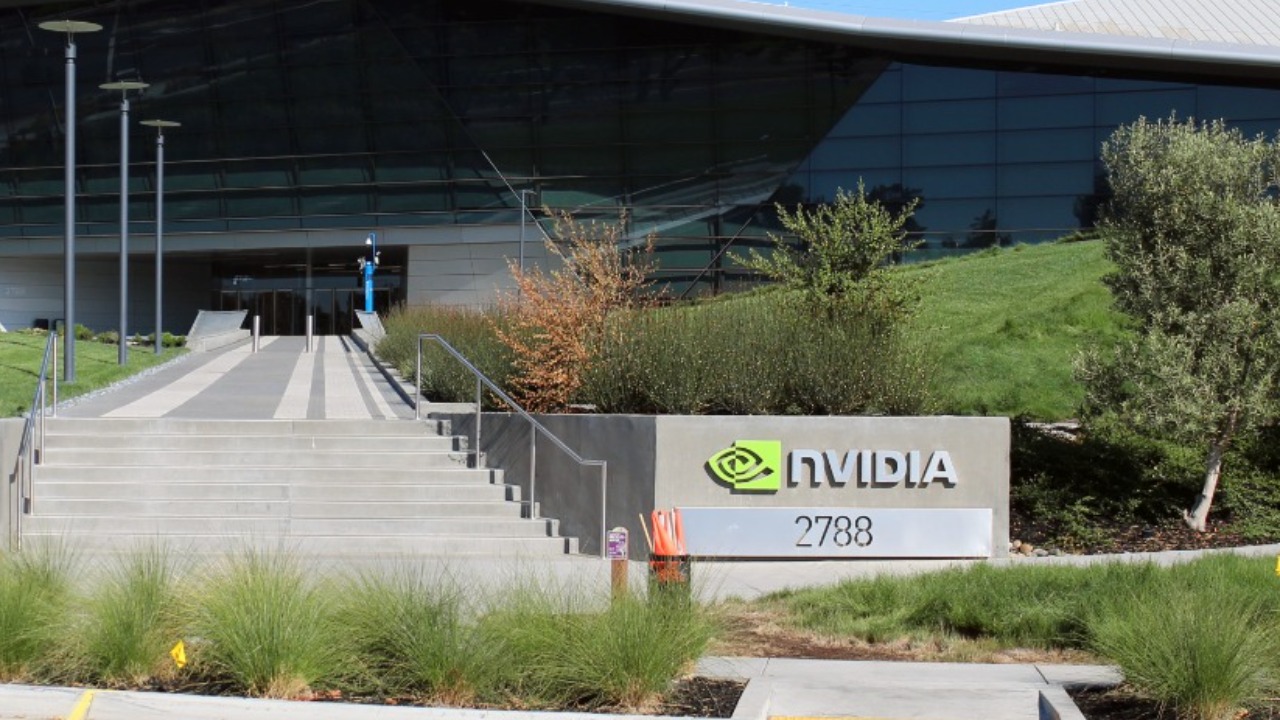
Nvidia has turned the AI boom into a structural shift in the global economy, positioning itself as the indispensable supplier of the chips and systems that power modern machine learning. Its market value, revenue growth and deal-making now shape how quickly companies, and even countries, can build advanced AI. As its power explodes, the central question is no longer whether Nvidia will dominate AI infrastructure, but how far that dominance will reach and who, if anyone, can meaningfully counterbalance it.
What began as a graphics specialist is now a systems architect for what executives like to call “AI factories,” the data centers that train and run models behind products from chatbots to self-driving software. That shift has created a feedback loop in which Nvidia’s technology, financial muscle and ecosystem advantages reinforce one another, tightening its grip on the AI economy even as regulators and rivals scramble to respond.
The GPU sovereign of a $5 trillion era
Nvidia’s rise has been so steep that investors now talk about the company as a kind of “GPU sovereign,” a reference to its role as the de facto ruler of high-end AI compute. Recent analysis describes Nvidia fortifying a roughly $5 trillion equity “empire” as the AI infrastructure supercycle enters a new phase, with the so-called Blackwell Era marking the next step in performance and power efficiency for its chips. That framing captures a reality I see across the industry: if you want to train a cutting-edge model, you are almost certainly designing around Nvidia’s hardware and software stack, from its latest GPUs to its networking and orchestration tools, which are treated as the default standard in hyperscale data centers.
The company’s influence extends beyond individual chips into the architecture of entire facilities, where its roadmaps shape how cloud providers and enterprises plan capital spending for years at a time. By defining the cadence of new platforms like Blackwell and tying them to integrated systems, Nvidia has turned its product cycle into a macroeconomic force that drives what some analysts call an AI infrastructure supercycle. That is why descriptions of a Trillion Empire are not just hyperbole, but shorthand for how central one vendor has become to the world’s compute build-out.
From gaming chips to near-monopoly AI infrastructure
The foundation of this power is market share. Nvidia represented 92 percent of the GPU market at the end of 2025, a figure that would be unthinkable in most other strategic technologies. That dominance means any company that needs more GPU capacity, from a startup training a new language model to a carmaker refining driver-assistance systems, is effectively required to work with Nvidia. The company’s CUDA software ecosystem and libraries deepen that lock-in, because once developers optimize for Nvidia’s stack, switching to a rival chip can mean rewriting and retuning large portions of their code.
This journey from gaming to AI infrastructure giant has been gradual but deliberate. Nvidia first won over gamers with its GeForce line, then data scientists with early general-purpose GPU computing, and now entire industries that rely on its accelerators to run everything from recommendation engines to drug discovery pipelines. By the time Jan reporting highlighted how Nvidia had become a vital partner for companies building AI models and infrastructure, the company had already cemented itself as the default choice for cloud providers and enterprises that cannot afford to fall behind in AI performance.
Financial firepower and the AI factory blueprint
The scale of Nvidia’s financial results shows how thoroughly AI has transformed its business. In its latest reported quarter, the company posted record revenue of $39.3 billion, a figure that would have been unimaginable back when GPUs were primarily for PC gaming. Over the twelve months ending October 31, 2025, NVIDIA revenue reached $187.142B, a 65.22% increase year-over-year, underscoring how quickly AI demand is translating into top-line growth. Those numbers give Nvidia enormous cash flow to reinvest in new chip designs, software and acquisitions, reinforcing its lead.
At the same time, Nvidia has shifted from selling components to selling blueprints for entire AI data centers. Industry Adoption Analysis of NVIDIA Projects and Commercial Scale describes how, in 2025, the company moved from pitching individual accelerators to promoting full “AI factory” designs for what is projected as a $7T data center market. Between 2021 and 2024, Nvidia’s partnerships centered on getting its GPUs into existing clouds; now it is co-designing facilities, networking and software stacks with customers, effectively writing the reference architecture for how AI infrastructure should look. That strategic pivot turns Nvidia from a supplier into a kind of master planner for the next generation of compute.
Regulation, geopolitics and the Trump-era export squeeze
Such concentration of power has inevitably drawn political scrutiny, especially as AI chips become entangled with national security. Earlier in 2025, Nvidia warned that tighter United States government controls on exports of advanced chips to certain countries were weighing on its outlook, a reminder that its growth is now constrained as much by geopolitics as by engineering. When the company disclosed those new limits, Shares in rival chipmakers also fell, underscoring how export policy under President Donald Trump now shapes the entire AI hardware sector. The episode showed that Washington sees Nvidia’s GPUs as strategic assets, not just commercial products, and is willing to restrict their flow in pursuit of broader foreign policy goals.
For Nvidia, that creates a delicate balancing act. On one hand, it must comply with evolving rules that can change which customers it can serve and what performance levels it can ship abroad. On the other, it needs to reassure investors that demand in permitted markets, from North America to parts of Europe and Asia, can offset any lost sales. The company’s disclosure that it had to adjust purchase commitments and related reserves after the latest controls illustrates how quickly policy can ripple through its financial planning. When reports from BANGKOK described how markets reacted on a Wednesday to Nvidia’s comments, it was a reminder that the company’s regulatory exposure is now a global story watched in real time.
Acquisitions, competition and the next phase of the supercycle
Nvidia is not relying on organic growth alone to maintain its edge. In Dec, the company agreed to buy assets from AI chip startup Groq for about $20 billion, its largest deal ever. Groq had spent nine years developing specialized processors and software for low-latency AI inference, and folding that technology into Nvidia’s portfolio could help it address workloads where response time and energy efficiency matter more than raw training throughput. The acquisition also removes a potential rival that had been pitching itself as an alternative to GPU-centric architectures, reinforcing Nvidia’s position at the center of AI compute.
These moves fit into a broader pattern in which Nvidia uses its financial strength to absorb promising challengers and expand into adjacent markets, from networking to AI-specific CPUs. Analysts who describe the company as The GPU Sovereign see the Groq deal as another step in fortifying that status as the AI infrastructure supercycle enters its next phase. As the Blackwell Era ramps and customers design new “AI factories” around Nvidia’s blueprints, the company’s grip on the AI economy is likely to tighten further. The open question, for regulators and competitors alike, is whether any combination of export controls, antitrust scrutiny or rival architectures can meaningfully loosen that hold, or whether Nvidia’s current trajectory will carry it deeper into the role of indispensable, if uneasy, kingmaker of the AI age.
More From TheDailyOverview
*This article was researched with the help of AI, with human editors creating the final content.

Grant Mercer covers market dynamics, business trends, and the economic forces driving growth across industries. His analysis connects macro movements with real-world implications for investors, entrepreneurs, and professionals. Through his work at The Daily Overview, Grant helps readers understand how markets function and where opportunities may emerge.