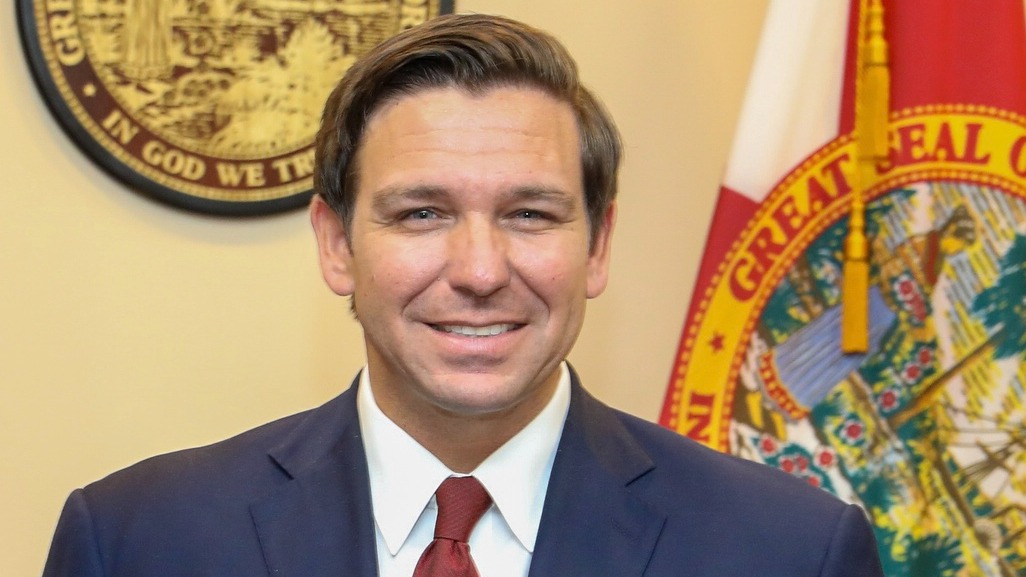
Florida’s fight over property taxes has moved from quiet committee rooms to the center of a high-stakes clash between lawmakers and Governor Ron DeSantis. At issue is whether the state should strip away most local property taxes on primary homes and how far to go in reshaping who pays for local government. With DeSantis already rejecting House tax reform amendments in a related fight, the threat of a veto looms over a debate that could reshape budgets, ballot measures, and the housing market.
The battle now turns on a simple question with complicated answers: can Florida cut non-school property taxes for homeowners without blowing a hole in local finances or shifting the burden onto renters and businesses? The measures now in play, including House Joint Resolution 201 and a set of 2026 ballot proposals, suggest lawmakers are willing to test that line, even if it means forcing a showdown with the governor. The outcome will hinge not only on politics but also on how much money is at stake in counties where homesteads make up most of the tax base.
HJR 201 and the homestead gamble
House Joint Resolution 201 is the clearest expression of the current push. The measure, titled “HJR 201: Elimination of Non-school Property Tax for Homesteads,” would change the state constitution to remove non-school ad valorem taxes from primary residences. The official summary on the Senate’s bill page describes HJR 201 as a proposal to eliminate non-school property taxes for homesteads, signaling that this is not a minor adjustment but an effort to erase a major revenue stream for counties and cities through a constitutional amendment rather than ordinary statute. The bill was formally referenced in mid-October for the 2026 Session, indicating that legislative leaders want the idea in play well before voters see it on the ballot.
The design choice matters. By using a joint resolution instead of a standard bill, lawmakers are trying to send the change directly to voters rather than rely on DeSantis’s signature, as shown in the Senate’s official bill history. That structure reduces the governor’s formal power over this specific measure but raises the stakes for the campaign that would follow if HJR 201 reaches the ballot. It also means fiscal questions that might normally be hashed out in appropriations committees could instead be argued in television ads and town halls, where simple slogans about ending non-school property tax on homes may drown out warnings from budget staff and local officials.
What the state’s tax data reveals
To grasp what is on the chopping block, it helps to look at the state’s own numbers. The Florida Department of Revenue’s Property Tax Oversight program maintains the statewide property tax data, which it describes as the main source for ad valorem tax datasets and reports. The portal assembles statewide property tax statistical reports, tax roll data, taxable value summaries, and other values that show how much revenue counties and cities raise and from which classes of property. Local officials use these tables to see how homesteads, commercial parcels, and other categories share the load.
Those statistics matter because HJR 201 targets only non-school property taxes on homesteads, leaving school millage and other property classes in place. The portal’s tax roll data can show, county by county, how large that slice of revenue is relative to everything else. In some counties, non-school homestead taxes might account for hundreds of millions of dollars in annual revenue; in others, the share may be smaller but still central to basic services. Without this baseline, it is hard for lawmakers or voters to judge whether the promise of lower bills for homeowners is worth the risk of service cuts or higher taxes on renters and businesses.
DeSantis’s rejection and the veto shadow
Even though a joint resolution bypasses the need for a governor’s signature, DeSantis’s posture still matters because he can shape the broader tax package and the political climate around it. In a separate but related fight over tax reform, he has already rejected the House’s property tax reform amendments, according to a detailed account from Governing. That report portrays a governor wary of changes that, in his view, either shift costs in ways he cannot predict or lack clear offsets in the state budget. While that coverage does not quote him on HJR 201 itself, it points to a leader who wants to control when and how tax cuts move forward.
His stance creates a paradox. DeSantis has built much of his political identity on tax relief and opposition to high local levies, yet he has shown a willingness to block House-driven changes that he sees as poorly structured or politically risky. That tension makes it more likely that any homestead-focused property tax plan that survives will be paired with guardrails or alternative revenue ideas that the governor can accept. It also means that even a ballot-bound resolution like HJR 201 could face behind-the-scenes pressure, as allies of the governor try to reshape or slow it before it reaches voters, especially if they fear that deep cuts could force local fee hikes or service reductions that might be blamed on state leaders.
2026 ballot proposals and who benefits
The fight over HJR 201 is unfolding alongside a broader set of 2026 ballot proposals aimed at property tax elimination. A Florida law firm’s overview explains that both the House and the Senate now have proposals tied to property tax elimination, and that there was a formal legislative status update on those efforts in late January. The analysis notes that the proposals for the 2026 Legislative Session are aimed in particular at new buyers and small businesses, suggesting lawmakers want to spread relief beyond long-time homestead owners who already benefit from existing caps and exemptions. The same source highlights that the debate has already produced at least 698 public comments and 703 pages of bill analyses and staff summaries, a sign of how intense the scrutiny has become even before voters see final ballot language.
Targeting new buyers and small businesses is a strategic choice. New homeowners often face the steepest property tax bills because they do not yet benefit from long-term assessment caps, while small firms say that rising commercial valuations outpace their revenue growth. By tying property tax elimination or reduction to these groups, lawmakers can argue they are supporting economic mobility and entrepreneurship rather than just rewarding established homeowners. The trade-off is that the package is more complex than a simple homestead exemption increase, and that complexity could confuse voters when they see multiple property tax questions on the 2026 ballot. The more moving parts there are, the harder it will be to explain who really benefits and who may end up paying more.
Urban-rural fault lines and budget risks
Behind the slogans about “elimination” lies a set of hard trade-offs that will not fall evenly across the state. Rural counties with limited tax bases have long argued that high property taxes push retirees and working families to sell and move to larger metros. For lawmakers from those areas, wiping out non-school property tax on homesteads looks like a way to keep residents in place and attract new ones, especially if they can point to neighboring counties with lower bills. Urban legislators, by contrast, know that their counties rely heavily on property tax to fund police, transit, and social services. If homesteads are partially shielded, they will face pressure either to cut services or to raise rates on commercial property, rental housing, and non-homestead residential units.
More From The Daily Overview
*This article was researched with the help of AI, with human editors creating the final content.

Julian Harrow specializes in taxation, IRS rules, and compliance strategy. His work helps readers navigate complex tax codes, deadlines, and reporting requirements while identifying opportunities for efficiency and risk reduction. At The Daily Overview, Julian breaks down tax-related topics with precision and clarity, making a traditionally dense subject easier to understand.