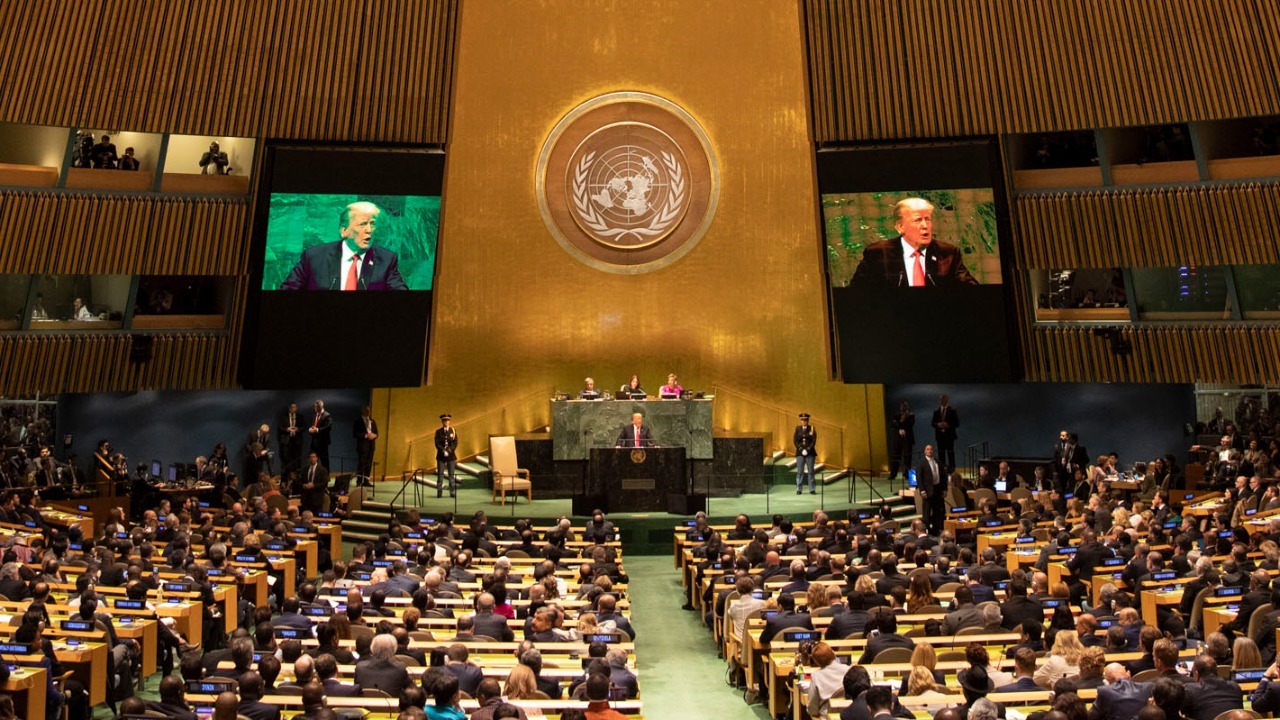
The United Nations is pressing the United States and other member states for answers over a ballooning pile of unpaid dues that senior officials say is pushing the organization toward a cash crunch. Secretary-General António Guterres has warned that nearly $1.6 billion in arrears is already on the books, even before disputed estimates of a larger U.S. shortfall are taken into account. The confrontation is no longer just about accounting; it is about whether the UN can function as designed when its largest contributors pay late, or not at all.
The headline figure of $4 billion in alleged U.S. arrears has circulated in political debate, but it is not backed by the official data available so far. What is documented is a system under strain: deep spending cuts, mounting liquidity worries, and chronic late payments from major members. At the center of that storm is the dispute with Washington, which is likely to shape how power and priorities are negotiated inside the UN in the years ahead. It also raises a basic question: if even one of the 193 member states can run up a disputed tab of several billion dollars, what does that signal to the other 192 about the value of paying on time?
UN books show $1.6 billion gap
When Guterres briefed member states on the UN’s finances, he warned that unpaid dues were approaching $1.6 billion, a figure that reflects assessed contributions that governments are legally obliged to pay. That number, drawn from the organization’s own budget data, is the only firm global arrears total on the table. The Secretary-General also told delegates that a full assessment of the situation had been made on 29 October, giving member states a clear baseline for how far the finances had deteriorated by late in the budget year. On its own, that shortfall would be serious for any international body; for the UN, which runs on tight margins and multi-year promises, it is a direct threat to planned operations.
Officials have already built deep spending cuts into the current budget, trimming activities to match the cash actually in hand rather than the contributions promised on paper. According to the UN’s own briefing, those cuts deepen the longer arrears sit unpaid, because they force managers to freeze hiring, delay reimbursements and postpone program rollouts. The Secretary-General has described the organization’s cash and liquidity position as fragile, warning that even routine obligations such as salaries and vendor payments can be affected when contributions arrive late. In one internal scenario, officials warned that if even 40 of the 193 member states delayed payment at the same time, the UN’s working capital fund could be stretched close to its limit, showing how a problem that starts with a few big players can ripple across the system.
Chronic late payments and US friction
Guterres has also pointed to chronic late payments as a structural problem, rather than a one-off shock. The UN’s information office describes recurring late payments as a regular feature of its budget cycle, with some of the largest contributors consistently missing the due dates for their assessed contributions. That pattern forces the Secretariat to rely on cash reserves and internal borrowing, tactics that may keep the lights on in the short term but leave the institution exposed when several big members delay at once. The Secretary-General’s warning about cash and liquidity fragility is rooted in this pattern: the UN is designed for predictable inflows, not for a stop-start funding rhythm that changes from month to month.
Within that broader group of late payers, the United States attracts outsized attention because of its economic weight and political influence. The structured claim that Washington owes “$4 billion” in arrears, however, is unverified based on available sources. Official UN reporting speaks of about $1.6 billion in total unpaid dues across all members and does not break out a figure that matches the headline number often cited in domestic U.S. debates. That gap between political rhetoric and institutional data matters. It suggests that while the United States is almost certainly a major part of the arrears picture, the precise size of its debt is being contested or at least not fully documented in the public UN budget summaries now available. For other members, the lack of a clear line item for the U.S. share makes it harder to judge whether Washington is uniquely at fault or simply the most visible example of a wider problem.
Liquidity strain and operational risk
The Secretary-General’s warning about the UN’s cash and liquidity fragility is not an abstract complaint. When managers are told that deep spending cuts are already built into the budget, it means they must decide which obligations can be pushed back and which are non-negotiable. According to the official briefings, those cuts are now the baseline scenario rather than an emergency measure. That suggests program managers are planning for a world in which a significant share of assessed contributions may not arrive on time, or at all, during the current budget period. In practice, that can mean slowing down field missions, delaying reimbursements to countries that provide peacekeepers, or postponing upgrades to aging facilities.
This environment amplifies the impact of every late payment from a large contributor. When the United States or another major economy delays its dues, the organization cannot simply replace that cash overnight. The UN’s own reports describe a system where chronic arrears and late contributions have already forced managers to adjust operations, and where a full assessment of the financial situation had to be shared with member states to convey the seriousness of the liquidity strain. In one example discussed by budget officials, a peacekeeping reimbursement line of $698 million had to be stretched over several extra months because the cash did not arrive as scheduled, leaving troop-contributing countries waiting longer to be paid. That kind of delay may seem technical, but it can affect whether governments are willing to keep sending personnel to UN missions.
Why the $4B claim matters politically
The unverified $4 billion figure for alleged U.S. arrears has taken on a political life of its own, even though official UN documents only confirm a global arrears total near $1.6 billion. This mismatch creates a narrative gap. Critics of Washington use the larger number to argue that the United States is single-handedly destabilizing the UN’s finances. Supporters of the U.S. position, in turn, point to the official arrears totals and dates to claim that the situation is more complex and that other members also share responsibility. Both sides are working from partial data: one leans on unverified estimates, the other on aggregate figures that do not spell out how much each major power owes or how long each has been in arrears.
The dispute matters because it shapes how other member states interpret the Secretary-General’s warnings. If smaller and medium-sized countries believe that a handful of large contributors are withholding billions, they may be less willing to tighten their own belts to help the UN manage its liquidity problems. If, instead, they see that the total confirmed arrears pool is smaller but spread across many members, they may push for systemic reforms such as penalties for late payment or incentives for early settlement. Some diplomats have floated ideas like automatic surcharges once arrears cross a certain threshold, such as 176 days past due, or temporary voting limits that kick in when a member’s unpaid balance exceeds a set share of the regular budget. Either way, the confrontation over alleged U.S. arrears is not just about one country’s bill; it is about how the UN allocates blame and responsibility when its finances come under stress.
More From The Daily Overview
*This article was researched with the help of AI, with human editors creating the final content.

Grant Mercer covers market dynamics, business trends, and the economic forces driving growth across industries. His analysis connects macro movements with real-world implications for investors, entrepreneurs, and professionals. Through his work at The Daily Overview, Grant helps readers understand how markets function and where opportunities may emerge.

