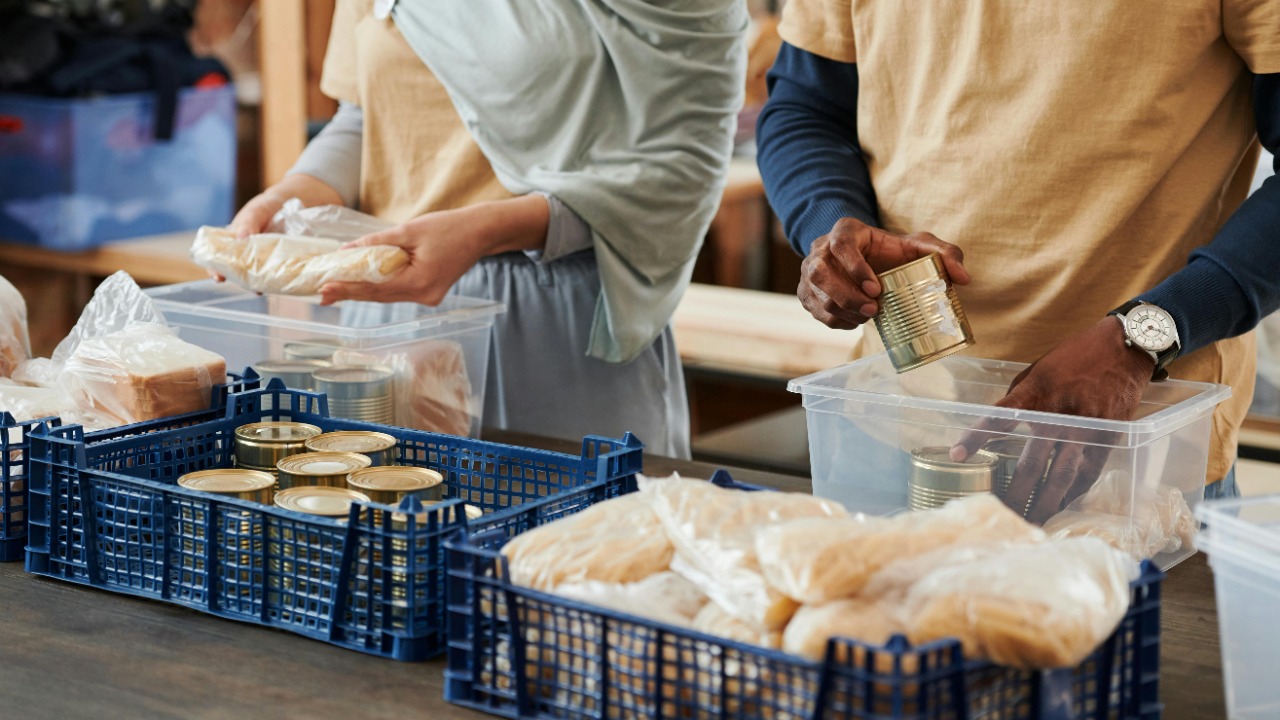
Families across the United States are turning to food pantries in numbers that local organizations describe as unprecedented, driven by a sustained rise in grocery costs that has eroded household budgets over the past year. At the same time, the federal government has pulled back one of its primary tools for measuring hunger, making it harder to track how deep the crisis runs. The collision of rising prices and shrinking data creates a troubling blind spot: demand for emergency food is climbing just as the country loses its clearest window into who is going hungry and why.
Grocery Inflation Keeps Squeezing Family Budgets
The cost of feeding a family has been climbing steadily, and the latest federal data confirms the trend has not let up. The Consumer Price Index News Release for January 2026 includes official measures for food overall, food at home, and detailed breakouts for categories like cereals and bakery products, meats, and dairy. Those granular line items tell a story that anyone who has pushed a cart through a supermarket already knows: the basics cost more than they did a year ago, and the increases are not evenly distributed across the grocery aisle.
Month-over-month changes in the CPI data reveal that certain staples have been especially volatile. When eggs, bread, and milk all trend upward at the same time, the effect compounds for households that spend the largest share of their income on food. Lower-income families typically devote a higher percentage of each paycheck to groceries, so even modest percentage increases translate into real dollars lost from already thin margins. That arithmetic is what pushes families toward food pantries, sometimes for the first time in their lives. For many, the margin between getting by and going hungry is now just a few dollars at the checkout line.
How Pantries Absorb the Shock at Street Level
Food pantries are the closest point of contact between a hungry family and a meal, yet they vary widely in how they operate. According to guidance from Harvard, food pantries function at the community level and may differ in eligibility requirements: some use income guidelines to determine who qualifies, while others have no income limits at all. That patchwork means a family turned away at one site might be welcomed at another across town, but the inconsistency also makes it difficult to count total demand or compare strain across regions.
The pantries that impose no income checks tend to see the sharpest surges when grocery prices spike, because they become the default safety net for working families who earn too much for federal nutrition programs but not enough to keep up with inflation. Volunteers and directors at these sites are the ones most likely to report longer lines, empty shelves by midday, and a growing share of visitors who have never sought charitable food before. In many communities, these observations become a de facto early-warning system: when lines start wrapping around the block, local officials and nonprofit leaders know that household budgets have reached a breaking point even before formal data catches up.
Federal Hunger Data Goes Dark
In a move that drew sharp criticism from nutrition researchers and anti-hunger advocates, the U.S. Department of Agriculture announced the termination of future Household Food Security Reports. The press release, dated September 20, 2025, described the long-running survey as redundant. For decades, that annual report served as the country’s most detailed measurement of how many households struggled to put food on the table, breaking the data down by state, household composition, and income bracket.
Eliminating the survey does not eliminate the problem it measured. What it does is remove the baseline that policymakers, researchers, and food banks relied on to allocate resources and justify funding requests. If pantry demand is rising while the primary federal gauge of food insecurity goes offline, the result is a widening gap between what is happening on the ground and what Washington can see. Critics argue that calling the survey redundant implies other data sources can fill the void, but no existing federal instrument replicates its depth or methodology. That gap may prove especially costly in a period when grocery inflation is already straining the emergency food network and when precise, credible numbers are often the difference between a modest grant and a major funding increase.
TEFAP Supply Lines Under Pressure
The federal government’s main pipeline for getting surplus food to pantries is the Emergency Food Assistance Program, commonly known as TEFAP. A Federal Register notice from the Food and Nutrition Service outlined the availability of foods for Fiscal Year 2025 under TEFAP, detailing what surplus and purchased commodities the agency expected to make available for donation to states. Allocations under the program are based on a formula tied to poverty and unemployment, which means states with higher need are supposed to receive a larger share of the food.
The formula sounds rational on paper, but it carries a built-in lag. Poverty and unemployment figures used to calculate state shares often reflect conditions from a prior reporting period, not the current moment. When grocery prices spike quickly, as they have over the past year, the formula can undercount the number of families who have recently fallen into food insecurity. Pantries on the receiving end of TEFAP shipments may find that the boxes arriving at their loading docks were sized for last year’s crisis, not this year’s. That mismatch between allocation timing and real-time need is one of the structural weaknesses that makes the emergency food system feel perpetually a step behind, forcing charities to scramble for private donations to fill the gap.
Farm to Food Bank Funding Faces Scale Questions
One newer piece of the TEFAP framework tries to connect local agricultural producers directly with food banks. A memorandum from the Food and Nutrition Service laid out state plan requests and allocations for FY 2026 Farm to Food Bank Projects, with $8 million available nationwide. The memo included instructions for state plan amendments, giving states a path to tap into the funding if they had not already done so or wanted to expand existing efforts to rescue unmarketed or surplus produce.
Eight million dollars spread across all 50 states and territories is a modest sum by any federal standard. To put it in perspective, that amount must cover the cost of harvesting, transporting, and distributing fresh produce from farms to food banks in every participating state, on top of the administrative work required to coordinate growers and charities. The program’s design is sound in principle: it reduces food waste, supports farmers, and delivers nutritious items to families who might otherwise receive only shelf-stable canned goods. But at current funding levels, the initiative functions more as a pilot than a nationwide solution. If grocery inflation continues to push new families toward pantries, the gap between what Farm to Food Bank projects can deliver and what communities actually need will only widen, especially in rural areas where transportation costs are high.
The Data Void Compounds the Crisis
The timing of the federal hunger survey’s termination is particularly concerning when set against the backdrop of rising grocery costs and rising pantry demand. The Household Food Security Report was not just an academic exercise; it was the instrument that told Congress how many children in the country lived in food-insecure homes, how many seniors skipped meals, and how those numbers shifted year to year. Without it, advocates lose their strongest evidence base for requesting increased TEFAP allocations, expanded SNAP benefits, or new emergency appropriations targeted to the communities where need is highest.
Some observers have suggested that alternative data sources, including Census Bureau surveys and nonprofit tracking efforts, could partially fill the gap. That argument has limits. The USDA survey was specifically designed to measure food security with a validated set of questions refined over decades, allowing analysts to distinguish between mild, moderate, and severe food hardship. Stitching together proxies from other instruments introduces methodological inconsistencies that make year-over-year comparisons unreliable. For food banks trying to forecast demand and lobby for resources, unreliable data is nearly as damaging as no data at all. The practical consequence is that the emergency food network now operates with less visibility into the scale of the problem it exists to solve, even as the pressures on that network intensify.
What Comes Next for Families and Pantries
The current situation presents a feedback loop that could intensify through the rest of 2026. Grocery prices, as reflected in ongoing CPI releases, show no sign of a sharp reversal. TEFAP allocations are pegged to formulas that lag behind real conditions, leaving some states under-resourced just as more families cross the line into food insecurity. Farm to Food Bank funding, while well-intentioned and innovative, operates at a fraction of the scale the moment demands. And the federal government’s decision to stop publishing its most detailed food insecurity data means the country is flying partially blind into what could become a deeper hunger crisis, with fewer tools to course-correct if policies fall short.
For the families standing in line at a pantry on a Tuesday morning, the policy debates in Washington feel distant. What matters to them is whether there will be enough food left when they reach the front, whether the box will include fresh items their children will eat, and whether they will need to return again next week. For the volunteers and staff on the other side of the folding tables, the questions are just as urgent: will the next shipment arrive on time, will donations cover the shortfall when federal supplies run thin, and will anyone in power see the strain clearly enough to act before the lines grow even longer? Until the country restores its capacity to measure hunger as rigorously as it measures prices—and funds its safety-net programs at a level that matches the reality in those lines—the burden of navigating the crisis will continue to fall most heavily on the people with the least room in their budgets to bear it.
More From The Daily Overview
*This article was researched with the help of AI, with human editors creating the final content.

Cole Whitaker focuses on the fundamentals of money management, helping readers make smarter decisions around income, spending, saving, and long-term financial stability. His writing emphasizes clarity, discipline, and practical systems that work in real life. At The Daily Overview, Cole breaks down personal finance topics into straightforward guidance readers can apply immediately.

