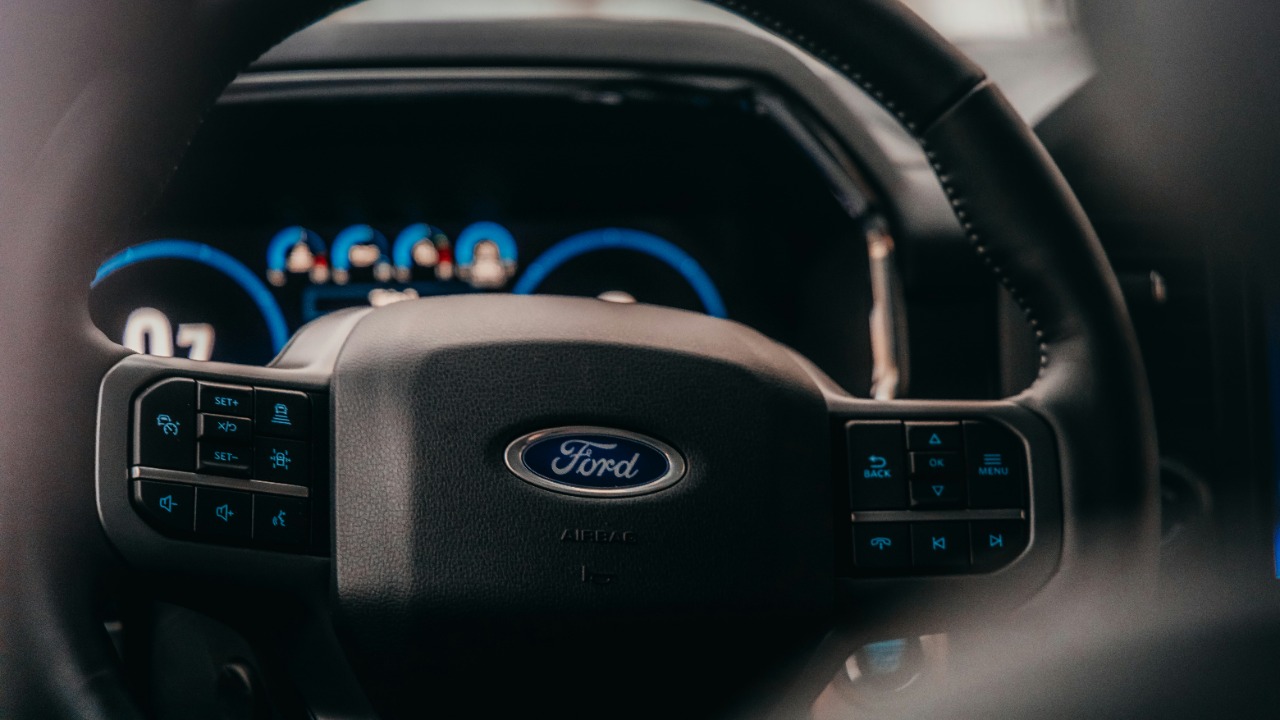
Ford chief executive Jim Farley is blunt about what generative AI means for the office: a large slice of white collar work is about to be automated, and the people who thrive will be those who pivot early rather than wait to be displaced. His warning lands at a moment when boardrooms are racing to deploy AI copilots, chatbots, and automation across finance, HR, engineering, and customer service, turning what once sounded like a distant risk into an immediate career question. The message is not that professional jobs vanish overnight, but that their content changes fast enough that standing still is no longer a safe option.
Ford’s AI reality check for office workers
Farley has framed AI not as a futuristic add‑on to Ford’s factories but as a core tool that will reshape how the company designs vehicles, manages supply chains, and runs its back office. He has said that generative systems can already draft engineering documentation, summarize complex warranty data, and support software development, which directly affects engineers, analysts, and managers rather than only assembly line roles, according to recent reporting. In that view, AI is less a bolt‑on productivity hack and more a new baseline for how knowledge work gets done inside a legacy manufacturer that employs tens of thousands of professionals.
What makes his comments stand out is the explicit link between AI deployment and headcount. Farley has warned that as tools become capable of handling routine analysis, report writing, and some coding, “a lot” of white collar roles will be eliminated or fundamentally redefined, particularly in areas like purchasing, logistics, and administrative support, as detailed in the same account. He has also tied this shift to Ford’s broader restructuring, which has already targeted traditional office functions while the company invests in software, battery technology, and connected services, a pattern echoed in wider auto industry coverage such as recent job cuts and its push into software‑defined vehicles. The implication is clear: if a CEO is comfortable saying out loud that AI will shrink office ranks, the internal planning is already well under way.
Why “safe” desk jobs are suddenly exposed
The assumption that professional roles are insulated from automation has been eroding for years, but generative AI has accelerated that shift by handling language, code, and images at scale. Analysts at major consultancies have estimated that large language models could affect hundreds of millions of jobs globally, with particularly high exposure in tasks like drafting emails, preparing presentations, and synthesizing research, according to recent projections. Those are precisely the activities that fill the days of project managers, junior consultants, and corporate staff, which is why Farley’s comments resonate far beyond the auto sector.
At the same time, early corporate pilots show that AI is already embedded in everyday tools rather than sitting in experimental labs. Microsoft has rolled out Copilot features in Office apps that can summarize Teams meetings, generate PowerPoint decks, and draft Excel formulas, while Salesforce has integrated generative assistants into its CRM workflows, as described in product briefings and AI announcements. When those capabilities are switched on by default, the baseline expectation for how quickly a knowledge worker can produce a first draft or analysis rises, and the value shifts toward those who can design better prompts, validate outputs, and connect AI‑generated material to business strategy.
How white collar workers can pivot instead of being sidelined
The practical response to Farley’s warning is not panic but a deliberate shift in how professionals build skills and choose projects. The most resilient roles are already tilting toward what AI cannot easily replicate: cross‑functional judgment, relationship building, and hands‑on familiarity with the tools themselves. Workers who learn to configure and supervise AI systems, rather than simply consume their outputs, are better positioned when companies reorganize around automation, a pattern visible in the surge of postings for “prompt engineer,” “AI product manager,” and “automation lead” in recent labor market data. In practice, that means volunteering for internal AI pilots, documenting how tools change workflows, and translating those lessons into measurable productivity gains that managers can see.
There is also a strategic choice about where to specialize. Farley has emphasized Ford’s need for software talent, battery experts, and data scientists as it scales electric and connected vehicles, according to recent interviews, and similar signals are coming from banks, retailers, and healthcare systems that are hiring AI engineers even as they trim traditional staff. For individual workers, that suggests three concrete pivots: move closer to revenue or product, where human judgment and client contact remain central; deepen domain expertise so AI becomes a tool rather than a substitute; and build enough technical literacy to collaborate with data and engineering teams. Farley’s candid assessment is less a prediction of doom than a clear early signal that the white collar job description is being rewritten, and those who start editing their own version now will have far more say in how their careers evolve.
More From TheDailyOverview
- Dave Ramsey says these two simple questions show whether you’re rich or poor
- Retired But Want To Work? Try These 18 Jobs for Seniors That Pay Weekly
- IRS raises capital gains thresholds for 2026 and what’s new
- 12 ways to make $5,000 fast that actually work

Grant Mercer covers market dynamics, business trends, and the economic forces driving growth across industries. His analysis connects macro movements with real-world implications for investors, entrepreneurs, and professionals. Through his work at The Daily Overview, Grant helps readers understand how markets function and where opportunities may emerge.

