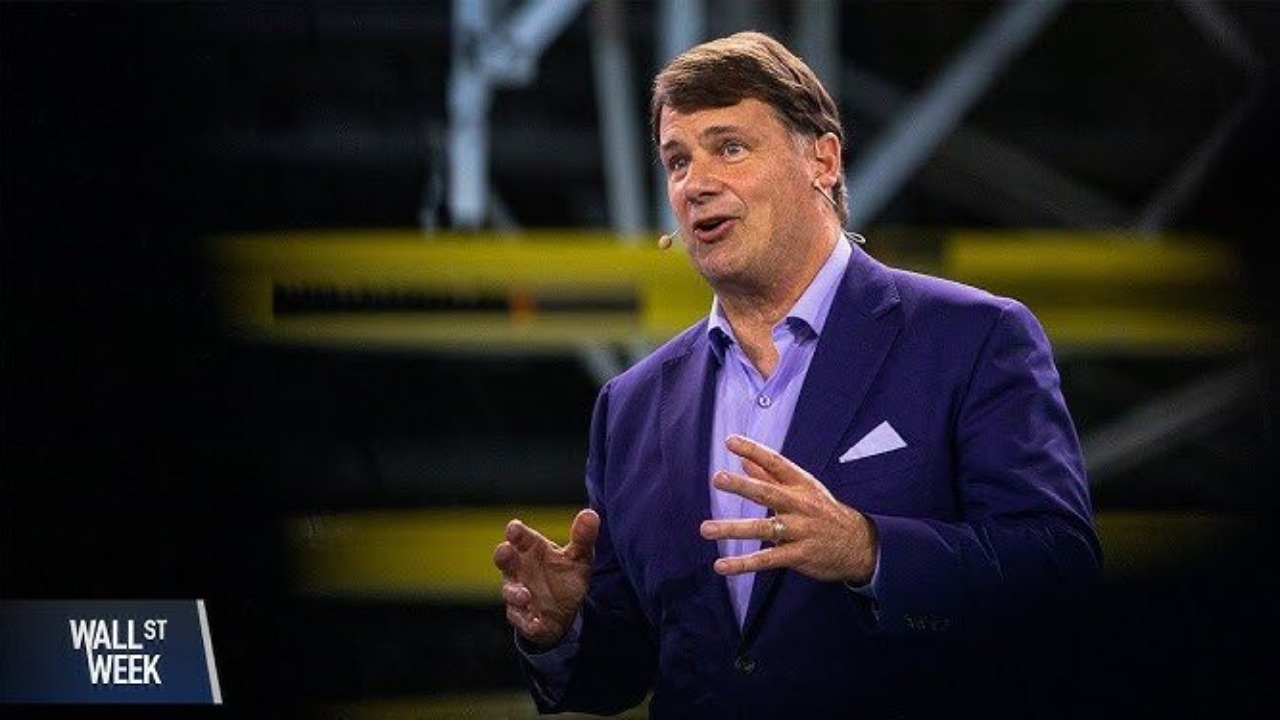
Ford’s top executive is sounding an alarm that cuts against the usual narrative of robots taking everyone’s jobs. As artificial intelligence drives a rush to build data centers and retool factories, Ford CEO Jim Farley argues that The United States is running short of the very blue-collar workers needed to pour the concrete, pull the cable, and keep the machines running. In his view, the country’s AI moonshot risks stalling not for lack of algorithms, but for lack of electricians, technicians, and factory hands.
Farley’s warning reframes the AI boom as a story about welders and mechanics as much as coders and data scientists. If there is, as he puts it, “nothing to backfill the ambition,” the gap between digital plans and physical execution could widen into a structural drag on growth, competitiveness, and even national security.
Farley’s stark numbers on the “essential economy”
Jim Farley has been unusually blunt about the scale of the labor gap he sees opening beneath the AI buildout. He has described a dearth of blue-collar workers able to construct AI data centers and operate factories, warning that there is “nothing to backfill the ambition” behind national AI goals, a phrase that has become shorthand for his concern about the mass demand for skilled trades. In public remarks, he has tied that shortage directly to what he calls the “essential economy,” the network of physical industries that keep everything from logistics to power grids functioning.
Farley’s critique is backed by hard figures. One analysis he has cited notes that the country is short 600,000 factory workers and 500,000 construction workers right now, and will need another 400,000 auto technicians over the coming years to keep up. Within the U.S., Farley said, “We have over a million openings in critical jobs (such as) emergency services, trucking, factory workers, plumbers, electricians and tradesmen,” a point echoed in reporting that quotes him on the scale of vacancies within the essential workforce.
AI’s physical footprint meets a blue-collar shortfall
Farley’s argument starts from a simple reality: AI is not just software, it is infrastructure. Training large models and serving them to millions of users requires vast AI data centers, which in turn demand land, steel, high voltage power, cooling systems, and intricate wiring. He has warned that there are not enough blue-collar workers to build those facilities, stressing that the AI boom is colliding with a shortage of people who can actually construct and maintain the AI data centers themselves.
That concern extends beyond server farms to the factories that will produce AI-enabled vehicles, batteries, and industrial equipment. Farley has framed the issue as a crisis in the “essential economy,” warning that without enough skilled labor to staff plants and construction sites, ambitious AI and manufacturing plans will remain stuck on paper. His comments have been echoed in coverage that describes how Farley’s concern about staffing AI data centers and factories is part of a broader squeeze on U.S. auto manufacturing capacity as Farley looks ahead to the next wave of industrial investment.
From dealerships to data centers, a talent pipeline under strain
The labor crunch Farley describes is not abstract. It shows up in places as mundane as local dealerships, where Ford is struggling to find enough technicians to service increasingly complex vehicles. Reporting on his comments notes that Ford CEO Jim Farley Warns Factory Workers Are Needed in the Hundreds of Thousands If America Is to Realize AI Dreams, including a call for roughly 6,000 technicians in dealerships immediately, underscoring how the shortage hits both high-tech projects and everyday car repairs Ford CEO Jim.
Those dealership pressures are part of a wider pattern. Ford CEO cites tech shortage; researchers point to dealership issues, describing how Ford is sounding an alarm about a looming labor crisis in auto service and repair, with Ford’s warning about a shrinking pipeline of people who want to fix things for a living highlighting the cultural and educational headwinds facing the trades Ford CEO cites. The same dynamics, Farley argues, will make it harder to staff the data centers and advanced factories that AI requires.
AI will cut white-collar roles while supercharging skilled trades
Farley’s warning is not that AI will destroy work in general, but that it will change who is in demand. He has said that AI could wipe out half of white-collar jobs, a prediction that aligns with broader fears about automation in office roles, while at the same time creating mass demand for skilled trades that can install, maintain, and repair the physical systems AI depends on The Ford CEO. Most people expect AI to hit factory lines first, with machines taking over and people getting replaced, but Farley has argued that the bigger disruption may come in offices, while shop floors scramble to find enough qualified humans Most.
That inversion of the usual automation story is already visible in pay scales. Farley has pointed to high-end mechanic roles that can pay $120,000 a year, though they take five years to learn and require thousands of dollars in tools, with Only a small sliver of mechanics sticking around long enough to reach that level. In that context, Farley’s suggestion that young people “think about learning a trade” reads less like nostalgia and more like a hard-nosed assessment of where AI-era bargaining power may lie, a point underscored in coverage that notes how Ford CEO Jim Farley Warns Factory Workers Are Needed in the Hundreds of Thousands If America Is to Realize AI Dreams and urges students to consider skilled work Hundreds of Thousands.
Policy stakes: training, geopolitics, and the AI race
Farley’s diagnosis carries clear policy implications. He has framed the skilled labor shortage as a threat to U.S. manufacturing and AI infrastructure, urging “bold workforce investments” to rebuild the pipeline of tradespeople who are critical to the essential economy Farley. In his view, the country cannot simply assume that market forces will conjure enough electricians, machinists, and line workers to meet AI-era demand without coordinated efforts in education, apprenticeships, and immigration.
There is also a geopolitical edge to his warning. Farley has expressed concern that China, through relentless investment and cohesive strategy, could outpace the United States in both AI and the industrial capacity that supports it, particularly if American policymakers ignore the skilled labor bottleneck China. That perspective aligns with broader worries that Labor Shortages Delay Major Tech Projects Even the largest technology companies are feeling the effects of this talent crunch, as major AI and cloud initiatives face delays due to a lack of skilled construction and operations staff Labor Shortages Delay.
More From TheDailyOverview

Grant Mercer covers market dynamics, business trends, and the economic forces driving growth across industries. His analysis connects macro movements with real-world implications for investors, entrepreneurs, and professionals. Through his work at The Daily Overview, Grant helps readers understand how markets function and where opportunities may emerge.