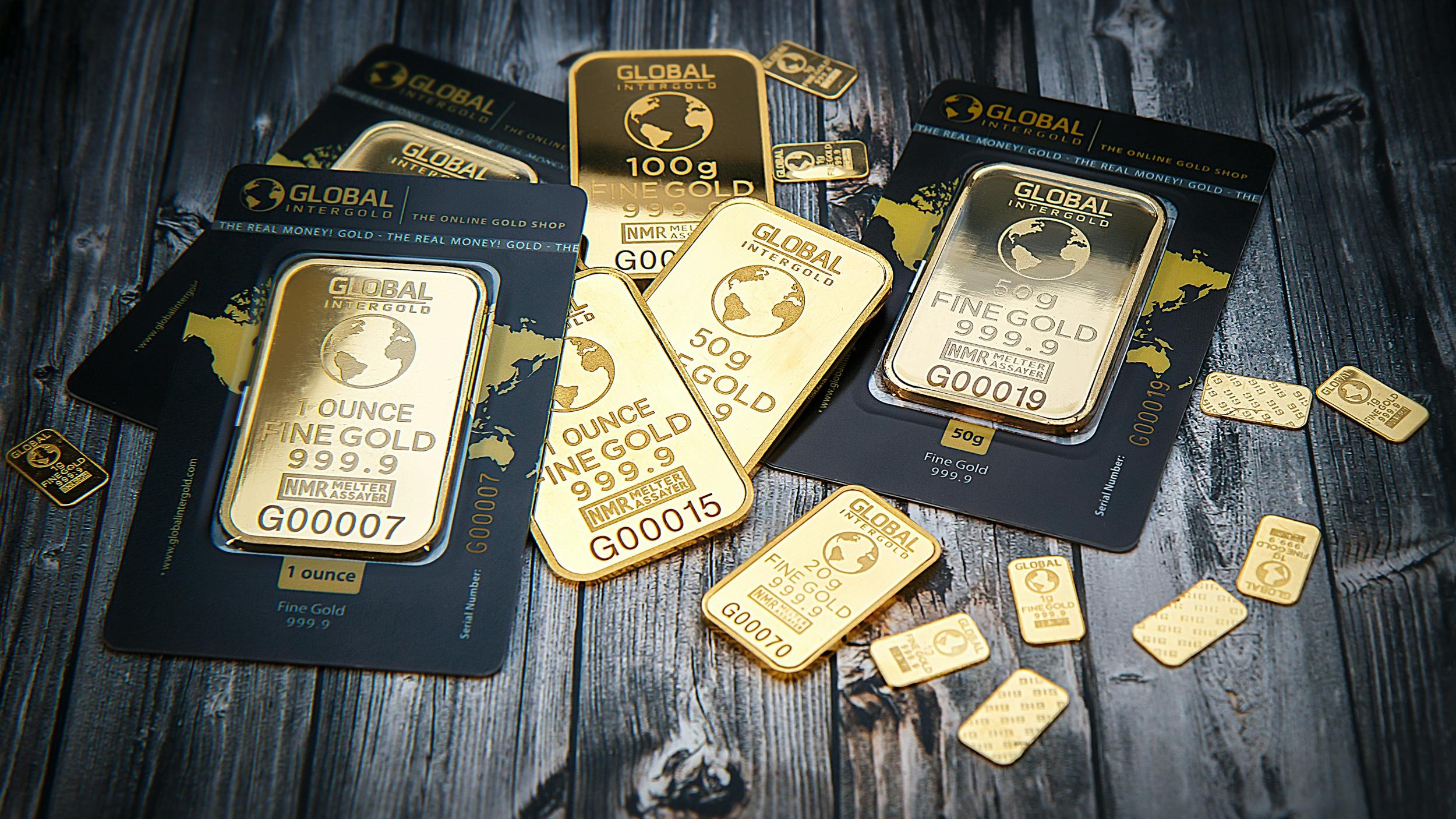
Gold has set new records beyond $5,000 per ounce, and a growing chorus of institutional voices and industry executives now argues that the metal’s run is far from over. The case for a $10,000 price target rests not on short-term speculation but on structural forces: constrained mine supply, accelerating central bank purchases, and a breakdown in the old relationship between gold and real interest rates. For investors tempted to trade every daily swing, the deeper signal may be a generational supercycle that rewards patience over timing.
Supply Constraints Set the Stage
Gold bulls often focus on demand, but the supply side tells an equally compelling story. The U.S. Geological Survey includes a dedicated gold chapter that documents global production and finite reserve estimates. The accompanying dataset, covering world production data from 2020 to 2024, shows output that has remained relatively flat even as prices have surged, confirming what geologists have warned for years: new large-scale deposits are harder to find and slower to develop. The USGS also publishes periodic industry surveys that track mid-year production and recycling conditions, reinforcing the picture of inelastic supply during a period of rising demand.
The machine-readable USGS dataset allows analysts to compare production trends against consumption in granular detail. What emerges is a market where annual mine output has struggled to keep pace with the combined appetite of central banks, ETF inflows, and jewelry fabrication. When supply cannot flex upward quickly, even modest demand increases translate into outsized price moves. That dynamic sits at the heart of the supercycle thesis: the world wants more gold than miners can deliver, and the gap is widening.
Central Banks Rewrote the Demand Equation
The most disruptive shift in the gold market over the past several years has come from official-sector buying. According to the European Central Bank, central banks accounted for more than 20% of global gold demand in 2024. That share is historically unusual and reflects a strategic pivot that accelerated after Russia’s foreign reserves were frozen in 2022. The same ECB analysis documents how the long-standing correlation between gold prices and real yields broke down after that event, suggesting that geopolitical considerations have displaced traditional financial models as the primary driver of official gold purchases.
The Brookings Institution’s Hutchins Center, drawing on the External Wealth database covering data from 1970 to 2024, provides a long-horizon view of how central bank gold holdings have evolved. The dataset reveals measurement differences between World Gold Council and IMF tallies, but the directional trend is unmistakable: reserve managers in emerging markets have been steadily increasing their gold allocations. This de-dollarization impulse, triggered by the precedent of sanctions-driven asset freezes, has created a structural demand floor that did not exist a decade ago. For the supercycle argument, this floor matters more than any single quarter’s price action.
The $10,000 Forecast Gains Mainstream Traction
A $10,000 gold price was once confined to the fringes of market commentary. That is no longer the case. Ed Yardeni, the veteran Wall Street strategist, stated that if gold continues on its current path, it could reach $10,000 over the next 10 years. Yardeni’s firm has framed the ongoing rally as part of a broader “geopolitical risk-on trade,” projecting gold could hit $10,000 per ounce by 2029. Separately, Randy Smallwood, CEO of Wheaton Precious Metals, told Bloomberg that he sees gold reaching $5,000 within a year and $10,000 by the end of the decade, citing the U.S. dollar as the “measuring stick,” the growing federal debt and interest burden, and the implication of negative real rates.
These are not fringe voices shouting into the void. J.P. Morgan Global Research noted that gold prices soared in 2025, driven by tariff uncertainty and strong demand from ETFs and central banks. The convergence of multiple credible forecasters around the same order-of-magnitude target suggests the market is pricing in a regime change rather than a temporary spike. When a mining CEO, a macro strategist, and a major bank’s research desk all arrive at similar conclusions through different analytical lenses, the signal deserves serious attention. It does not guarantee that $10,000 will be reached on a precise timetable, but it does imply that the distribution of plausible outcomes has shifted decisively higher.
Why the 1970s Parallel Holds Weight
Historical pattern-matching can be misleading, but the comparison between the 2020s and the 1970s carries substance. Analysis published on Seeking Alpha argues that gold is entering a potential supercycle in the 2020s, with record highs and strong historical parallels to the 1970s. During that earlier period, a combination of currency debasement, geopolitical instability, and negative real interest rates drove gold from $35 per ounce to over $800 in roughly a decade. The structural ingredients today are strikingly similar: governments running large fiscal deficits, central banks tolerating inflation to ease debt burdens, and a fracturing global monetary order.
The key difference is scale. In the 1970s, the gold market was smaller and less liquid, with fewer institutional channels for investors to express a view. Today, the official sector alone absorbs a fifth of annual supply, ETF holdings add another layer of demand, and retail investors in Asia and the Middle East have far greater purchasing power than their counterparts did 50 years ago. If the 1970s supercycle produced a roughly 20-fold increase in price, even a fraction of that magnitude applied to a starting point above $5,000 would put five-figure gold well within reach. The parallel is not perfect, but the direction of the forces is consistent: once confidence in fiat regimes begins to erode, the repricing of hard assets can be both violent and prolonged.
Interest Rates and the Dollar as Accelerants
Gold’s inverse relationship with interest rates has been a textbook assumption for decades, and that relationship still matters even if the post-2022 correlation with real yields has weakened. U.S. interest rates are widely expected to decline in the next few years, which would reduce the opportunity cost of holding a non-yielding asset like gold. Lower rates also tend to weaken the dollar, and since gold is priced in dollars, a softer greenback mechanically lifts the metal’s price for international buyers. In a world where many investors hold cash-like instruments that yield less than inflation, the relative appeal of an asset with no counterparty risk becomes clearer.
Randy Smallwood’s emphasis on the dollar as the “measuring stick” captures a subtlety that daily price watchers often miss. Gold does not need to become more valuable in absolute terms for its dollar price to rise; the dollar simply needs to lose purchasing power. With the federal government’s debt and interest burden growing, and with monetary policy likely to remain accommodative relative to inflation, the conditions for sustained dollar weakness are in place. That is not a prediction about any single Federal Reserve meeting. It is a structural observation about the trajectory of U.S. fiscal policy and its implications for the currency in which gold is denominated, and it helps explain why so many long-term forecasts cluster around much higher price levels.
A New Phase in Precious Metals Markets
The supercycle thesis extends beyond gold alone. A detailed review by Bullion Exchanges describes a broad metals supercycle driven by monetary debasement, geopolitical fragmentation, and structural supply constraints. In that framework, silver, platinum, and key industrial metals could also benefit from the same macro tailwinds pushing gold higher. Banks and institutional investors that historically treated precious metals as tactical hedges are being forced to reconsider them as core portfolio components, especially in regions where local currencies have already suffered substantial depreciation against the dollar.
For individual investors, this new phase raises both opportunities and risks. A supercycle can reward long-term holders, but it also attracts speculative flows that amplify volatility. Allocations that once seemed aggressive (such as 10% or more of a portfolio in precious metals) may become more common if the narrative of currency debasement and geopolitical risk continues to gain traction. At the same time, investors must weigh liquidity needs, diversification, and their own tolerance for drawdowns. The path to $10,000, if it materializes, is unlikely to be smooth; sharp corrections are a feature of every historical bull market in gold.
Reading the Data Behind the Narrative
Behind the headlines, a wealth of official data helps investors separate durable trends from hype. The USGS maintains a broad catalog of mineral reports and maps through its online storefront, making it possible to track how exploration, reserves, and production respond to changing prices over time. For questions about how to interpret those datasets (such as the distinction between reserves and resources, or the lag between discovery and commercial output), the agency’s public information service provides technical guidance. These resources offer a check on overly optimistic assumptions that higher prices will quickly unlock abundant new supply.
Longer-term context also comes from historical analyses of mineral-resource availability and policy. A classic USGS circular on mineral resources outlines how technological change, environmental regulation, and geopolitical risk interact to shape supply. While written in a different era, its core message remains relevant: mineral markets can stay tight for extended periods even in the face of high prices, particularly when permitting and infrastructure constraints slow the response. When that structural rigidity meets a surge of monetary and geopolitical demand for safe-haven assets, the conditions for a sustained supercycle, and for seemingly outlandish price targets like $10,000 gold, are no longer easy to dismiss.
More From The Daily Overview
*This article was researched with the help of AI, with human editors creating the final content.

Grant Mercer covers market dynamics, business trends, and the economic forces driving growth across industries. His analysis connects macro movements with real-world implications for investors, entrepreneurs, and professionals. Through his work at The Daily Overview, Grant helps readers understand how markets function and where opportunities may emerge.

