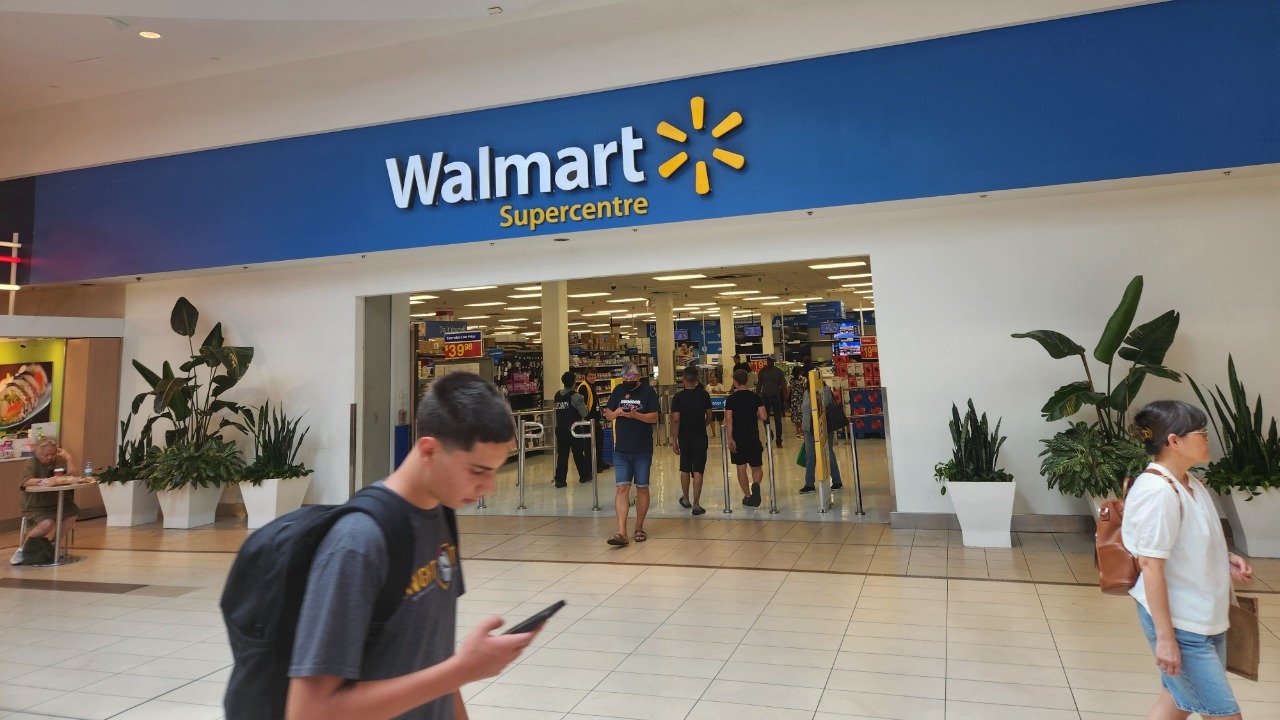
Walmart and Dollar General are pulling back on self-checkout at roughly 9,000 locations, a sharp reversal for two chains that once treated automation as the future of the front end. I see that shift less as a tech retreat and more as a recalibration of how big-box and discount retailers balance labor costs, theft, and customer patience in a slower, more margin-pressured economy.
As both companies remove or restrict kiosks, they are testing whether more human cashiers, tighter controls, and new formats can restore profitability without driving away shoppers who have grown used to scanning their own carts. The stakes are high, because what happens at Walmart and Dollar General often becomes the template for the rest of brick-and-mortar retail.
Why Walmart and Dollar General are rethinking self-checkout
The most immediate driver behind the rollback is shrink, the industry term that covers theft, scanning errors, and inventory loss. Retailers have long tolerated some leakage as the price of speed, but the math has shifted as inflation, organized shoplifting, and higher wages all squeeze margins. Walmart has been experimenting with limiting self-checkout to smaller baskets and certain hours, while Dollar General is removing kiosks entirely in thousands of stores, a sign that the cost of uncontrolled lanes has started to outweigh the labor savings those machines once promised. That is especially true in high-shrink locations where a single busy evening can wipe out the profit on an entire day’s sales.
Executives are also responding to a clear pattern in customer behavior. Self-checkout works reasonably well for a handful of items, but it breaks down when shoppers arrive with full carts, produce that needs weighing, or alcohol that requires ID checks. Each interruption forces an associate to intervene, which slows the line and frustrates everyone involved. By cutting back kiosks in favor of staffed lanes, Walmart and Dollar General are betting that a more curated use of automation, focused on quick trips and low-risk items, will reduce errors and friction. That approach aligns with broader retail research that links heavy self-checkout use to higher shrink rates and more frequent customer complaints about mis-scans and unexpected security checks.
How the pullback will change the in-store experience
For shoppers, the most visible change will be the return of longer, more consistently staffed traditional lanes, particularly at peak times. I expect that to feel like a relief in many Dollar General locations, where understaffed stores and malfunctioning kiosks have been a persistent sore point. At Walmart, where some supercenters had shifted almost entirely to self-service, the reintroduction of more cashiers should shorten the stop-and-go rhythm that comes from waiting for an associate to clear a kiosk error. The tradeoff is that customers who loved the autonomy and speed of scanning a few items themselves may now find fewer open machines and more subtle nudges toward staffed checkouts.
The shift will also change how workers spend their time on the floor. Instead of one associate hovering over a bank of eight or ten kiosks, more employees will be tied to individual lanes, greeting customers, bagging items, and handling payments directly. That can improve perceived service quality, especially for older shoppers or those using cash or complex payment methods, but it also raises the question of staffing levels. If Walmart and Dollar General do not increase headcount meaningfully, they will simply be redistributing the same number of people across fewer self-checkout stations and more manned registers, which could still leave stores stretched thin. Early pilots at other chains that reduced kiosks have shown modest gains in customer satisfaction scores when more lanes are staffed, a pattern that supports the logic behind these changes.
The economics behind cutting 9,000 stores back from self-checkout
Scaling back self-checkout at roughly 9,000 combined locations is not a cosmetic tweak, it is a major capital and operating decision. Each kiosk represents tens of thousands of dollars in hardware, software, and integration costs, plus ongoing maintenance and payment processing fees. When shrink climbs, those sunk costs become harder to justify. Dollar General has been under particular pressure to improve profitability after years of rapid expansion into rural and low-income areas, where small-ticket transactions and higher security risks make every percentage point of loss painful. By removing self-checkout in thousands of stores, the company is effectively admitting that the labor savings did not offset the revenue it was losing at the front end.
Walmart, with its far larger scale and more sophisticated data systems, is taking a more surgical approach, tightening self-checkout access in stores and time windows where shrink and congestion are worst. That strategy reflects a broader trend in big-box retail, where chains use store-level analytics to decide which locations can support more automation and which need a heavier human presence. Industry data shows that even a 0.5 percentage point reduction in shrink can translate into hundreds of millions of dollars in recovered profit for a retailer of Walmart’s size, which helps explain why the company is willing to risk some customer irritation as it rebalances its checkout mix. The fact that both Walmart and Dollar General are moving in the same direction suggests that the economics of fully open self-checkout have become harder to defend across much of the sector.
What this signals for automation, labor, and retail jobs
The retreat from all-in self-checkout does not mean automation is disappearing from stores, but it does change the trajectory of how technology and labor interact. For several years, the dominant narrative was that kiosks would steadily replace cashiers, freeing retailers to run leaner front ends while redeploying some workers to stocking and online order fulfillment. By cutting back kiosks and reopening more manned lanes, Walmart and Dollar General are implicitly acknowledging that human cashiers still play a central role in loss prevention, customer service, and store safety. That is particularly true in smaller formats, where a single associate at the front can deter theft simply by making eye contact and greeting customers.
For workers, the near-term impact is likely to be a mix of more traditional cashier roles and continued cross-training. I expect both chains to keep leaning on flexible job descriptions, where the same employee might run a register during a rush, then pivot to picking online orders or stocking shelves. The difference is that the front end will once again require more consistent staffing, which could stabilize hours in some locations. At the same time, the industry’s broader push toward automation is not going away. Retailers are investing in backroom robotics, smarter inventory systems, and mobile checkout tools that let associates ring up customers anywhere in the store. The pullback at the fixed kiosks is less a rejection of technology than a recognition that not every task, especially one as sensitive as handling cash and preventing theft, can be fully handed over to machines without costly side effects.
What shoppers and competitors should watch next
The next phase of this experiment will play out in how quickly Walmart and Dollar General adjust their store operations based on what they learn from the 9,000 affected locations. If shrink falls and customer satisfaction improves, I expect both companies to double down on a hybrid model that limits self-checkout to low-risk, low-basket transactions while investing in better training and scheduling for front-end staff. Shoppers should watch for subtle changes like clearer signage about which lanes are open, more visible managers at the front, and new prompts on kiosks that steer certain purchases to staffed registers. Those small operational details will reveal whether the chains are treating this as a one-time fix or a longer-term redesign of how the checkout area works.
Competitors are already taking notes. Regional grocers and pharmacy chains that rushed to install banks of kiosks are now weighing whether to follow Walmart and Dollar General in scaling back, especially in stores where theft has spiked. Some may respond by adding more security features to existing kiosks, such as weight sensors and AI-powered cameras, while others may copy the move toward fewer machines and more human cashiers. For shoppers, the practical takeaway is that the era of unlimited self-checkout is ending. The future looks more like a controlled mix of staffed lanes, limited self-service, and mobile tools, shaped as much by loss prevention and labor economics as by convenience. As Walmart and Dollar General recalibrate at scale, they are effectively redrawing the boundaries of how much automation the average store can handle before the costs start to outweigh the benefits.
More From TheDailyOverview
- Dave Ramsey warns to stop 401(k) contributions
- 11 night jobs you can do from home (not exciting but steady)
- Small U.S. cities ready to boom next
- 19 things boomers should never sell no matter what

Grant Mercer covers market dynamics, business trends, and the economic forces driving growth across industries. His analysis connects macro movements with real-world implications for investors, entrepreneurs, and professionals. Through his work at The Daily Overview, Grant helps readers understand how markets function and where opportunities may emerge.