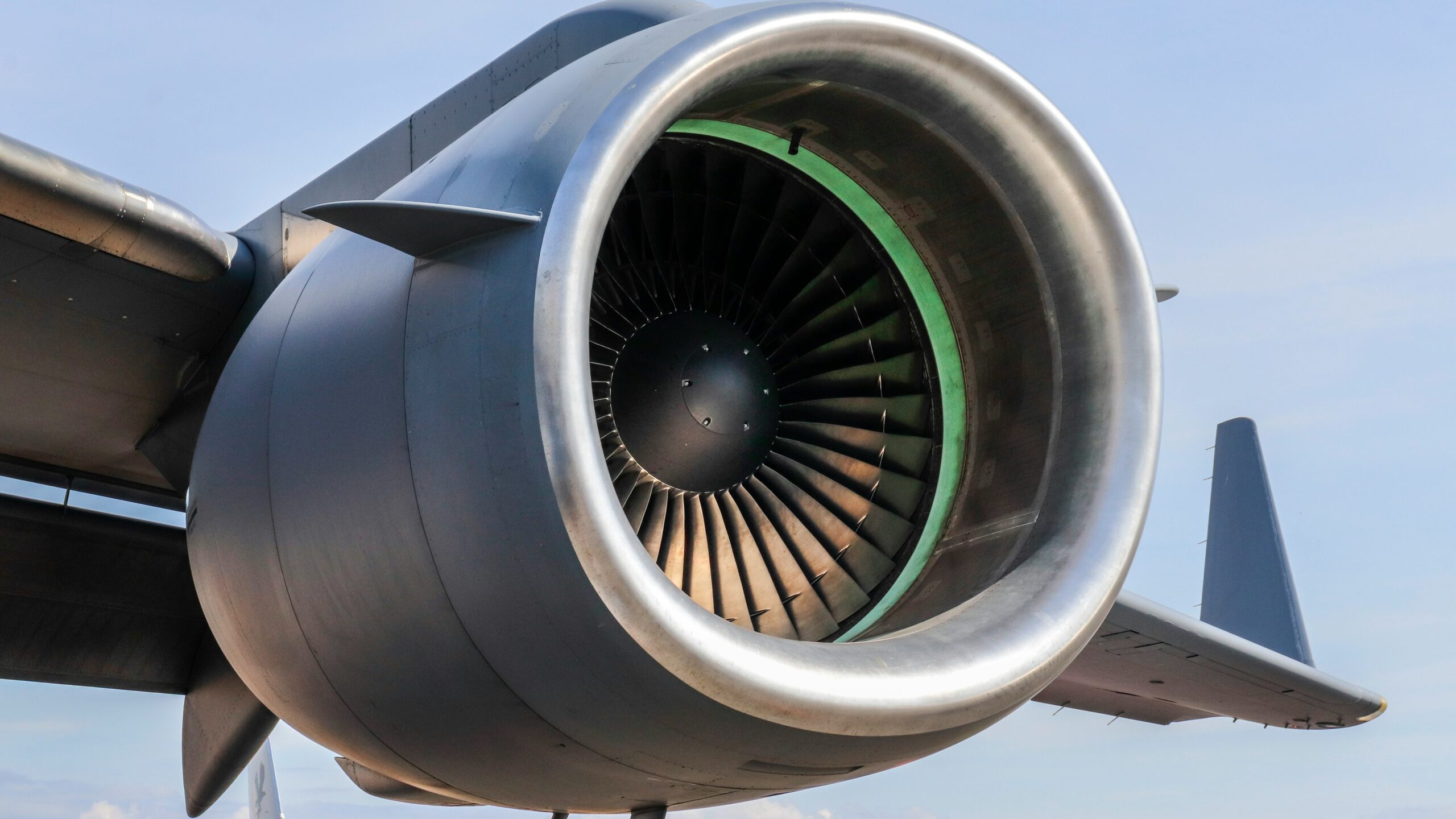
GE Aerospace and Palantir Technologies have reportedly entered discussions around an artificial intelligence partnership targeting jet engine design and maintenance, a deal that would extend Palantir’s growing footprint across the U.S. aerospace and defense sector. While neither company has issued an official press release confirming the arrangement, the reported collaboration follows a pattern of major aerospace firms turning to Palantir for AI integration on sensitive programs. The timing is significant: defense budgets are expanding, supply chains remain strained, and competitors are already locking in similar agreements.
Palantir’s Expanding Aerospace Playbook
Palantir has rapidly become the AI vendor of choice for legacy aerospace and defense companies looking to modernize operations without building proprietary machine-learning platforms from scratch. The clearest proof of that trajectory came when Boeing Defense, Space and Security formally partnered with Palantir to accelerate AI adoption across defense classified programs, with BDS tapping the company to provide AI expertise on undisclosed classified and proprietary efforts according to the official announcement. Ted Colbert, president of Boeing BDS, underscored the urgency by warning that the pace of innovation is not slowing down and that the company cannot afford to fall behind, a sentiment that resonates across the defense industrial base.
That Boeing deal established a template. A large prime contractor with deep institutional knowledge but limited software agility brings in Palantir to layer AI tools on top of existing workflows, particularly in classified environments where off-the-shelf commercial products cannot operate. If GE Aerospace follows a similar structure, the partnership would likely center on Palantir’s Foundry or AIP platforms applied to engine telemetry, maintenance scheduling, and performance optimization rather than a blank-check research project. In practice, this would mean ingesting data from GE’s extensive installed base of engines and fusing it with logistics, supply, and operational records to create a more dynamic picture of engine health and fleet readiness.
What an AI Jet Engine Deal Would Actually Change
Jet engines generate enormous volumes of sensor data during every flight cycle, covering temperature, vibration, fuel flow, and pressure across dozens of components. Airlines and military operators already collect much of this data, but analysis often lags behind collection because legacy systems were built for periodic inspections rather than continuous, model-driven monitoring. Predictive maintenance, where algorithms flag a part likely to fail before it does, could cut unscheduled engine removals and reduce the costly ground time that ripples through airline schedules and military readiness. For GE Aerospace, which services thousands of commercial and military engines worldwide, even small efficiency gains per engine translate into significant operational savings across the fleet.
The commercial incentive is straightforward. Engine makers earn a large share of their revenue not from selling new hardware but from long-term service agreements tied to flight hours. If AI-driven diagnostics can extend intervals between overhauls or reduce false-positive maintenance alerts, GE stands to lower its own service costs while offering airlines more predictable uptime. On the military side, the calculus shifts toward readiness: keeping fighter jet and transport aircraft engines mission-capable at higher rates without expanding maintenance crews. A well-structured AI program could also help operators manage spare parts inventories more efficiently by forecasting demand, potentially easing some of the supply chain bottlenecks that have constrained engine availability in recent years.
Defense Ties Raise Strategic and Ethical Questions
Palantir’s deep roots in defense and intelligence work make it a natural fit for classified engine programs, but those same roots invite scrutiny. The company built its reputation on data analytics tools used by national security agencies, and its expansion into commercial aerospace has not fully separated its brand from surveillance and warfare applications. A GE Aerospace partnership focused on military jet engines, particularly for platforms like the F414 powering the F/A-18 Super Hornet or the T700 in Black Hawk helicopters, would place Palantir’s AI closer to the operational edge of combat systems. That proximity is especially sensitive when algorithms begin to influence decisions about which aircraft are cleared for missions, how long they can remain in theater, and when critical components must be replaced.
That proximity creates a tension most coverage of these deals glosses over. AI applied to engine health monitoring is relatively uncontroversial, framed as a safety and efficiency tool. But the same data pipelines and predictive models could, in theory, feed into broader mission-planning or logistics systems where the line between maintenance optimization and operational decision-making blurs. Palantir’s existing work on classified programs with Boeing, where specific program names remain undisclosed, already illustrates how little visibility the public has into the scope of these AI integrations. GE Aerospace entering a similar arrangement would concentrate even more defense AI capability within a single vendor, raising questions about vendor lock-in, data sovereignty, and the degree of algorithmic influence over military hardware decisions. Policymakers and regulators may eventually need clearer guardrails around how maintenance-focused AI tools can be repurposed or integrated into combat-adjacent systems.
Why GE Cannot Afford to Wait
The competitive pressure on GE Aerospace is real and growing. Rolls-Royce has invested heavily in its own digital analytics for the Trent engine family, and Pratt & Whitney’s parent company RTX has expanded its internal data science capabilities to support both commercial and military programs. If GE delays AI integration while rivals build proprietary platforms, it risks falling behind on service contract economics, where data-driven maintenance promises are increasingly a selling point for airline customers choosing between engine options for new aircraft orders. In a market where performance, fuel efficiency, and reliability differentials are narrowing, the ability to guarantee higher uptime through smarter analytics can tilt multi-billion-dollar fleet decisions.
The defense side carries its own urgency. The Pentagon has signaled repeatedly that it wants to accelerate AI adoption across all branches, and contractors that can demonstrate working AI tools on existing platforms will have an advantage in future procurement competitions. Boeing’s decision to bring Palantir into classified programs reflects that same calculation, positioning its defense unit as an early mover in operationalizing AI at scale. For GE Aerospace, whose military engines power a wide range of U.S. and allied aircraft, aligning with an established defense AI provider could strengthen its position in upcoming engine competitions and sustainment contracts. Waiting for a perfect internal solution while competitors partner with proven vendors is a risk few defense executives are willing to accept, particularly when budget cycles and program timelines reward those who can show near-term capability rather than long-term research roadmaps.
What Remains Unconfirmed
Despite the strategic logic, several key details about the reported GE Aerospace and Palantir arrangement remain unverified based on available sources. No official press release, securities filing, or executive statement from either GE Aerospace or Palantir has confirmed the partnership as of the time of this reporting. Contract terms, financial figures, and specific engine programs involved are all absent from the public record. The strongest confirmed precedent is the Boeing BDS and Palantir partnership, which itself involves undisclosed classified and proprietary programs with limited public detail beyond the broad mandate to accelerate AI adoption across defense work.
That information gap matters. Investors, analysts, and defense watchers should treat the reported deal as plausible and strategically consistent but not yet confirmed by either party. If GE Aerospace does formalize an agreement, the announcement will likely clarify whether the focus leans commercial, military, or both, and whether Palantir is being brought in primarily as a data integration layer, a predictive maintenance engine, or a broader AI infrastructure provider. Until then, the potential partnership is best understood as part of a larger trend: traditional aerospace manufacturers concluding that they cannot build every critical software capability in house, and turning instead to specialized AI firms to unlock value from the data their products have been generating for decades.
More From The Daily Overview
*This article was researched with the help of AI, with human editors creating the final content.

Grant Mercer covers market dynamics, business trends, and the economic forces driving growth across industries. His analysis connects macro movements with real-world implications for investors, entrepreneurs, and professionals. Through his work at The Daily Overview, Grant helps readers understand how markets function and where opportunities may emerge.

