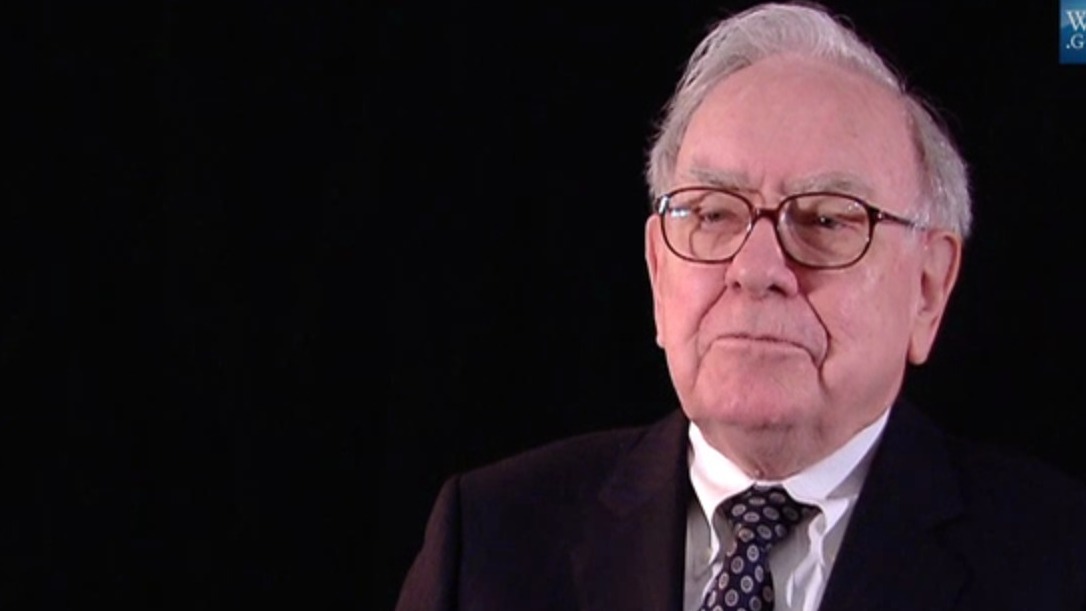
Warren Buffett’s fortune was not built on flashy trades or meme stocks. It grew out of a series of disciplined, often quiet decisions that turned overlooked businesses and simple habits into compounding machines. His sharpest moves, from buying sleepy insurers to shunning debt, show how methodical choices can add up to millions over time.
Those decisions are not just history lessons. They reveal a repeatable playbook: focus on durable businesses, protect downside risk, and let time do the heavy lifting. When I trace Buffett’s record, the most powerful insights come from the deals he barely talked about and the habits he followed when everyone else was chasing the next big thing.
Turning Berkshire from a dying mill into a cash engine
Buffett’s defining move was not a single stock pick but the decision to use Berkshire Hathaway as his permanent holding company. He initially bought into BRK as a struggling textile business, then, after taking control, he shifted away from the mills and turned Berkshire Hathaway into a vehicle for buying other companies at attractive prices. As he later put it, price is what you pay and value is what you get, a mindset that guided his transformation of BRK from a capital‑hungry manufacturer into a compounding portfolio.
Soon after acquiring the company outright he liquidated the textile manufacturing components and redeployed that capital into more promising areas, including insurance and consumer businesses that could throw off steady cash. His primary investments were made through this structure, which evolved into a powerhouse that could buy entire companies as well as minority stakes and still function as a strong dividend option for shareholders who held on. That quiet pivot, described in detail in reporting on how he reshaped Berkshire Hathaway, is the foundation under almost every later Buffett win.
Moats, real assets and the power of boring businesses
Buffett’s next subtle masterstroke was to concentrate Berkshire’s money in companies with what he calls moats, businesses whose products people keep buying in good times and bad. His investment philosophy is to prioritize businesses with dependable products and services, like razor blades and laundry detergent, which is why he gravitated toward consumer names such as Gillette (the Gillette company) and other staples that fit His criteria. That focus on predictability, not excitement, quietly compounded Berkshire’s earnings while more speculative bets elsewhere flamed out.
He has applied the same logic to hard assets. Buffett Still Goes Big on Real Assets when prices make sense, using what he calls his elephant gun sparingly but decisively. Recent analysis of Berkshire’s portfolio shows that when valuations in the broader market appear rich, he is more inclined to lean into infrastructure, energy and other tangible holdings that can produce cash regardless of market mood, a pattern highlighted in coverage of how Buffett Still Goes on these Real Assets. For ordinary investors, the lesson is clear: the dullest products often sit atop the deepest moats.
GEICO, crisis deals and the art of getting paid to rescue
One of Buffett’s sharpest long game moves was his gradual accumulation of Geico. Buffett, the Oracle of Omaha, built up a stake over years, then had Berkshire buy the entire company once the economics were undeniable. That patience turned a once‑niche auto insurer into a core Berkshire profit center, with reporting noting how Buffett (the Oracle of Omaha) used Geico to generate high returns for Berkshire. By 2013, Buffett reported that GEICO had generated $73B for Berkshire Hathaway in one year, an extraordinary figure for a company that Buffett took over for $2.3B, underscoring how a single well‑chosen insurer can reshape a conglomerate’s earnings power, as detailed in his discussion of GEICO inside Berkshire Hathaway.
He has been just as shrewd in moments of panic. During the financial crisis, Goldman Sachs, General Electric and Bank of America effectively paid Buffett to bless them with solvency, handing Berkshire lucrative preferred shares and warrants in exchange for capital when markets were frozen. Those lifeline deals, described in detail in coverage of how Goldman Sachs, General Electric and Bank of America turned to Buffett, show how he insists on being overpaid for taking risk. Moments when Buffett went against the crowd, such as when Berkshire injected $5 billion into Goldman at the height of the crisis, are catalogued in analyses of those Moments, and they underline a core Buffett rule: only step into chaos when you are being paid handsomely to do so.
Quiet tech bets, cash hoards and preparing for crashes
For years Buffett was skeptical of technology stocks, but his recent moves show a more nuanced approach. Berkshire took a $4.9 billion stake in Alphabet Inc, a position that has already benefited from the company’s dominance in search and artificial intelligence, as detailed in reporting on that $4.9 billion investment. Alphabet is already sitting on a 50% gain from its average purchase price, a reminder that even a cautious value investor can profit from tech when the valuation and moat line up, as shown in analysis of why Berkshire has been adding to Alphabet.
At the same time, Buffett has been willing to pull back when prices look stretched. Reporting on Berkshire’s recent decision to take $6 billion out of the stock market notes that Warren Buffett and Berkshire Hathaway trimmed positions and built cash, a move some observers, including Moz Farooque, interpreted as bracing for rougher seas, as described in coverage of how Warren Buffett repositioned Berkshire Hathaway and BRK. Instead, he (Buffett) would rather sit on a cash equivalent and earn guaranteed interest income, waiting for his (Warren Buffet) moment to strike as one of the best investors of all time, a stance laid out in his recent warning to Wall Street. When others fear missing out, Buffett quietly prepares for the next crash.
That mindset extends to how he thinks about downturns. Buffett (Warren Buffett)’s most famous quote captures a timeless truth, that the best opportunities often arise in times of panic, and he has urged investors to quietly buy great businesses at a discount when markets are in free fall. Guidance on what Buffett says to do about a coming market crash emphasizes staying calm, holding cash or equivalents and being ready to act when quality companies are suddenly cheap. It is a strategy that looks cautious on the surface but has repeatedly made him millions when the cycle turns.
The habits behind the money: patience, fees and avoiding debt
Behind the big deals sit a handful of habits that Buffett treats as non‑negotiable. In 2007, Warren Buffett made a bold $1 million wager that a simple S&P 500 index fund would beat a basket of hedge funds after fees, highlighting his view that high costs quietly erode investor returns, a point he underscored when he criticized the two‑tier fee structure common in that industry, as detailed in analysis of Warren Buffett and investor habits. Perhaps the most underrated part of Warren Buffett (The Oracle of Omaha)’s success is patience, letting time and compounding do the work and turning steady returns into substantial wealth over time, a principle highlighted in guidance that urges investors to Let compounding work for them.
He is equally blunt about leverage. One of his core rules is to Avoid Debt, Especially Credit Card Debt, warning that if he had carried high‑interest balances early in life he would have been broke instead of rich. That message, captured in advice that urges people to Avoid Debt, Especially Credit Card Debt, is as central to his success as any stock pick. For everyday investors, copying these habits, from shunning unnecessary borrowing to favoring low‑fee funds, may be the sharpest Buffett move of all.
More From TheDailyOverview
*This article was researched with the help of AI, with human editors creating the final content.

Cole Whitaker focuses on the fundamentals of money management, helping readers make smarter decisions around income, spending, saving, and long-term financial stability. His writing emphasizes clarity, discipline, and practical systems that work in real life. At The Daily Overview, Cole breaks down personal finance topics into straightforward guidance readers can apply immediately.
