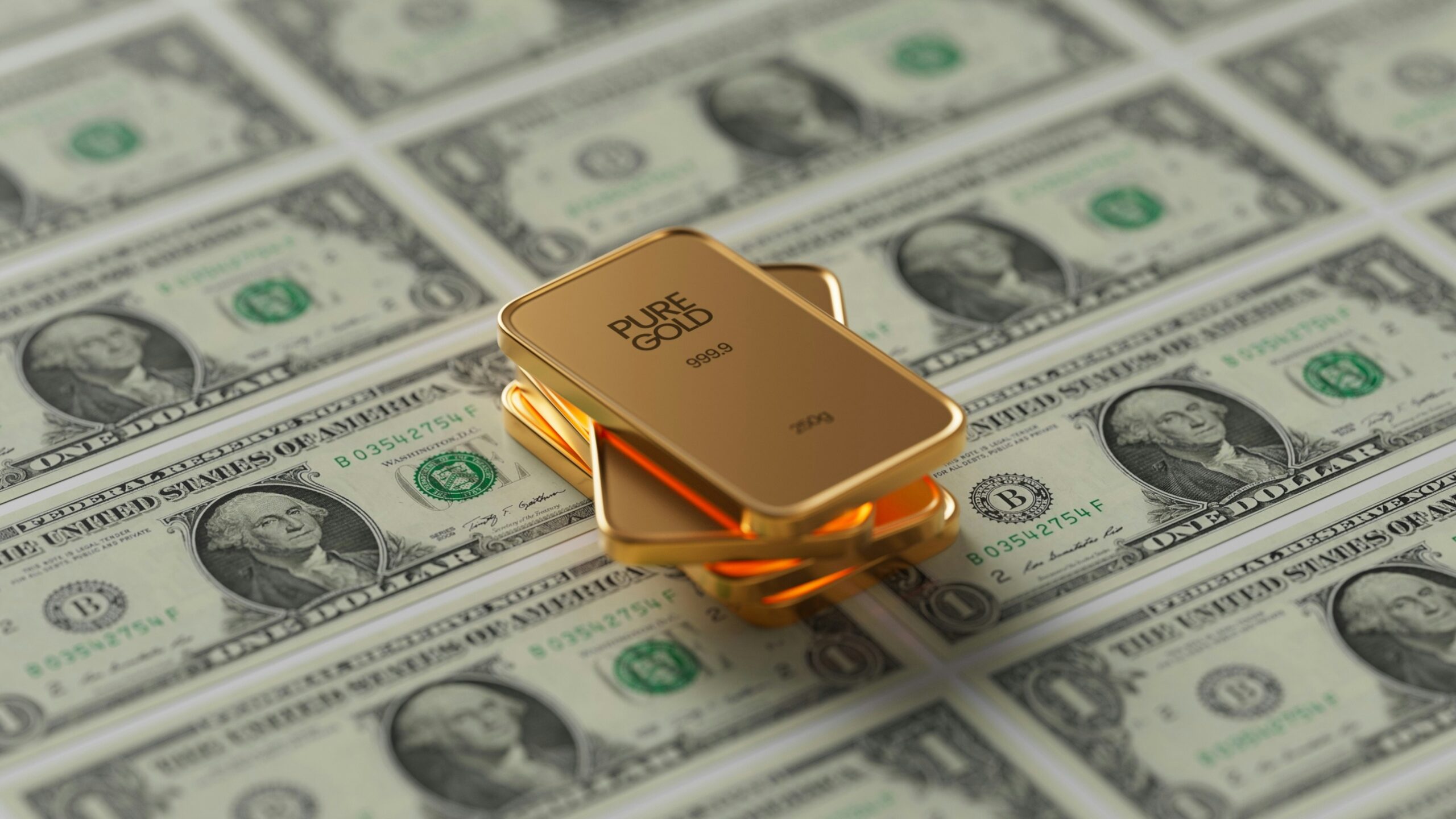
Gold has stormed back above the psychologically crucial $5,000 mark, restoring a historic rally that only days ago looked badly shaken. After a brutal selloff that briefly knocked prices below that threshold, buyers have returned in force, pushing the metal to fresh records and reigniting a broader precious-metals boom.
The move cements gold’s transformation from a sleepy safe haven into one of the most aggressively traded macro assets of 2026. I see a market now driven as much by momentum, central-bank demand, and political anxiety as by traditional inflation hedging, with investors weighing whether this is the middle of a durable bull market or the late stages of a speculative blowoff.
From first $5,000 breakout to fresh records
The latest surge builds on a milestone that would have seemed outlandish only a few years ago: spot prices breaking above $5,000 per ounce for the first time. Earlier this year, gold’s bull run pushed it through that barrier, with one analysis noting that spot moved past $5,000/oz as part of a broader “sell America” trade that saw investors rotate away from U.S. assets. That initial breakout was not just a round-number headline, it signaled that macro fears around growth, debt and politics had reached a level where investors were willing to pay unprecedented prices for perceived safety.
By late Jan, the rally had already evolved from a one-off spike into what I view as a full-fledged regime shift. A detailed breakdown of the Gold Price Record described how the metal not only cleared $5,000 but continued climbing as traders digested a mix of weaker real yields, persistent inflation worries and geopolitical stress. A companion analysis of What is Driving the Surge highlighted that prices had already moved beyond the initial $5,000 per ounce print, underscoring how quickly traders normalized a level that once looked like a ceiling.
The violent shakeout and rapid rebound
The path back above $5,000 has not been smooth. A harsh liquidation phase sent gold to a four-week low, with one report noting that, At Friday‘s settlement, the metal had dropped 9.0 percent in a single session, its largest one-day fall in years. That collapse, tied in part to easing concerns about Federal Reserve independence and a rush to take profits, briefly shattered the aura of invincibility around the trade and forced leveraged speculators to unwind positions at speed.
Yet the selloff proved to be an invitation for dip buyers rather than the end of the story. In early trading on a subsequent Wednesday, Catherine Brock reported that Gold (GC=F) futures opened at $4,966.10 per troy ounce, with the contract specifically quoted at $4,966.10 per troy. That level, just shy of the round number, prompted opportunistic buying that quickly pushed prices back over $5,000 per ounce as traders framed the prior plunge as a temporary “bloodbath” rather than a structural turn.
The momentum only accelerated as the session wore on. One account of how Gold surged back described buyers “charging back in” after the historic bloodletting, with the metal rebounding above $5,000 per ounce as bargain hunters and systematic funds reloaded. The same report noted that silver’s smaller market amplified its price swings, a reminder that the current precious-metals bull run is not confined to a single asset but is instead rippling across the complex.
Macro fuel: rates, money and central banks
Behind the price fireworks sits a familiar macro cocktail. I see three forces doing most of the work: expectations that interest rates will fall, a flood of liquidity, and aggressive official-sector buying. A breakdown of 5 reasons for the rising gold price highlighted how lower real yields and looser monetary policy have eroded the opportunity cost of holding a non-yielding asset, while worries about long-term currency debasement have made physical stores of value more attractive. That same analysis, published in Jan and flagged under a Table of contents that begins with Interest rate expectations, framed the current move as the logical outcome of years of ultra-easy policy colliding with renewed inflation pressure.
Central banks have added another powerful tailwind. A detailed look at the Gold Price Increase in 2026, introduced under the banner Shocking Rise to $6,300, emphasized that Real Gold Price in 2026 is the scale of official purchases. Under the subheading Central Banks Are, the piece describes how monetary authorities have been accumulating bullion as a hedge against sanctions risk and currency volatility, tightening the physical market and amplifying every wave of speculative demand.
Safe-haven demand and the February test
Layered on top of the macro story is a surge in classic safe-haven buying. Investors rattled by geopolitical tensions and domestic political uncertainty have been rotating into gold as a crisis hedge, a trend that one Feb outlook argued could make the coming weeks pivotal. That forecast, framed as a gold price forecast for February and building on analysis from Jan, suggested that the convergence of geopolitical stress and safe-haven flows could determine whether the rally extends or faces its first major correction.
The intraday tape backs up that narrative. On a recent morning, Continuous gold futures were up 2.9% to $5,076.30 per ounce, with the contract specifically quoted at 2.9% and $5,076.30 per ounce. That kind of move in a single session, especially after a violent drawdown, speaks to a market where fear and greed are colliding in real time.
What the rally means for investors now
For individual investors, the return above $5,000 is both an opportunity and a warning. A broad survey of Wall Street forecasts found widespread bullishness on why gold prices are rallying, with strategists pointing to everything from central-bank buying to strong demand from gold-and-jewelry retailers. At the same time, several analysts cautioned that the very factors driving the surge, including political risk and policy uncertainty, could reverse quickly, leaving latecomers exposed to sharp pullbacks like the 9.0 percent drop seen at the recent trough.
In my view, that makes discipline and data even more important. Retail traders tracking intraday moves through platforms that rely on feeds covered by the Google Finance disclaimer should remember that futures and spot prices can diverge, and that headline levels like $5,000 per ounce can obscure the volatility underneath. With some projections already floating scenarios where prices could spike toward $6,300, as referenced in the $6,300 “Shocking Rise” discussion, I see a market that rewards patience, diversification and a clear sense of risk tolerance far more than it rewards chasing the latest intraday breakout.
More From The Daily Overview
*This article was researched with the help of AI, with human editors creating the final content.

Grant Mercer covers market dynamics, business trends, and the economic forces driving growth across industries. His analysis connects macro movements with real-world implications for investors, entrepreneurs, and professionals. Through his work at The Daily Overview, Grant helps readers understand how markets function and where opportunities may emerge.

